The following text was taken from “
My very first little German Book. ”. The year of this book is unknown, but I have adapted this book for Elvish purposes, and the sentences will be broken down by Sindarin translation, literal translation, and original text.
Miuinya Eldarin parmanya.
First Elvish book-my.
“My first Elvish Book.”
Sisse nitya parma lyen ná, yasse paruval parmahenta Eldarin. Namin sa tyasuvalyes, yú, Ná, naitie!
Here (a) little book you-for (polite) is, where learn-will-you (polite) to read Elvish. Judge-I that like-will-you (polite)-it, also, Yes, indeed!
Here is a little book for you, where you may learn to read German. I’m sure you’ll like it, too, Yes, very much indeed!
Saro i·yestasse ú-istuval hyanyar quettar, arrongo istuval tai illi lai mai, ar enyalá tai enyalielyallo.
Therefore the beginning-at not-know-will-you (polite) the different words, very soon know-will-you (polite) them all very well, and recall them memory-your-from (polite).
For though at first you cannot tell the different words apart, yet soon you’ll know them all quite well and get them off by heart.
Ar tasse nár yú, qui tiril, saite netyar emmar sásse. Nás i·armelin nitya parma. Tulá, lavá ven yestá!
And there are also, if look-you (polite), such pretty pictures in it. It (is) the dearest little book. Come, allow for us (inclusive) to begin!
And there are also, if you look, such pretty pictures in it. It is the dearest little book—come on, then, let’s begin!
Miuinya
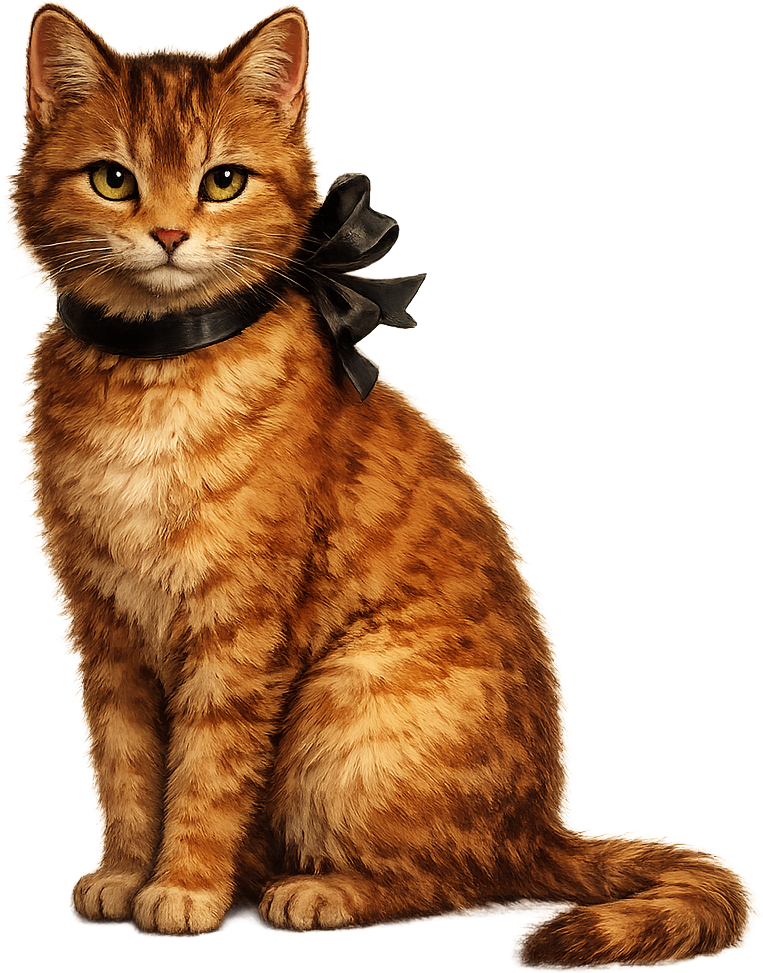
Yasse ná miuinya?
Where is cat-my?
(Where is my cat?)
Ú-istan.
Not-know-I
(I do not know.)
i·Ilin
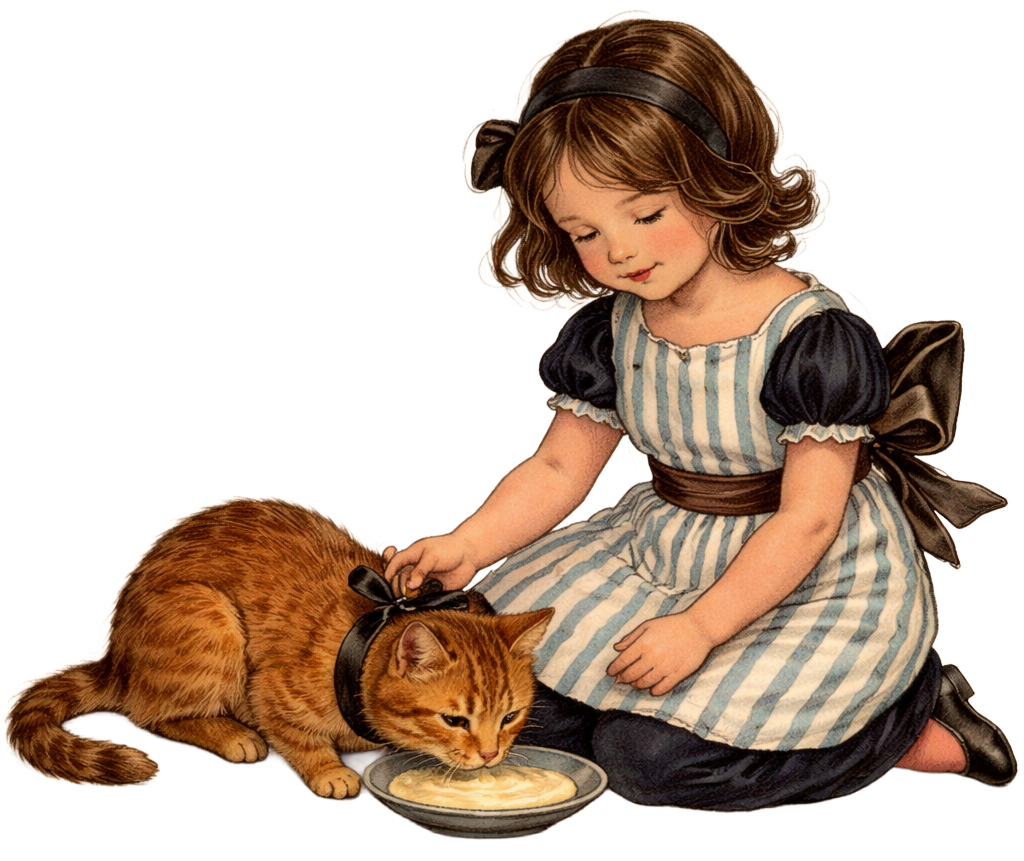
Samin ililli sen.
Have-I some-milk her-for.
(I have some milk for her.)
Tyasis ilin.
Likes-she milk.
(She is very fond of milk.)
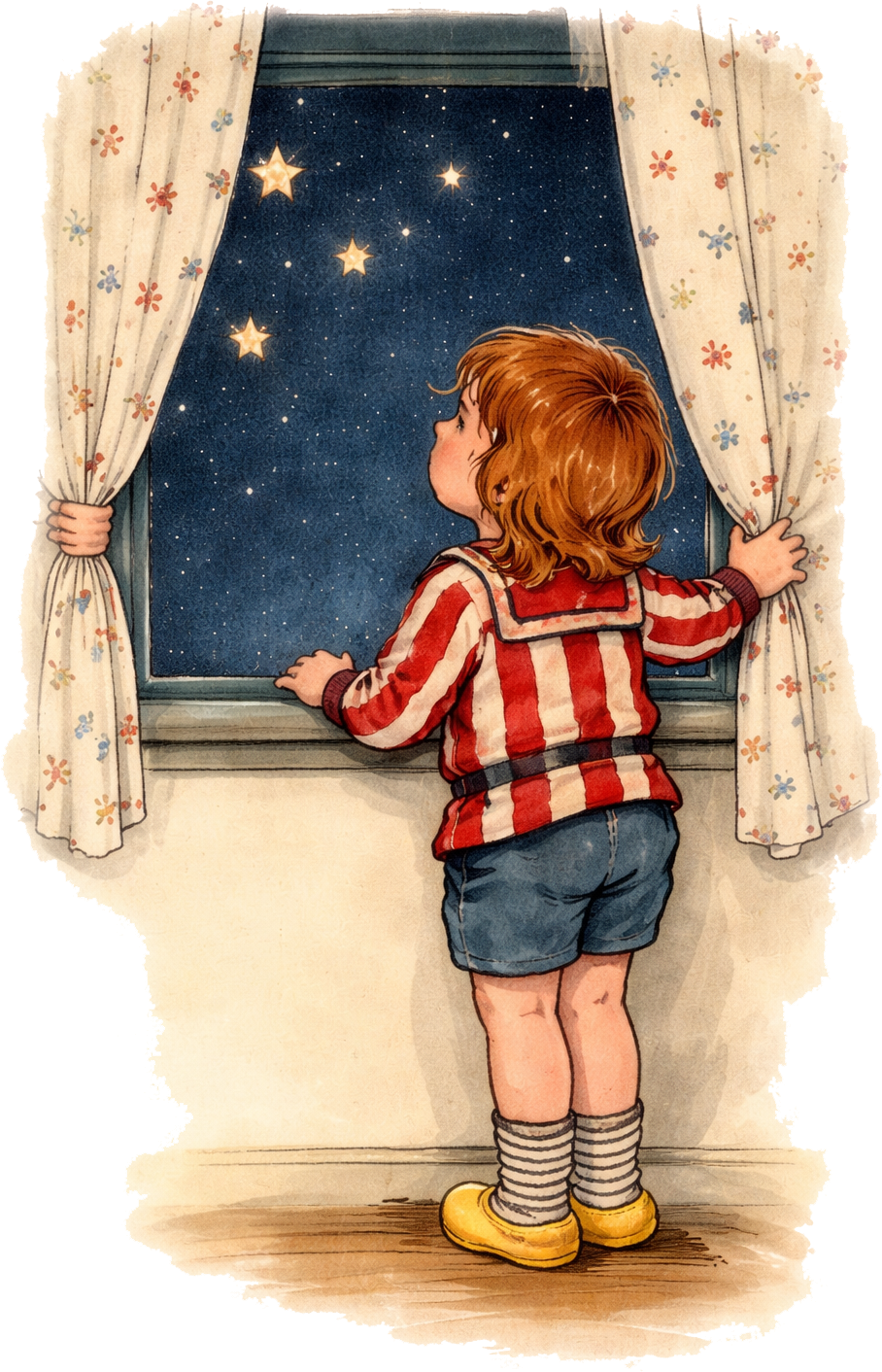
Iþil
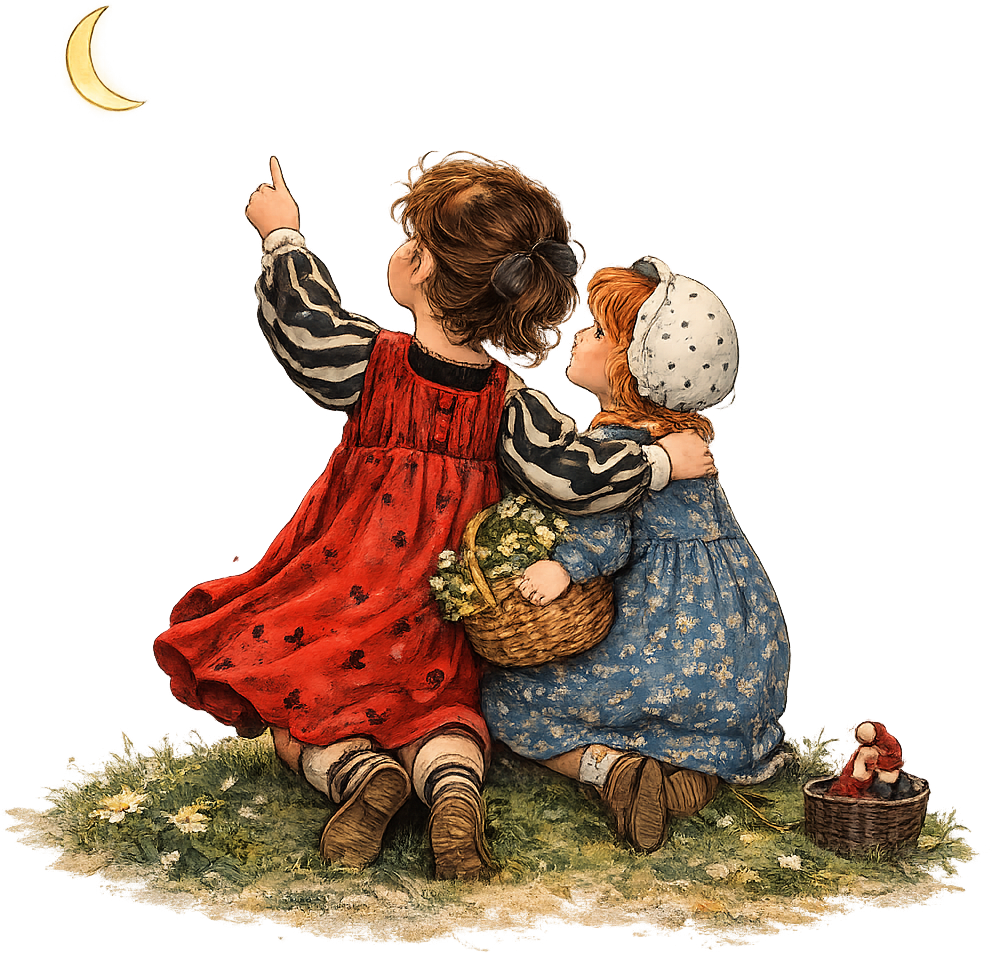
Cenin Iþil
See-I the moon.
(I see the moon.)
Ancalima Iþil.
Brightest (is) (the) Moon.
(It is very bright.)
i·Eleni
Ta mimírima i·eleni.
Also very beautiful (are) the stars.
(The stars are also very beautiful.)
Iþil ar i·eleni calyar ve.
The moon and the stars illuminate us (inclusive).
(The moon and the stars light us.)
i·Tarwasse
Masse tye?
Where (were) you (familiar)?
(Where have you been?)
i·Tarwasse.
In the garden.
(In the garden.)
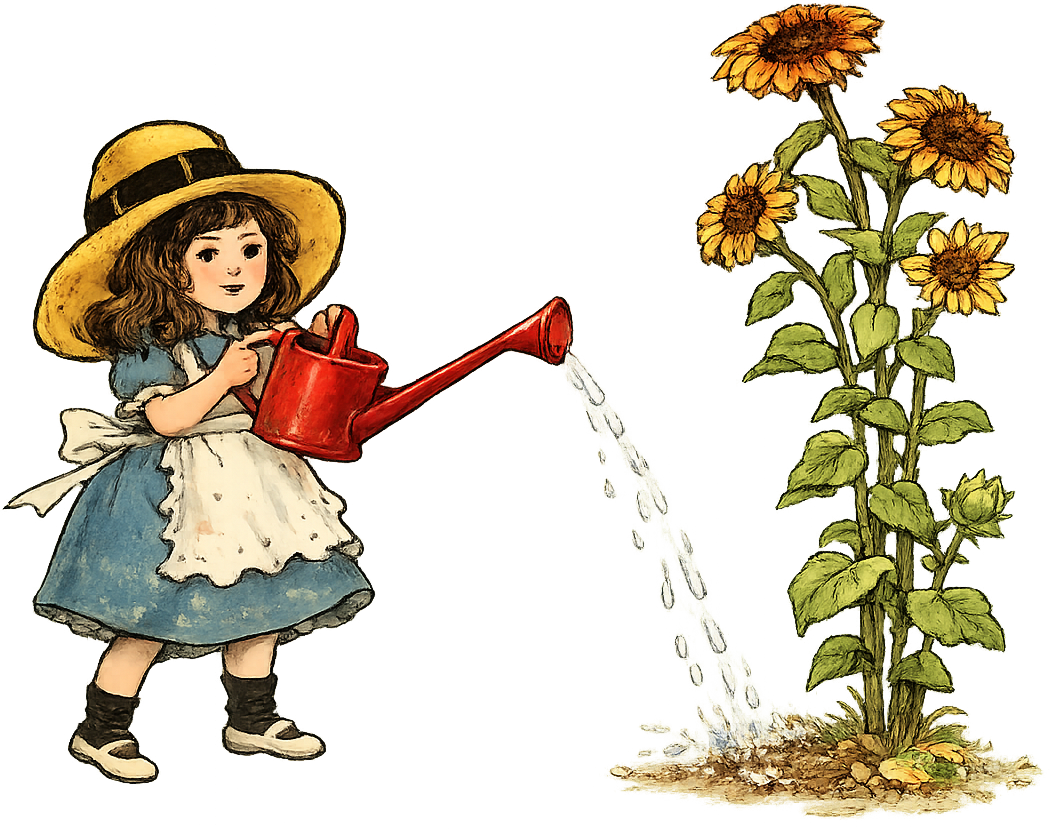
i·Nieri
Cennen i·miryar lóti.
Saw-I the beautiful flowers.
(I have seen the pretty flowers.)
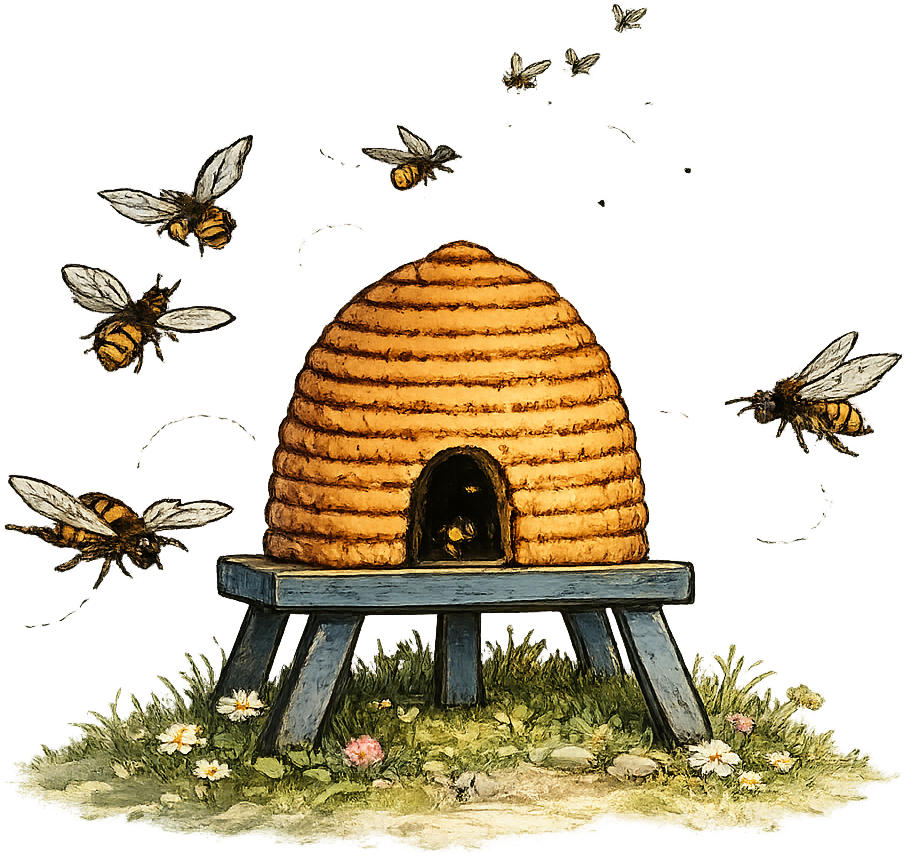
Ar ecénien i·nieri, i varer lís.
And have-seen-I the bees which yield honey.
(And I have seen the bees, which make honey.)
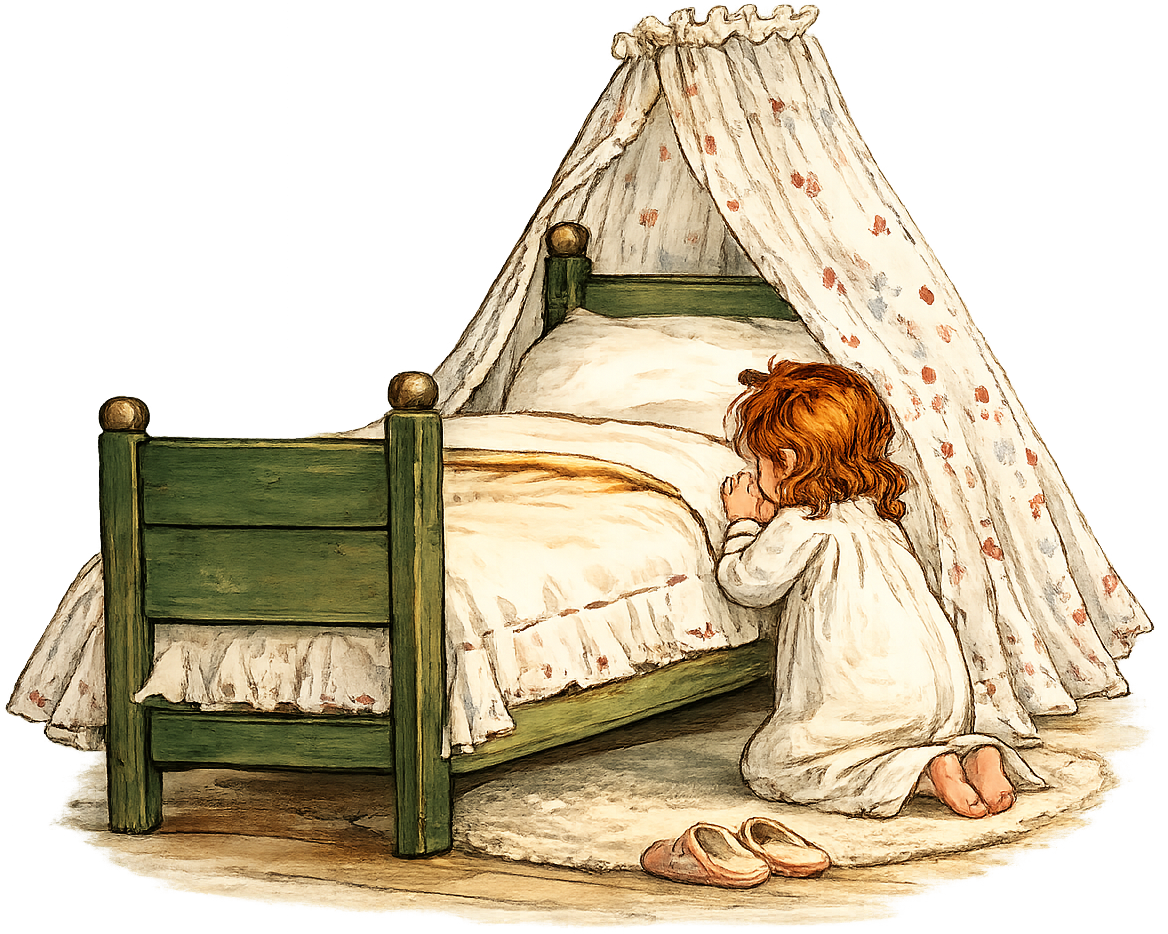
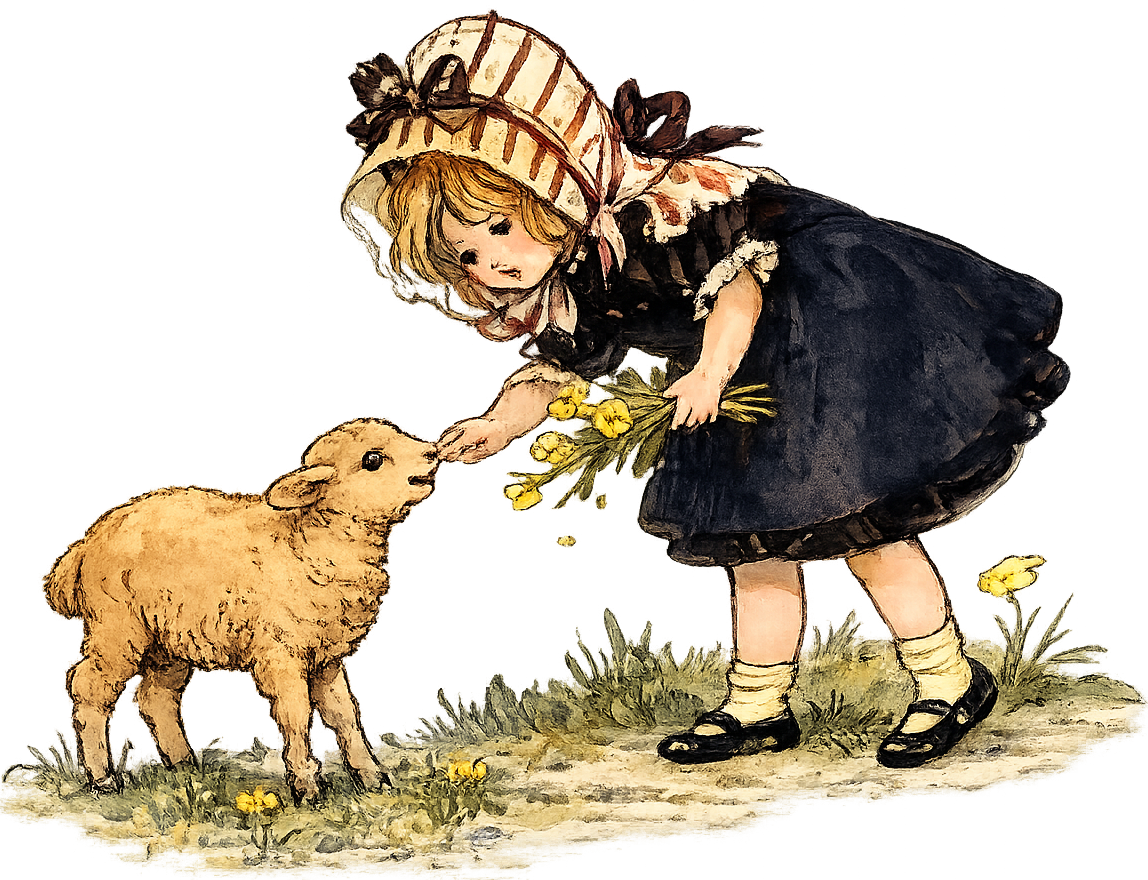
i·Caima
A! Melin i·nitya caimanya yá lumba nán.
Oh! Love-I the bed little my when tired am-I.
(Oh! how I love my little bed when I am tired.)
Arifána, arimussë, arelmendeä nás.
Very white, very soft, very wonderful is-it.
(It is so white, and so soft, and so nice.)
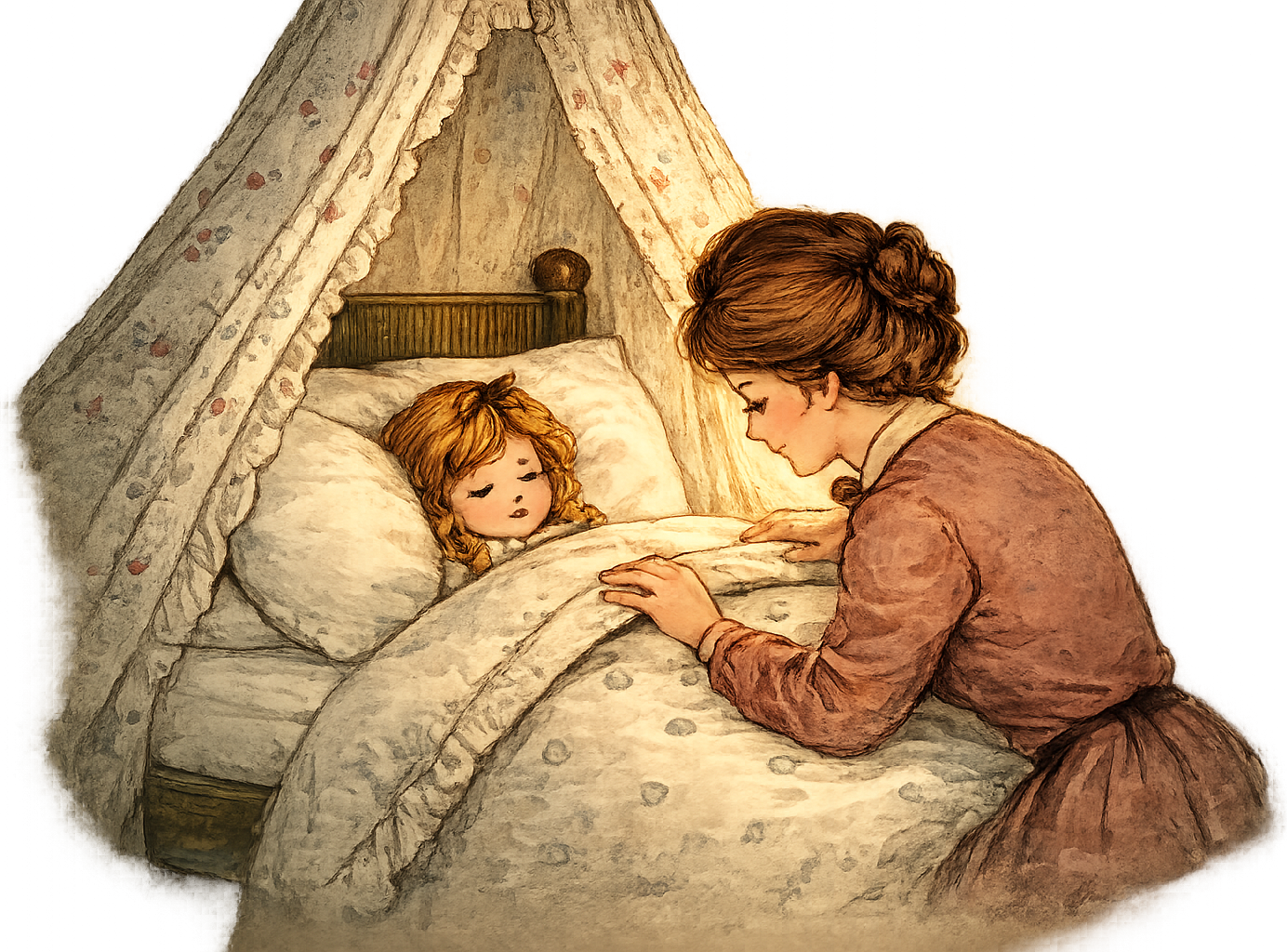
Márienna
Semin i·arilissi olori i·nitya caimanyasse.
Have-I sweetest dreams the little bed-my-in.
(l have the sweetest dreams in my little bed.)
Merin i samil márienna, amya.
Hope-I that have-you (polite) (a) towards/to what is good, mommy.
(Good night, Mamma.)
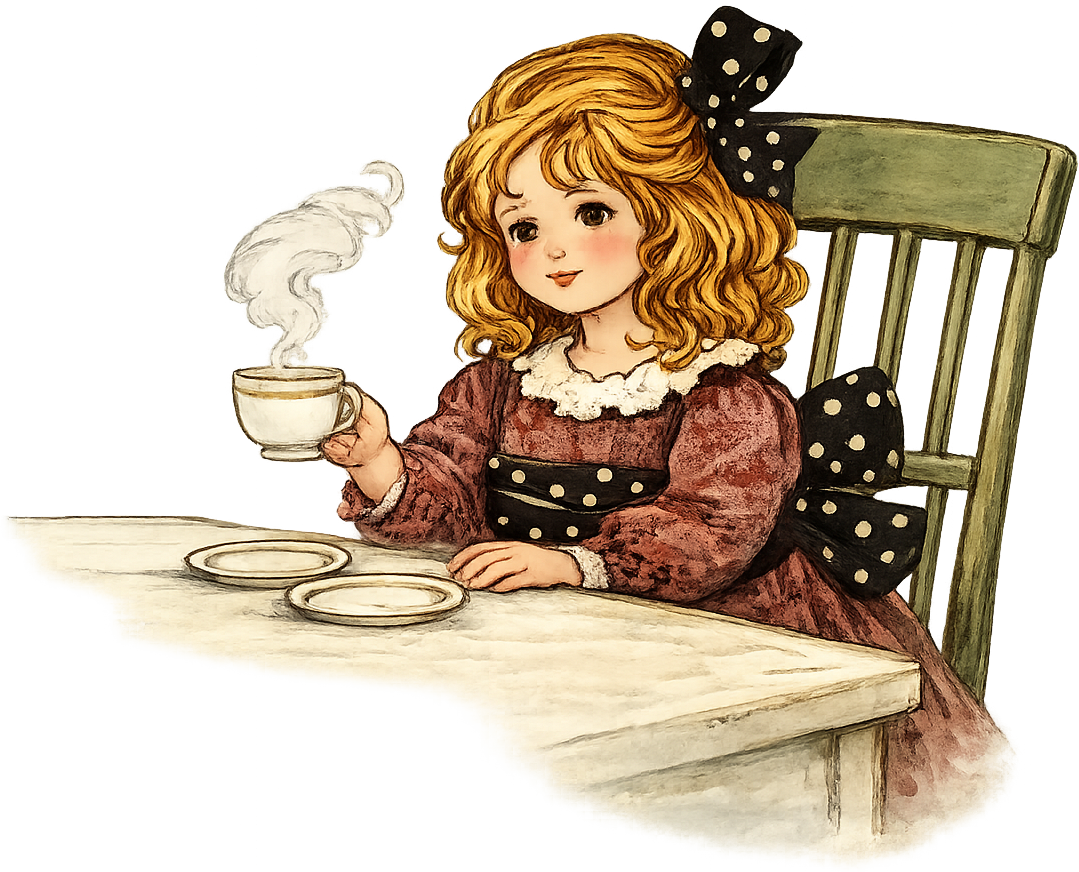
Yullassinya
Úrin yullassinya ná.
(Blazing) hot tea-my is.
(My tea is too hot.)
Ú-polin yules.
Not-(physically) able-I to drink-it.
(I cannot drink it.)
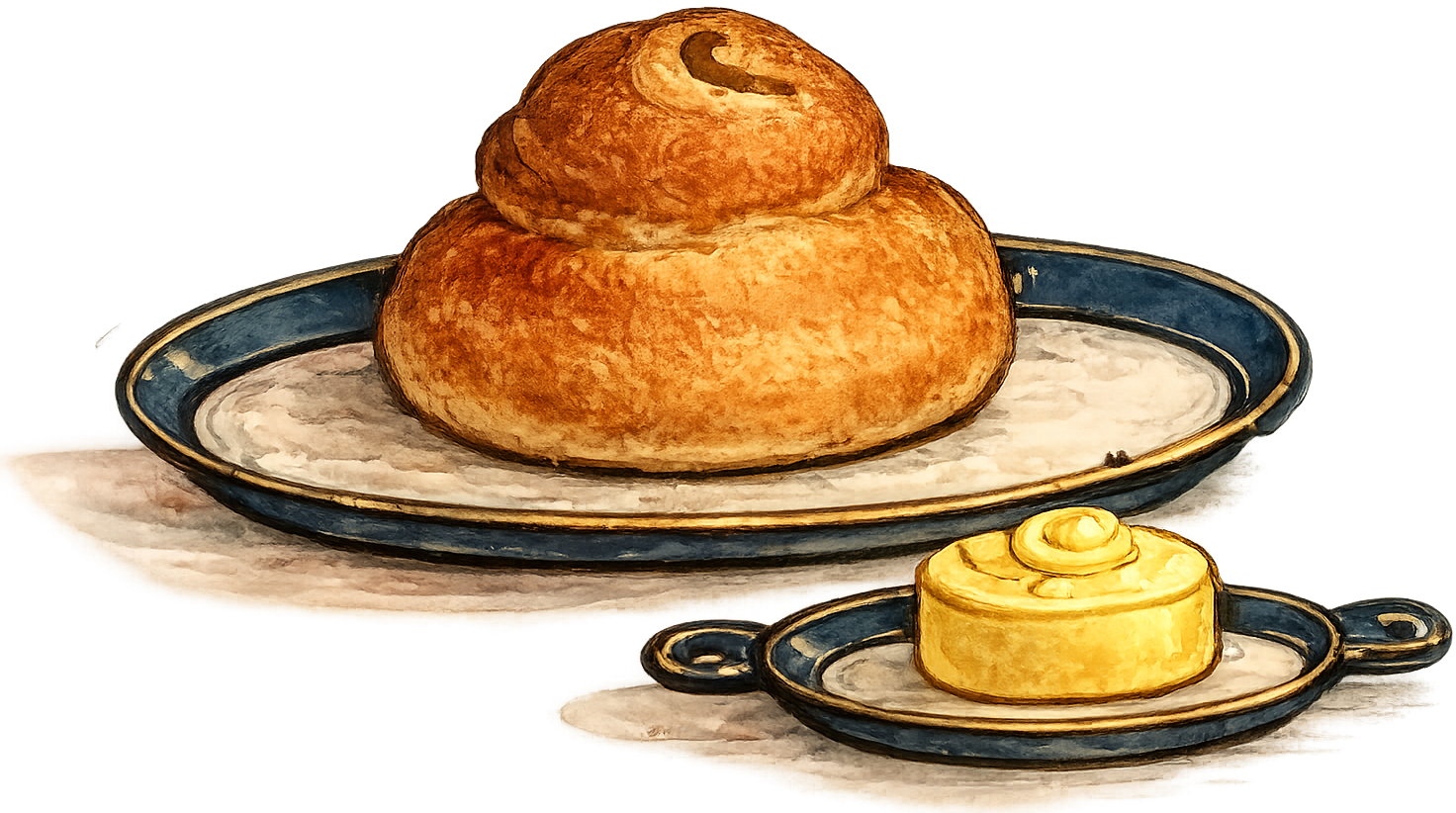
i·Massa ar i·manya
Riþá i ú-hwatityes.
Mind that not-spill-you (familiar)-it.
(Mind that you do not spill it.)
Samá massali ar nihta manyo.
Have some bread and (a) small piece butter-of.
(Take some bread and a little butter.)
Mailengaite nette
Amátietye arinwat?
Have eaten-(Perfect)-you (familiar) breakfast?
(Have you had breakfast?)
Ná, amil.
Yes, mother.
(Yes, mother.)
Tá á tulya nyen parmatya.
Then bring me-to book-your (familiar).
(Then bring me your book.)
i·Parma
Parmahentatye mai.
Read-you (familiar) well
(You read very well.)
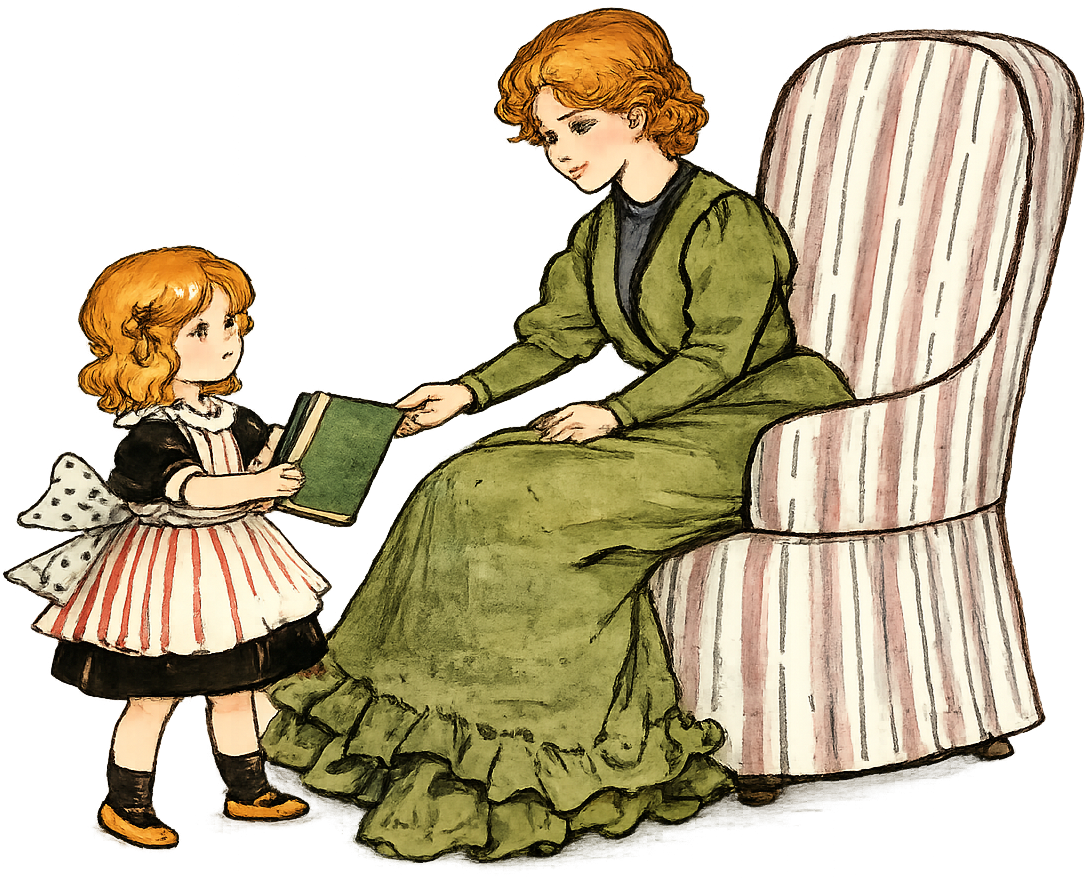
Mára nette natye.
Good (little) girl are-you (familiar).
(You are a good little girl.)
i·Nitya hína
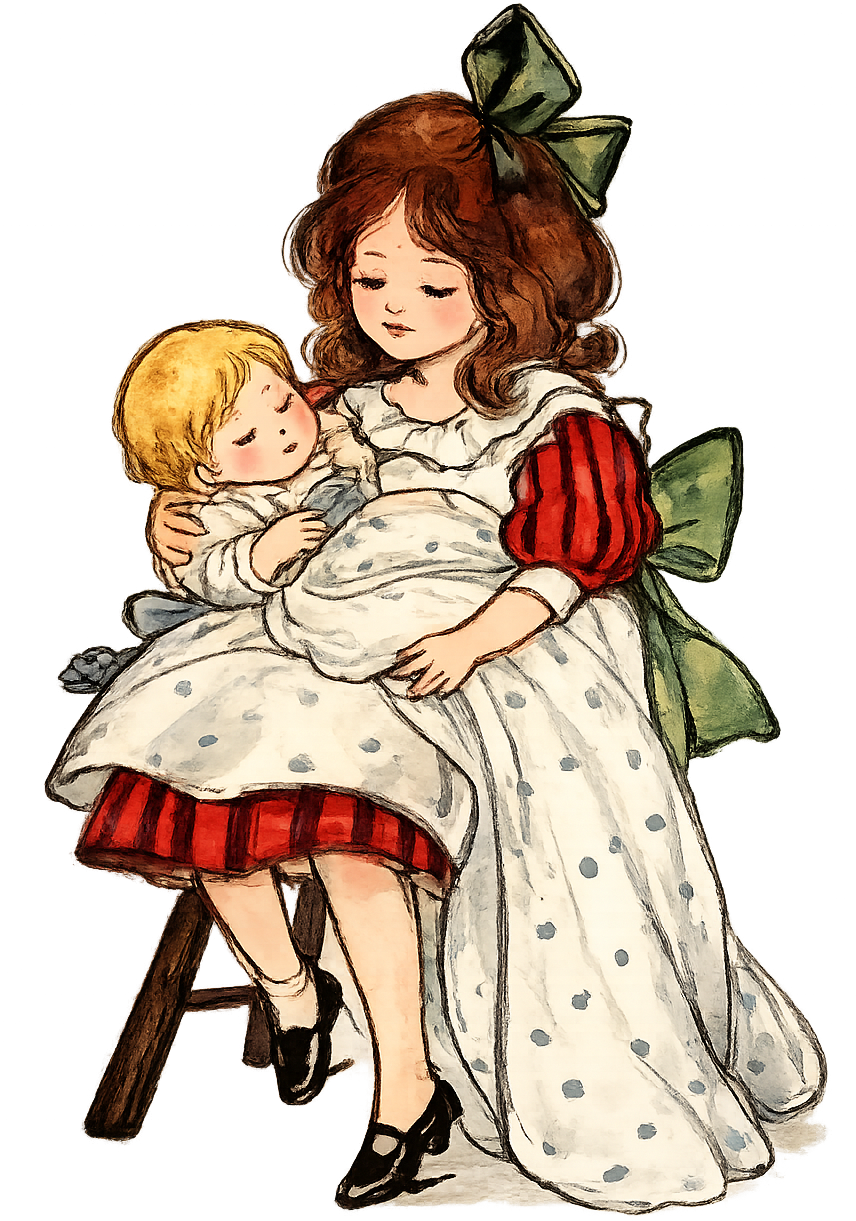
Nitya hánonya lórua.
Little brother-my falling asleep-is.
(My little brother is going to sleep.)
Níca nás.
Small is-he.
(He is quite small.)
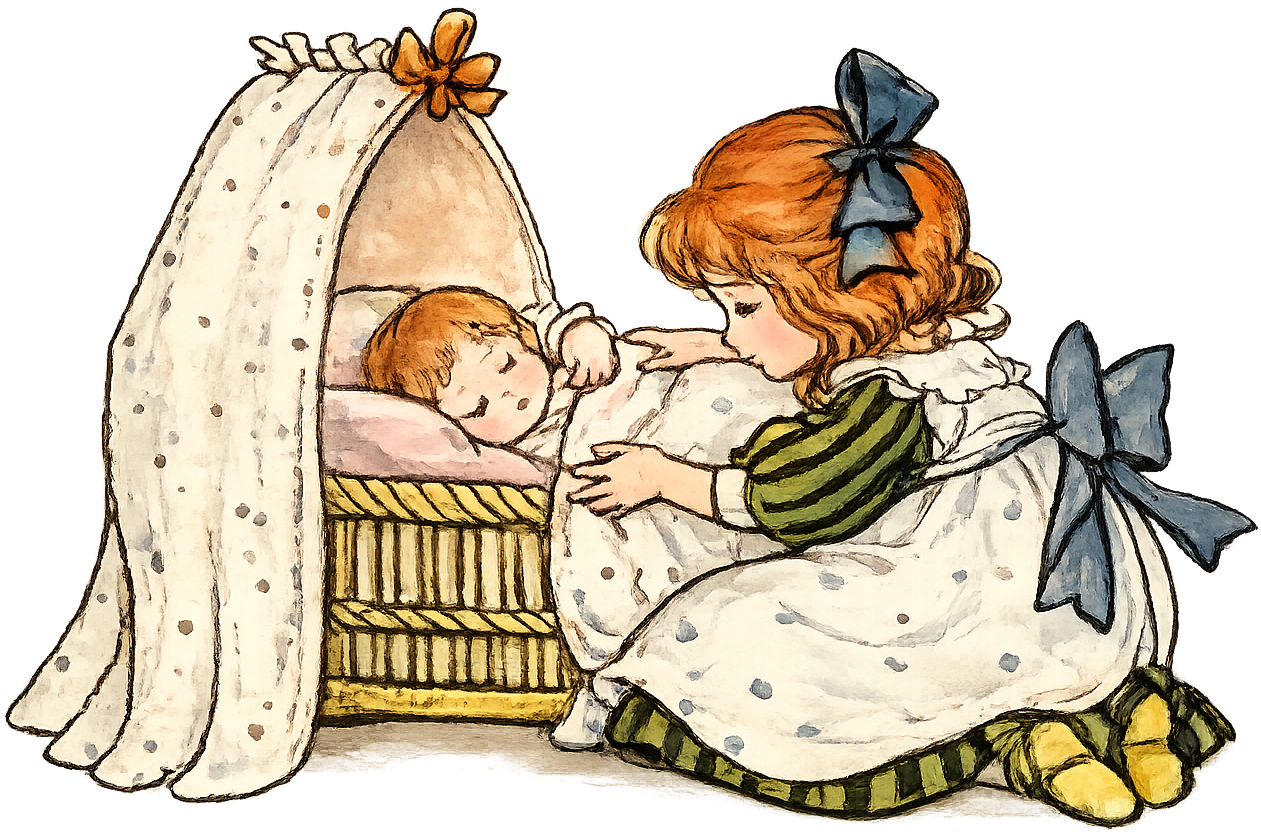
Samis caimince1 yó fáne telmi.
Has-(he) (a) crib (together) with (a) white coverings.
(He has a cradle with white curtains.)
Lorisse
Mirya nás mal ú-polis pahta.
Beautiful is-he but not-(physically) able-(he) to speak.
(He is very pretty; but he cannot speak.)
Tyasin tires lan lóras!
Like-I to watch-him while sleeping-is-(he)!
(I do like watching him when he is asleep!)
i·Lopoldi
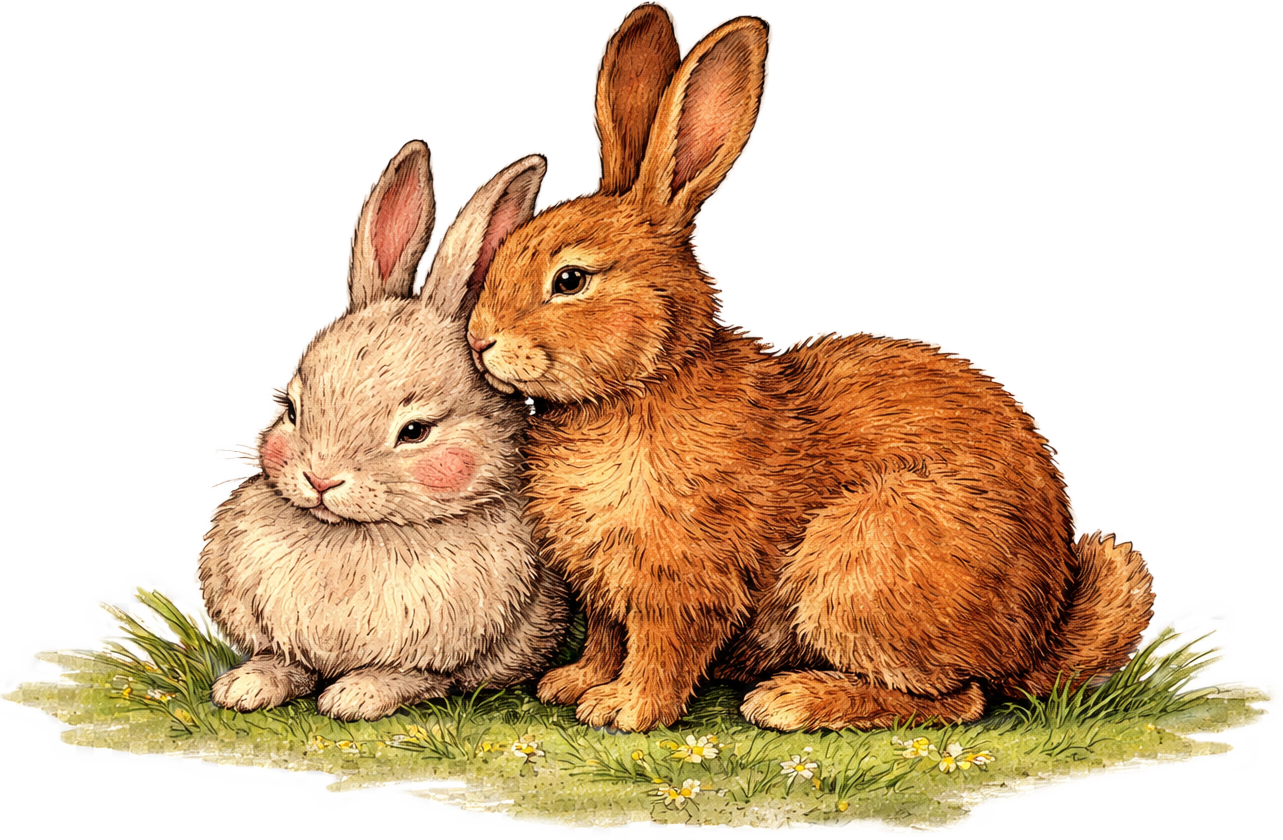
Cenitye lopoldelvar?
See-you (familiar) rabbits-our (exclusive)?
(Have you seen our rabbits?)
Á tule ar á cenet!
Come and see-them!
(Come and see them.)
Fána ó mori tixi er lopolde ná.
White (together) with spots black one rabbit is.
(One is white with black spots.)
Mule ar caras
Ar ilya mista i·hyana lopolde ná.
And all grey the other rabbit is.
(And the other is all grey.)
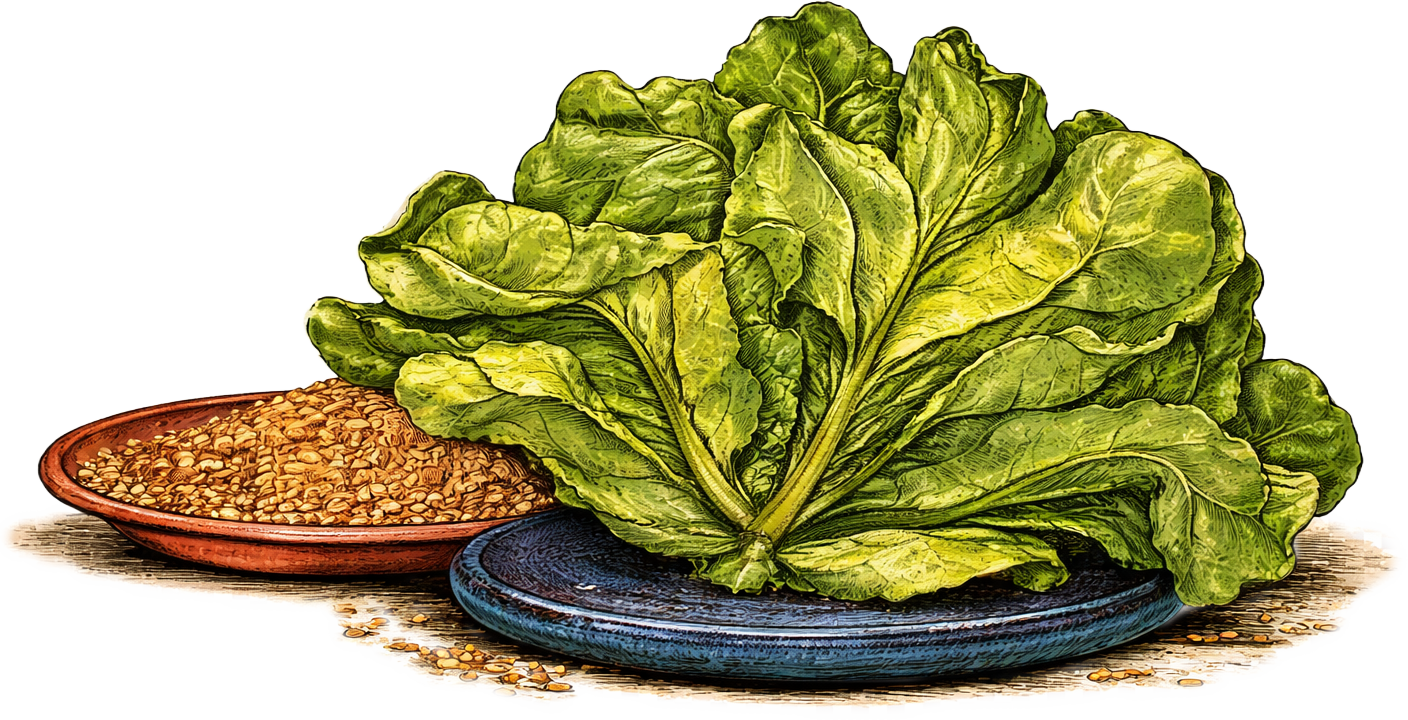
Matit mule ar caras.
Eat-they wheat and greenness.
(They eat bran and lettuces.)
Á tire calilu hendettar ar andu hlarettar.
Look at eyes shining-(dual) eyes-(dual)-their-(plural) and long-(dual) ears-(dual)-their-(plural)!
(Look at their shining eyes and long ears.)
i·Lante
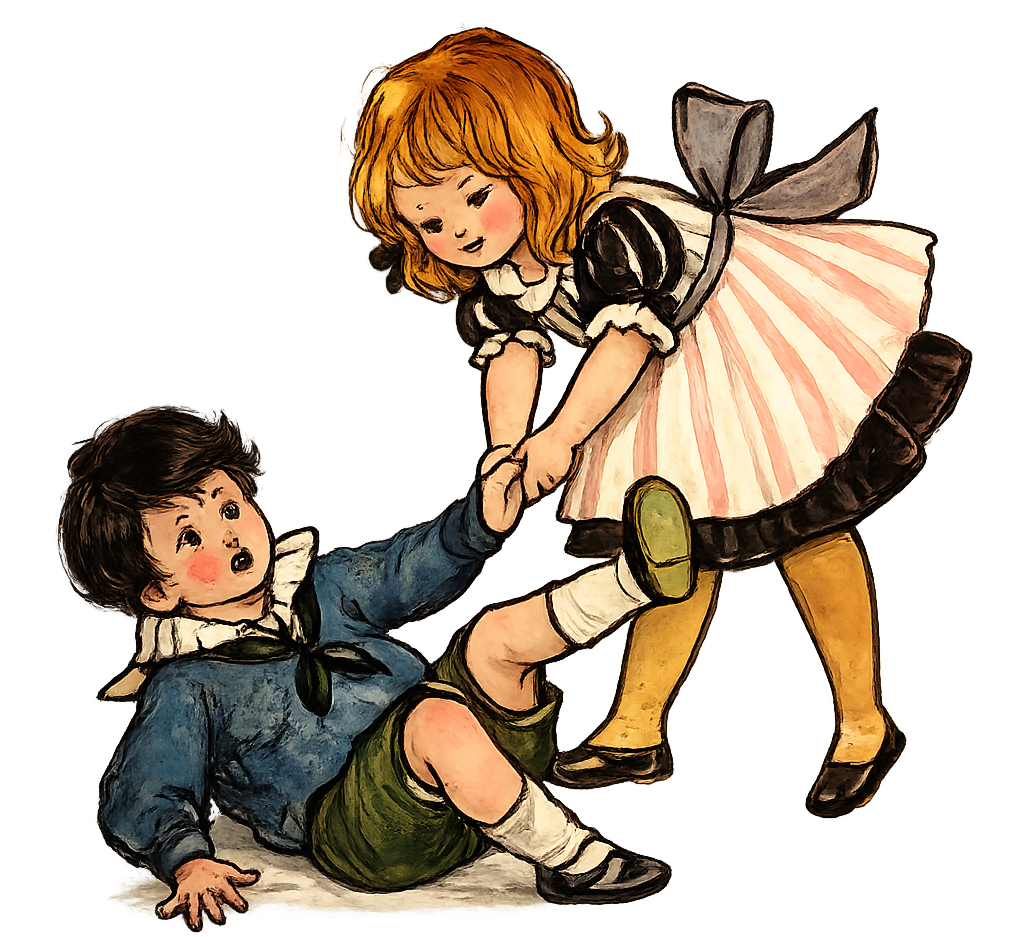
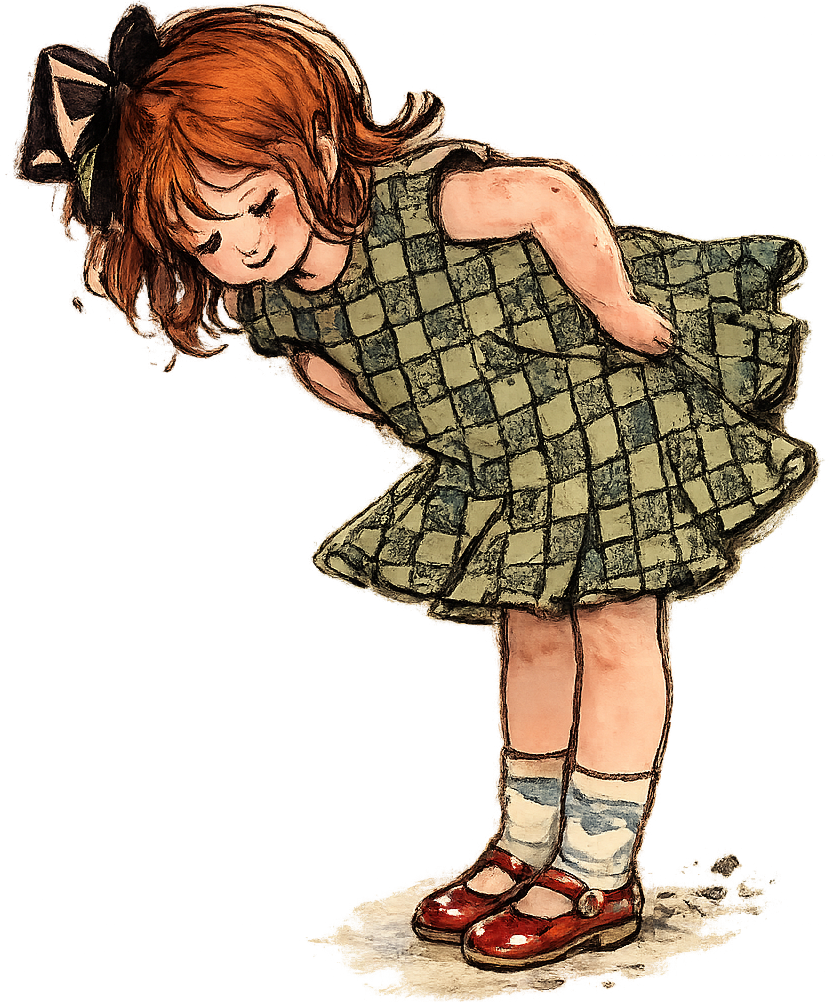
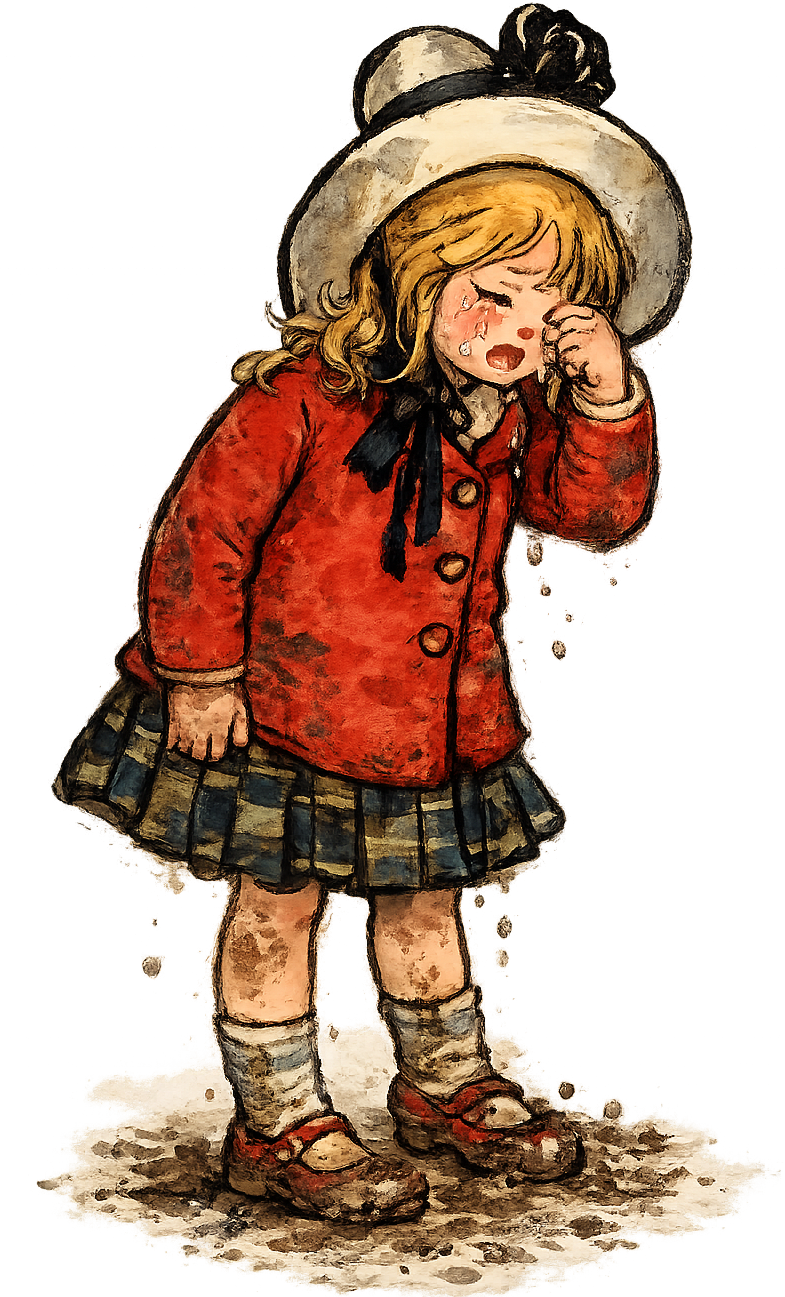
A! Alanantien ar asácien imni.
Oh! Fallen-have-I and hurt-have-I myself.
(Oh! I have fallen down and I have hurt myself.)
Felin naire tyen nitya seldo! Alyauvanye tye tare.
Feel-I sorrow you-for boy little! Help-will-I you (familiar) to stand.
(Poor little boy! I will pick you up.)
Asácien carinya, mánya, telcunya, almonya.
Have-hurt-I hand-my, hand-my, leg-my, shoulder-my.
(I have hurt my head, my hand, my leg, and my shoulder.)
Paluhtasse
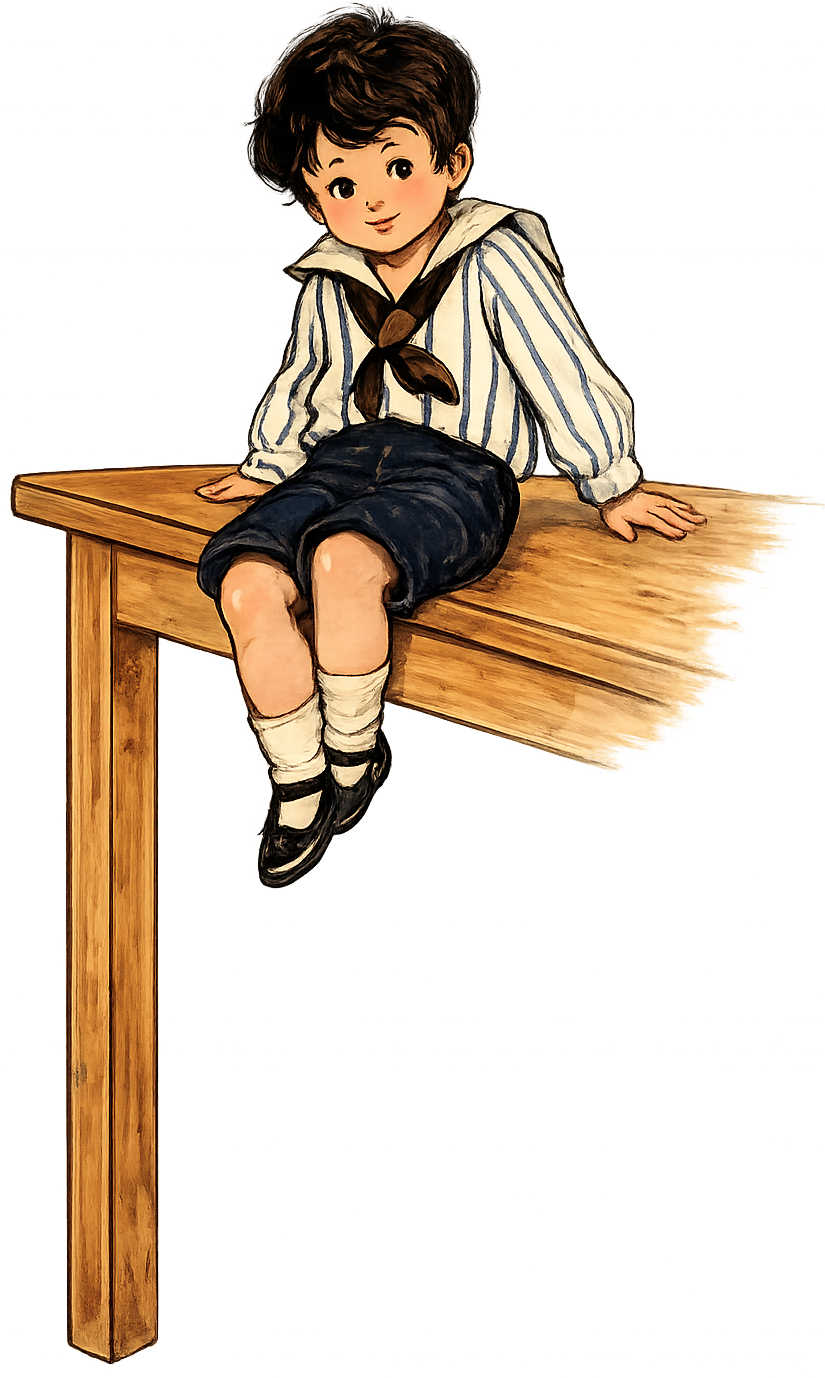
A! Felin arihlaiwa.
Oh! Feel-I very sick.
(Oh! I feel very ill.)
Tá, maro rentetye paluhtasse qui ú-mernetye lanta.
Then, why climbed-you (familiar) on the table if not-wanted-you (familiar) to fall?
(But then, why did you climb on the table if you did not want to fall?)
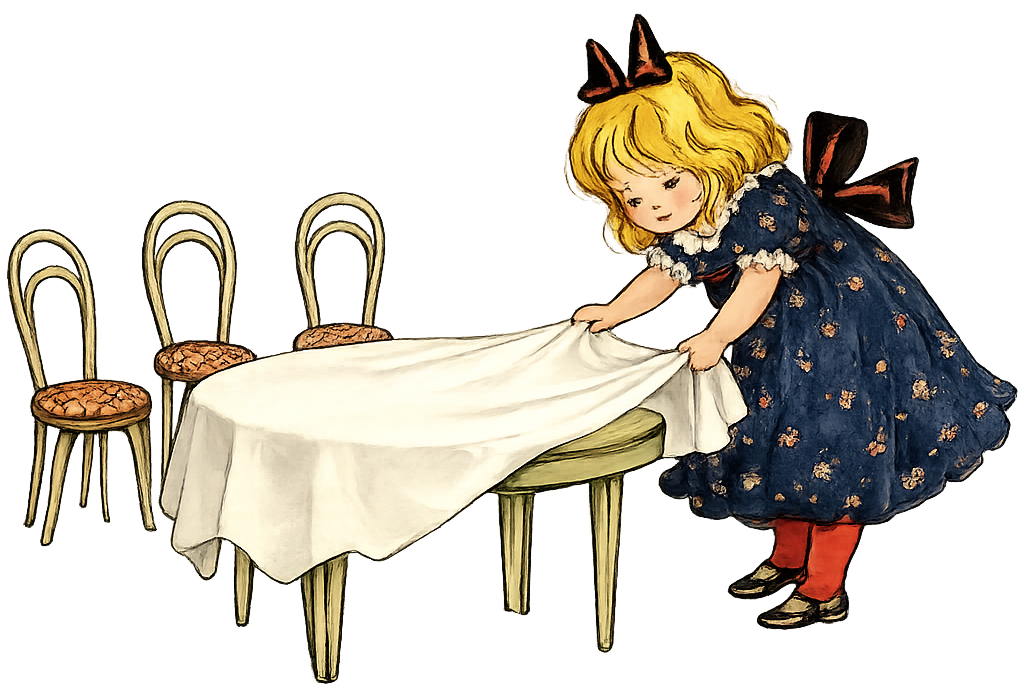
i·Toli
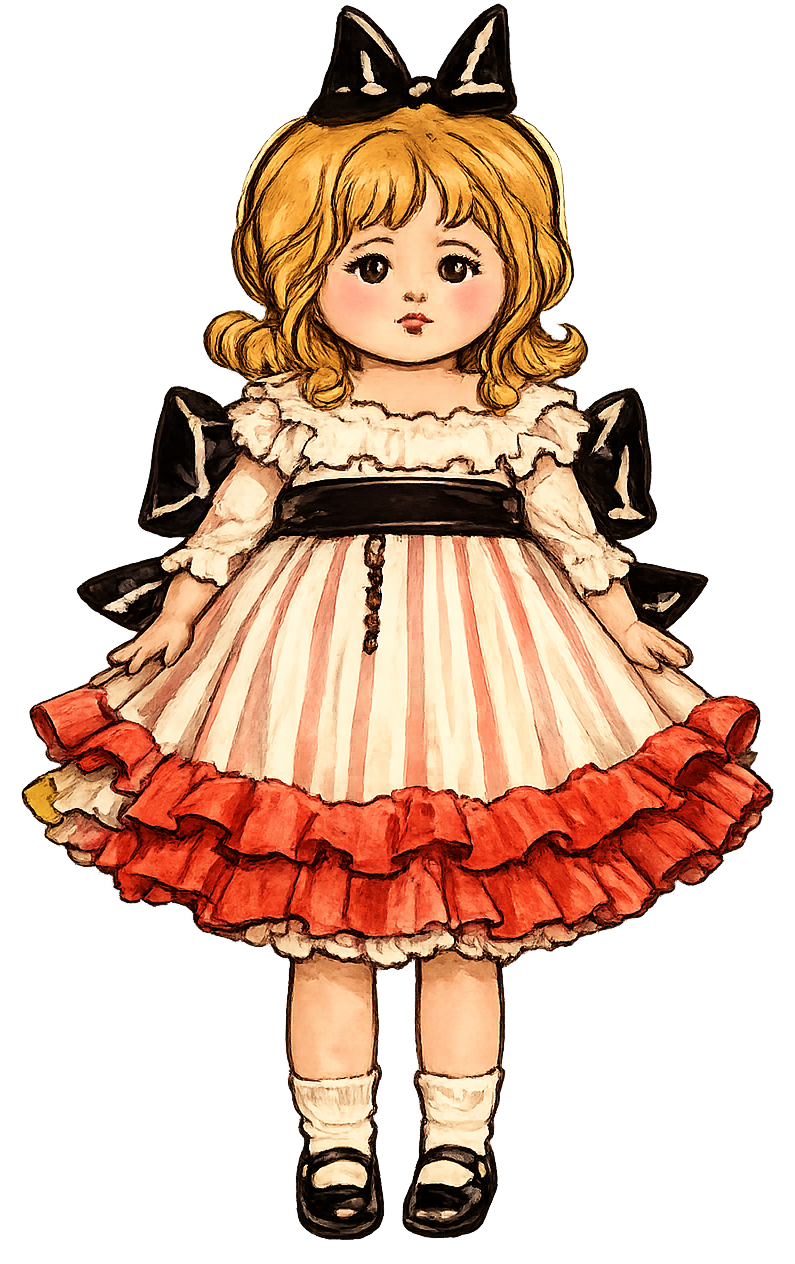
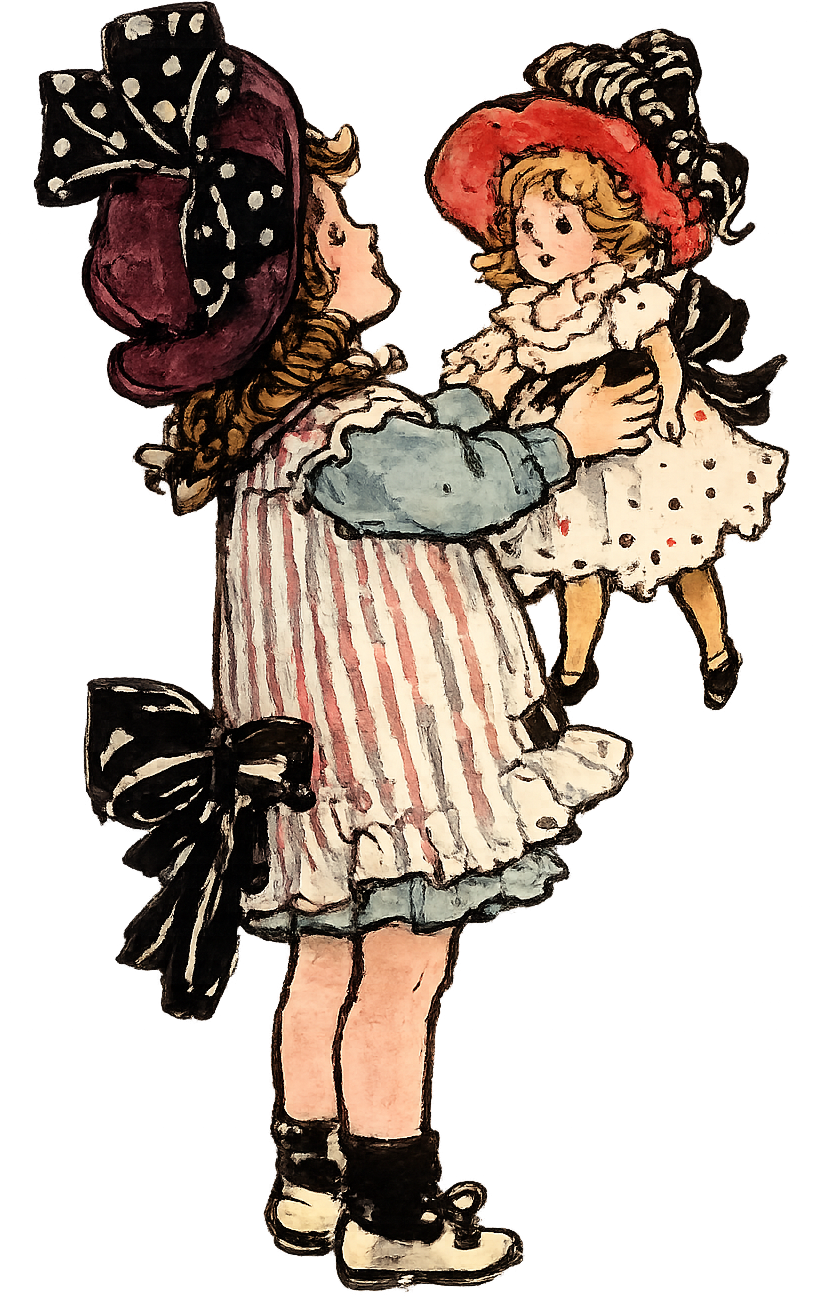
Tolinya hora naþali si andúne.
Doll-my waits for guests the this evening.
(My doll expects visitors this evening.)
Moa ven ferya i·latsi.
Must us-for (exclusive) to make ready the rooms.
(We must get the rooms ready.)
Panno i·chedhy, a sesto e·lann boe hardh/bo e·hardh.
Arrange the chairs, and put the cloth on the table.
(Arrange the chairs, and put the cloth on the table.)
Á tulya i·paldar ar i·calampar.
Bring the plates and the spoons.
(Bring; the plates and the spoons.)
Tupin i·paluhta
Samuvalme lissimbassi ilíte.
Have-will-we (exclusive) bread sweet of all sorts.
(We shall have cakes of all sorts.)
Ar yú masta, piohimmar, quirme.
And also bread, jams, (and) cream.
(And also bread, jams and cream.)
Ar nai palda masto ó manya
And maybe (a) plate bread-of (together) with butter.
(And perhaps a plate of bread-and-butter.)
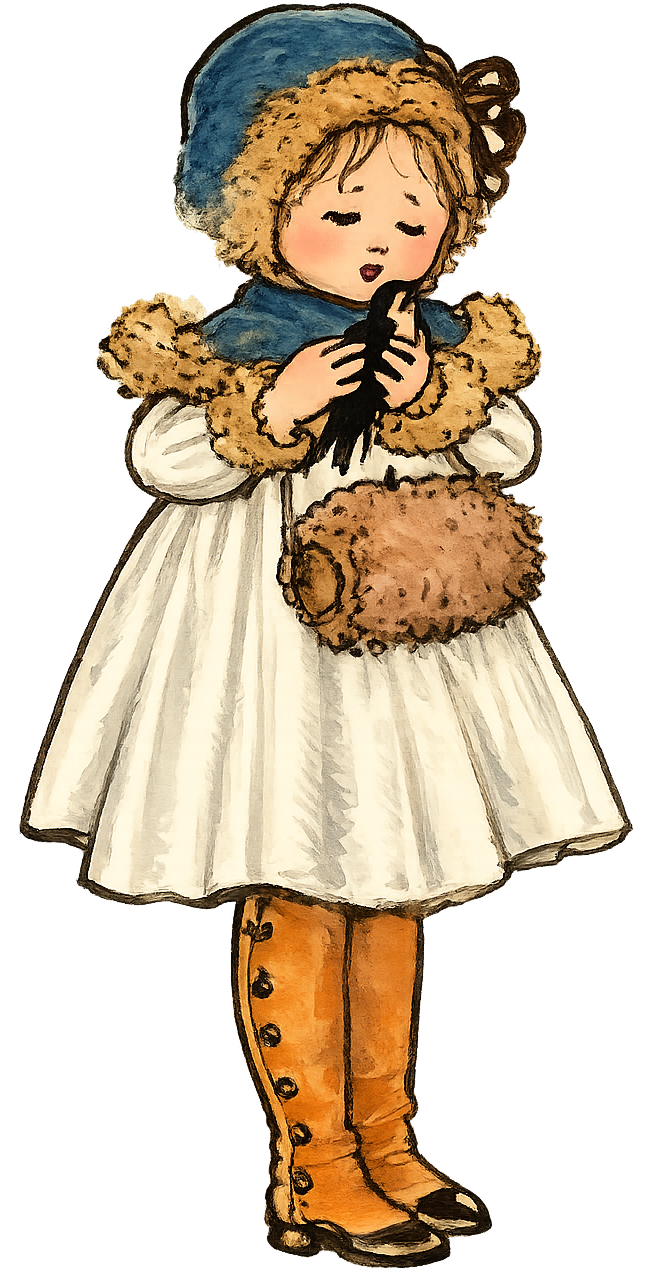
i·Nitya aiwe
Hirin ú-mai nitya aiwe.
Found-I not-well little bird.
(I have found a poor little bird.)
Perfirin namin nás.
Half-dead judge-I is-it.
(I believe it is half dead.)
Cainunes i·hristilesse. Ú-polles mene rámaryat latwa ú-polles lire.
Lay down-it the snow-on. Not-(physically) able-it to go wings-(both)-its or not-(physically) able-it to sing.
(It lay on the snow. It could neither move its wings nor sing.)
Ar i·miue cennes. tulles ara se, ar evir mernes mates.
And the cat saw-it. Came-she beside it, and wanted-she to eat-it.
(And the cat saw it. She came near it, and wanted to eat it.)
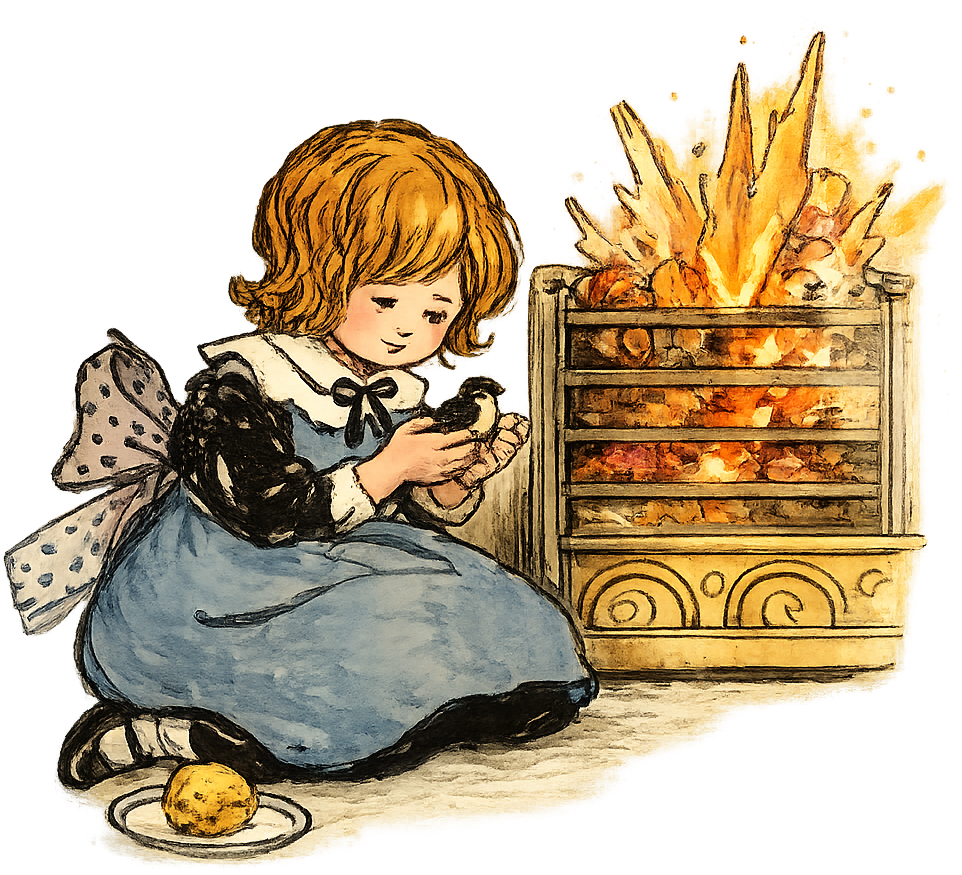
Opo ruine
Mal ruhtanenyes au, ar nornen lintave ar lepenten i·ú-mai nitya aiwe.
But frightend-I-her away, and ran-I quickly and picked up-I the little not-well.
(But I frightened her away, and I ran quickly and picked up the poor little bird.)
Laucatanenyes ara i·ruine.
Heat up-I it beside the fire.
(I will warm it by the fire.)
Ar tá antauvanyes nihtali masto, ar lauvanyes vile au.
And then give-will-I-it pieces-some (of) bread, allow-will-I-it to fly away.
(And then I will give it some crumbs of bread, and let it fly away.)
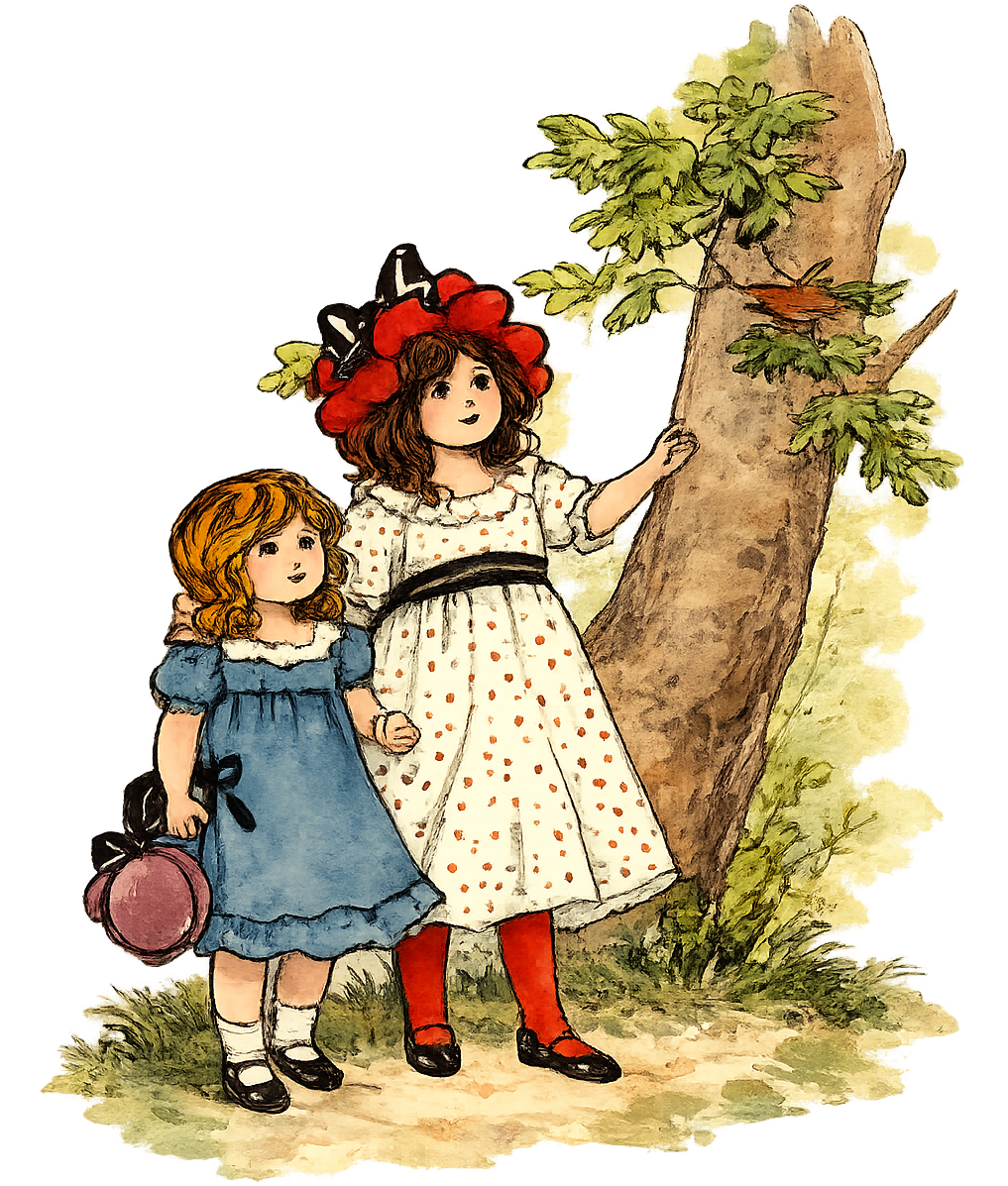
i·Tauressen
Á tula ó ni i·tauressen.
Come (together) with me the woods-in.
(Come with me into the wood.)
Arhoa i·aldar nár.
Very big the trees are.
(The trees are so big.)
Á lasta, lómelinde linda imíca i·lassi.
Listen, (a) nightingale sings among the leaves.
(Listen, a nightingale is singing amid the leaves.)
i·Peccuvo
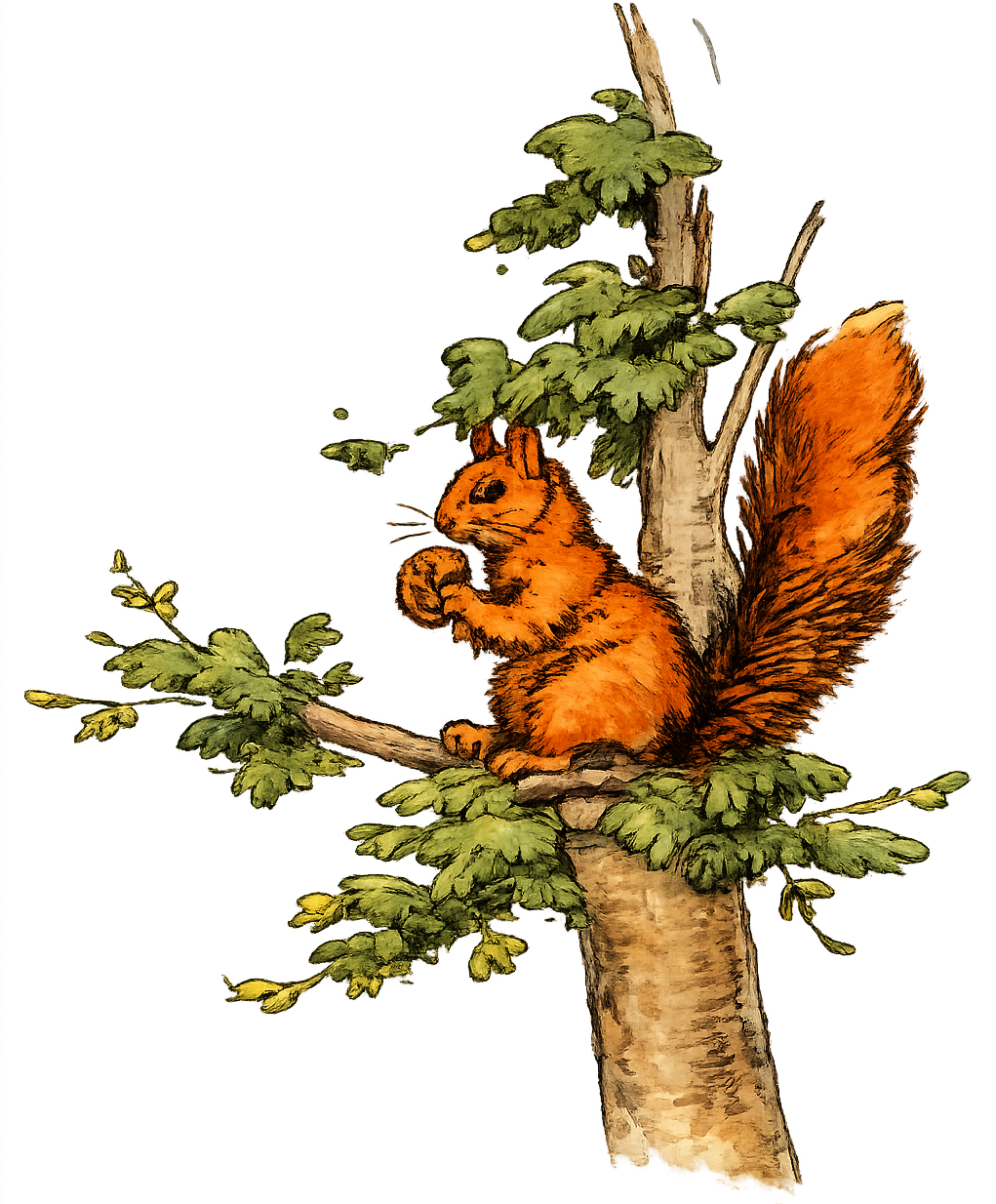
Ar tasse pccuvo cápa olballo olbanna.
And (a) squirrel there is jumping from branch to branch.
(And there is a squirrel jumping from bough to bough.)
Ar vin cenne lopolde norila imíca i·tussar.
And just now saw-I (a) rabbit running among the bushes.
(And I have just seen a hare running among the bushes.)
i·Tauressen
Hlaritye quenta i·nícu onnato, i pentaina i·tauressen nár.
Hear-you (familiar) story the little-(dual) children-(dual)-of, who lost the woods-in were-(plural)?
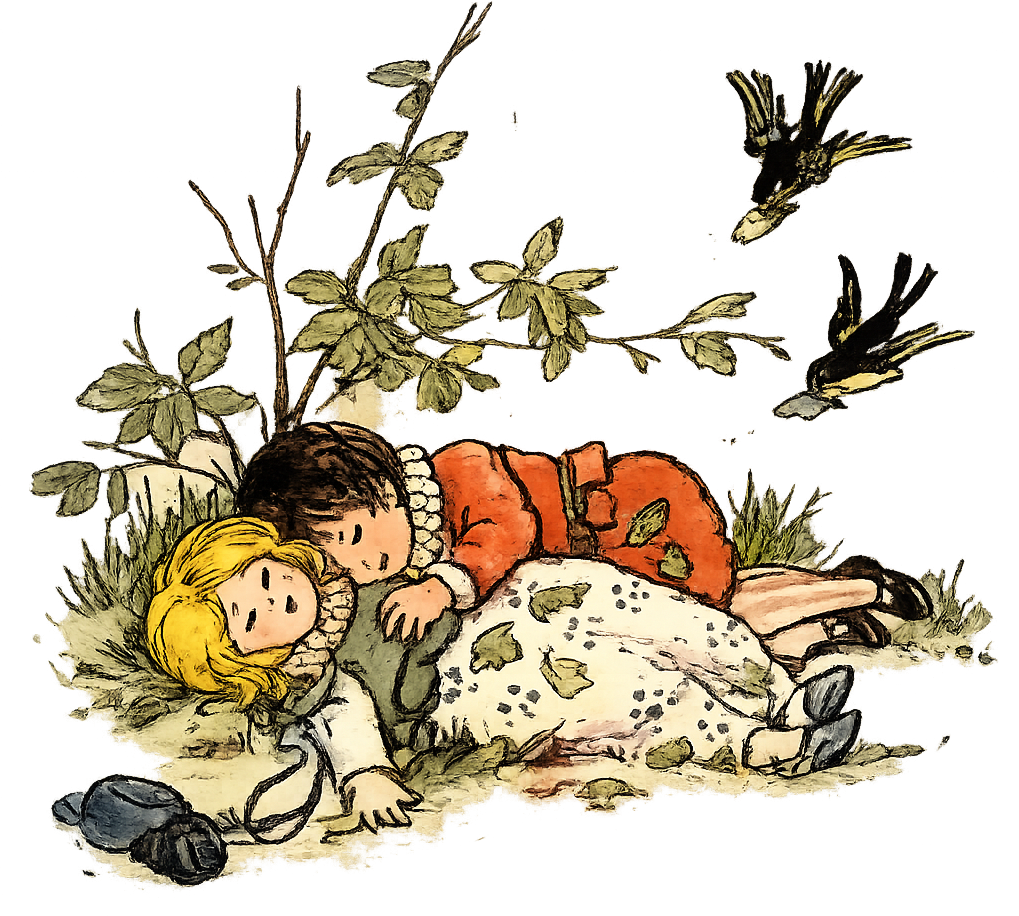
(Have you heard the story of the two little children, who were lost in the woods?)
Mantet i·hráve yávi.
Ate-they the wild fruits.
(They ate wild fruits.)
Ar teldave cainunet nu alda.
And finally lay down-they under (a) tree.
(And at last they lay down under a tree.)
Ar i·carniambori tulyaner lassi.
And the robins brought-(plural) leaves.
(And the red-breasts brought leaves.)
i·Naireat onnat
Ar tumpet i·naireat nícu onnat.
And covered-they the children little sad.
(And coveredup the poor little ones.)
Merin allume oluvan pentaina.
Hope-I never become-will-I lost.
(I hope I shall never get lost.)
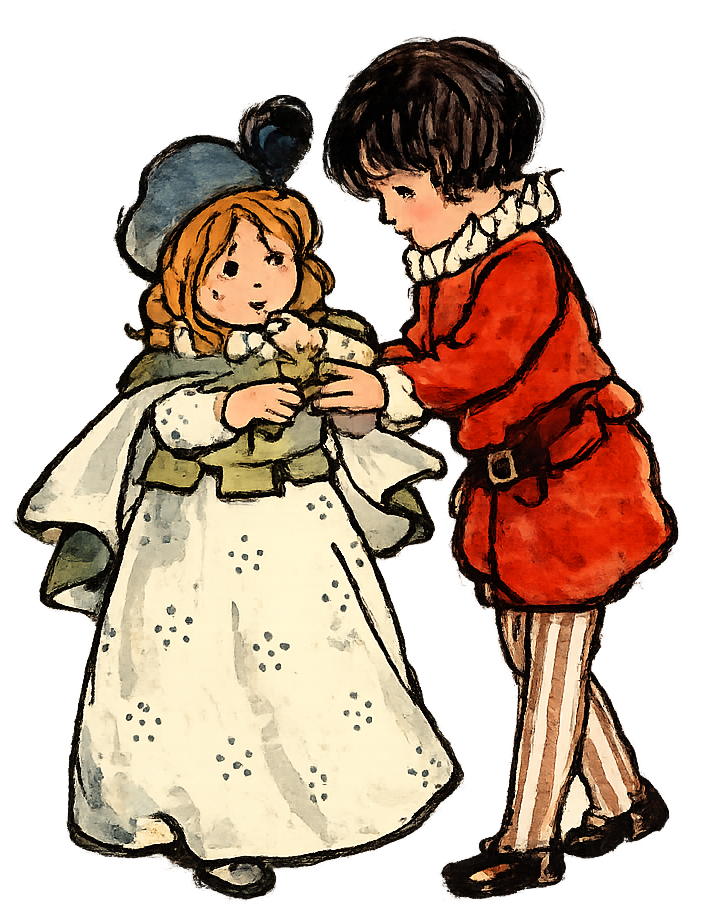
Á tula, nanwenilmë marenna sí!
Come, go back-we (exclusive) to home now!
(Let us go back home at once!)
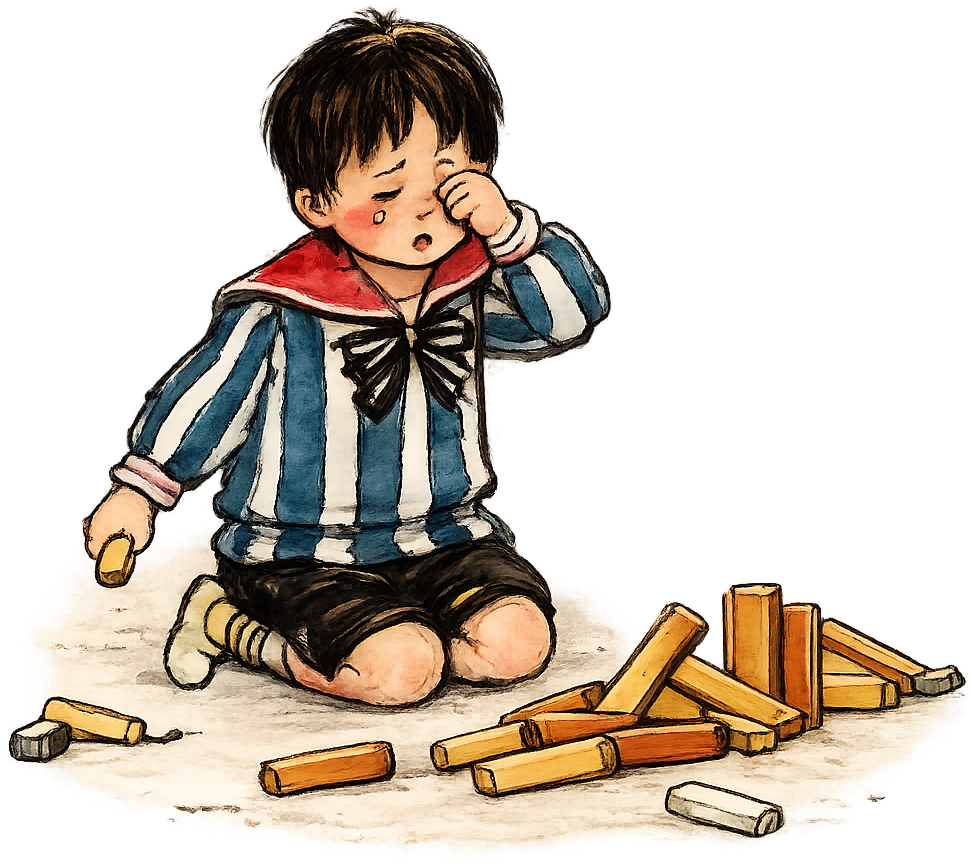
i·nitya rocconya lanta
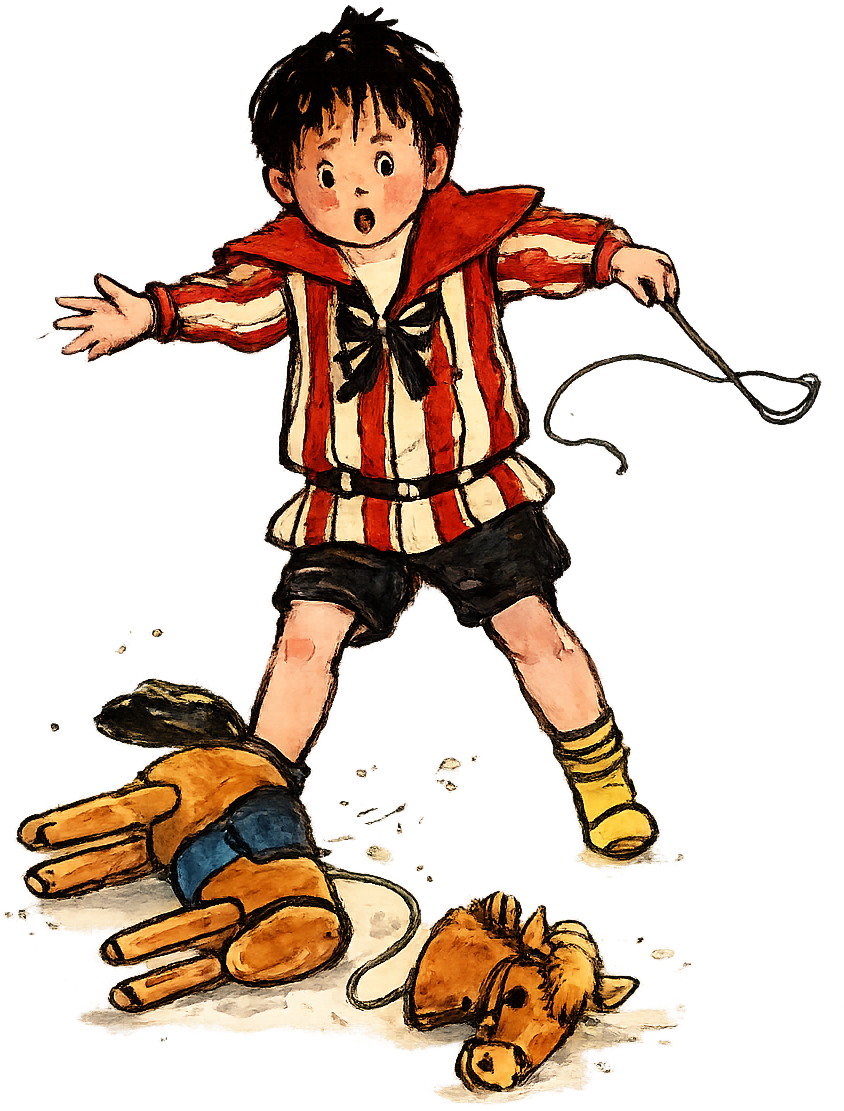
Racine illi i·tyalmar nár. Si rúcima ná!
Broken all the toys my are. This dreadful is!
(My toys are all broken. It is dreadful!)
Ú-tyarnen sina.
Not-caused-I this.
(It is not my fault.)
Aphon e·roch nín, a dannast.
Touch-I the horse my, and falls-(he).
(I touch my horse, and he falls.)
Tirin e·duil nín a dannast laew, a rhâg e·dholl dín.
Look-I the doll my and falls-(she) frequent, and breaks the head her.
(I look at my doll and very often she falls too, and breaks her head.)
in·Edaib nín dhannar ui
e·‘Wilbog12 nín ‘wîl gwa a chinia vi ‘aladh.
The ballon my flies away and sticks in tree.
(My balloon flies away and sticks in a tree.)
Ah in·edaib nín dhannar ui.
And the buildings my fall ever.
(And my buildings always tumble down.)
Se ú-alwed dhae.
This (is) not-fortunate very.
(It really is most unfortunate.)
e·‘Rithwen13
e·‘Rithwen13 nín odunc nin n’ idh·raith.
The nanny my brought me to the streets.
(My nurse took me this morning into the streets.)
i·Lhoe velig ú-dherir.
The sounds great not-stop-they.
(There was a great noise all the time.)
Egínen dhregyl, resg, neryd14 .
Saw-I carts, wagons, cars.
(I saw carts, carriages, and cabs.)
e·Duil vain nín
Dae vain dae i·mbengaith.
Very beautiful (is) the markets.
(The shops are very pretty.)
Ach mbangath Teliennaid11 , sa rovaer athar il i·mbengaith!
But market (of) toys, that most-good beyond all the markets!
(But the toy-shop, that is the best of all!)
Ah e·‘rithwen13 nín echir a bachón15 nin e·duil8 rovain ui.
And the nanny my found and bought me the doll most-beautiful ever.
(And my nurse bought me one of the most beautiful dolls to be found.)
e·‘Aear
A! Daer e·‘aear!
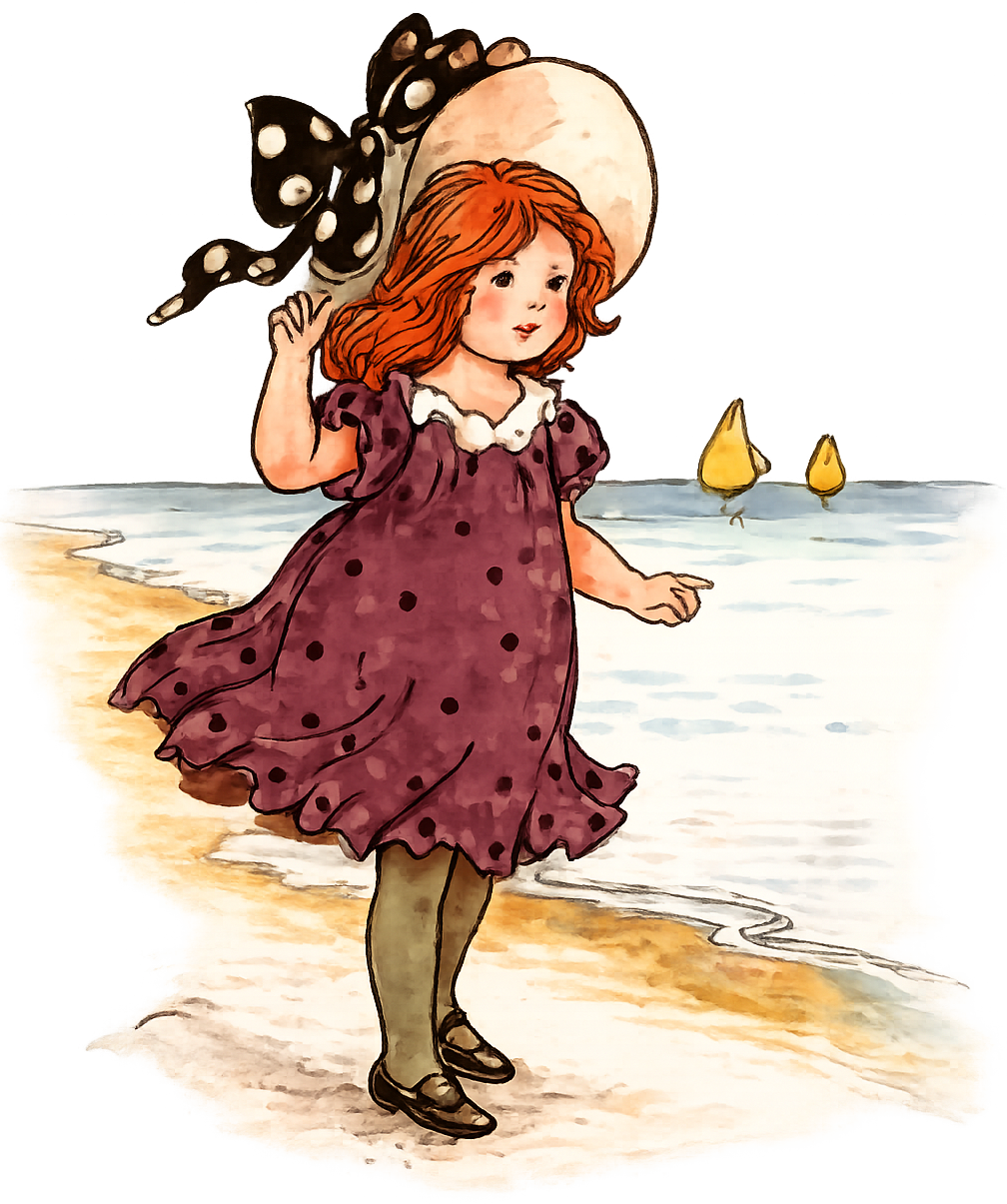
Oh! Big (is) the sea!
(How big the sea is!)
Mi lui laew luin e·‘aear, egor chalen, egor chithren.
In occasions many blue (is) the sea, or green, or grey.
(It is sometimes blue, sometimes green, and sometimes grey.)
Merin olad girion.
Like-I to become sailor.
(I should very much like to be a sailor.)
e·Duil vain nín
Ach ú-verin e·gair nín olad rangen boe falas/bo e·falas.
But not-like-I the ship my to become broken on the shore.
(But I should not like to be shipwrecked.)
Ce dharthathof aen si boe falas/bo e·falas.
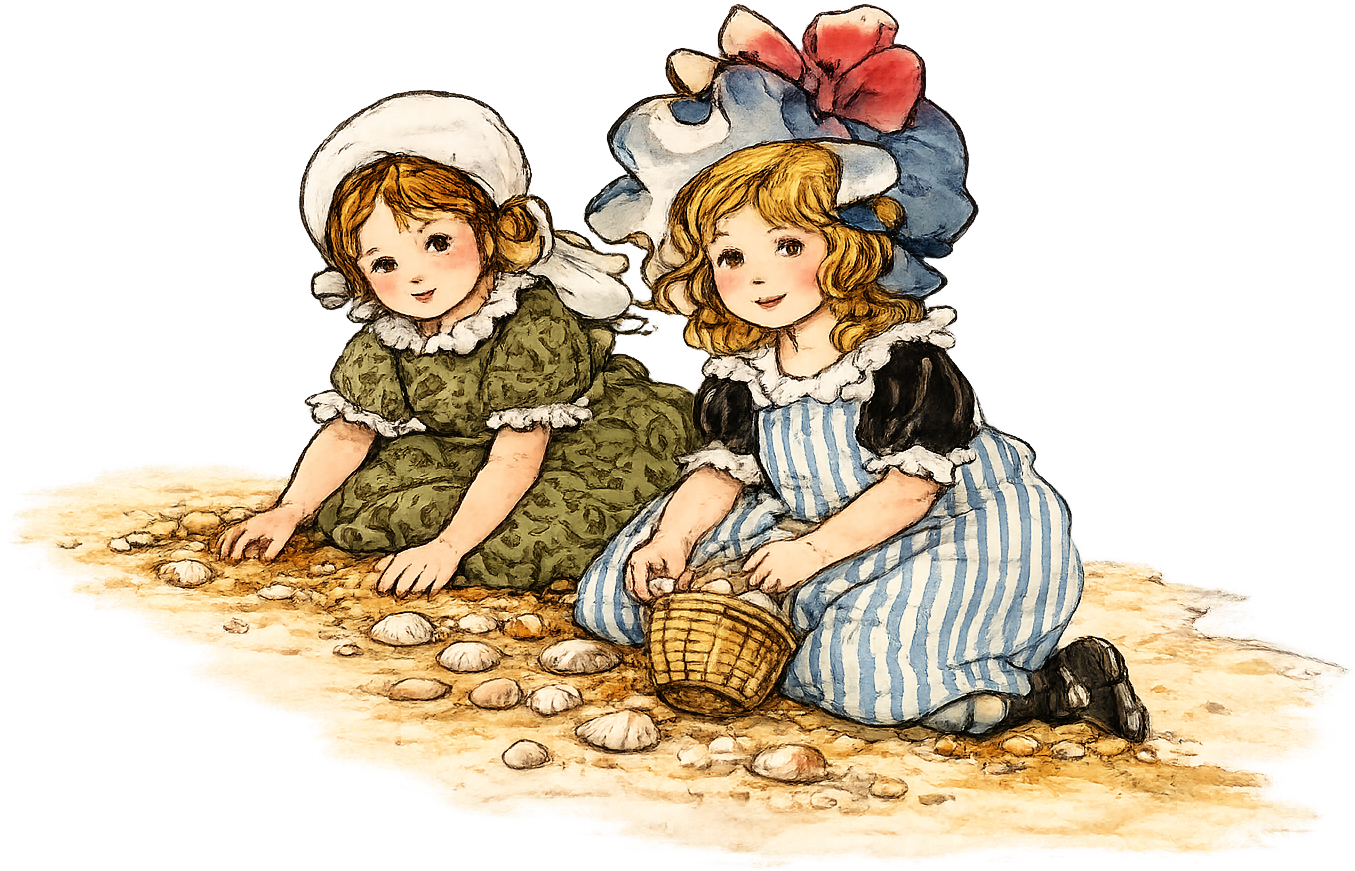
Maybe stay-will-we (exclusive) should here on the beach.
(Perhaps it would be better to stay here on the beach.)
A lheutho helf vain, helf nimgerain16 , helf gyrn.
And pick shells beautiful, shells pink, shells round.
(And pick up pretty shells, pink and round shells.)
e·Chîn vedir in·yrf
Il chîn vevir yrf.
All children like apples.
(All children like apples.)
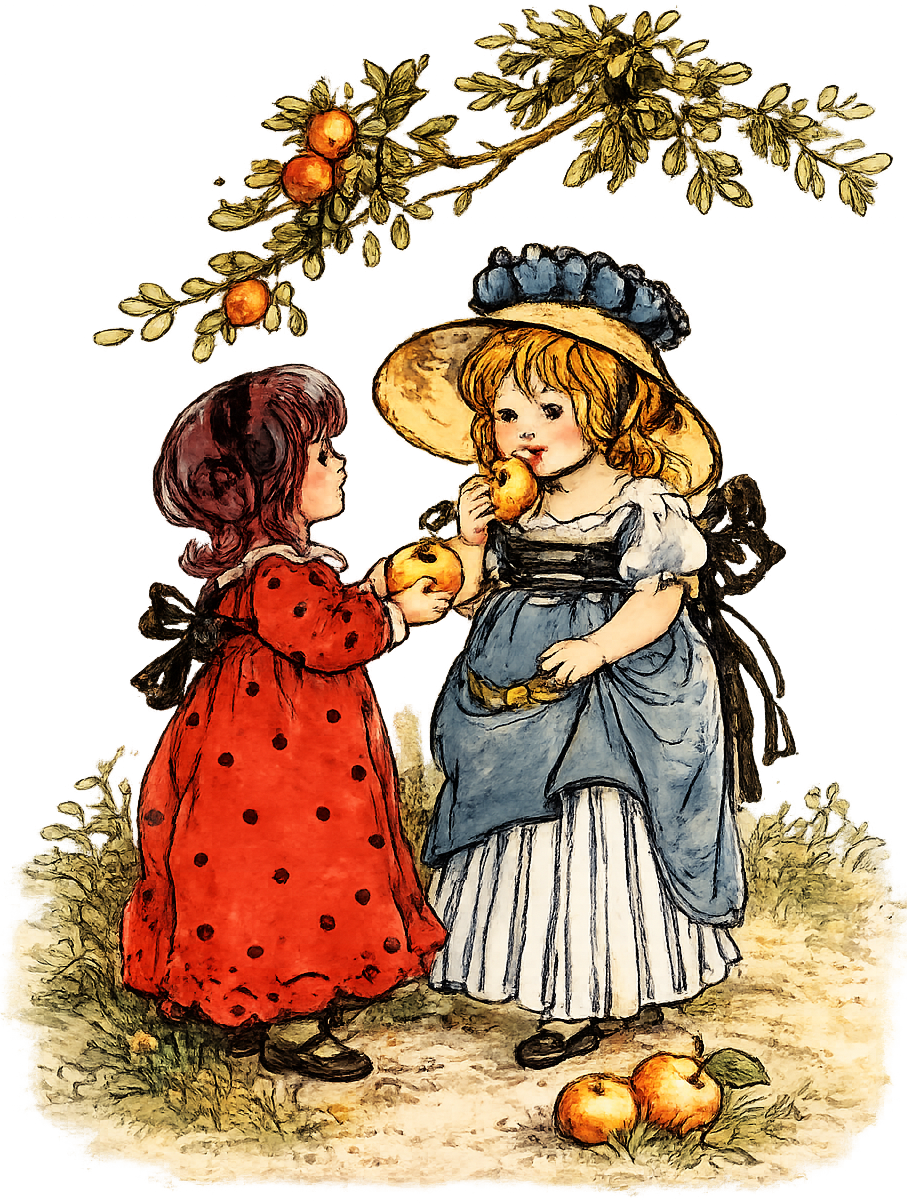
Galthon dhae ‘aladh yrf vin hant/vi e·hant vín.
Be glad-I there is tree apple in the tree ours (exclusive).
(I am very glad there is an apple tree in our garden.)
Bain e·‘aladh vin ethuil/vi en·ethuil.
Beautiful the tree in the spring.
(The tree is so pretty in the spring.)
Leuthof in·ylf
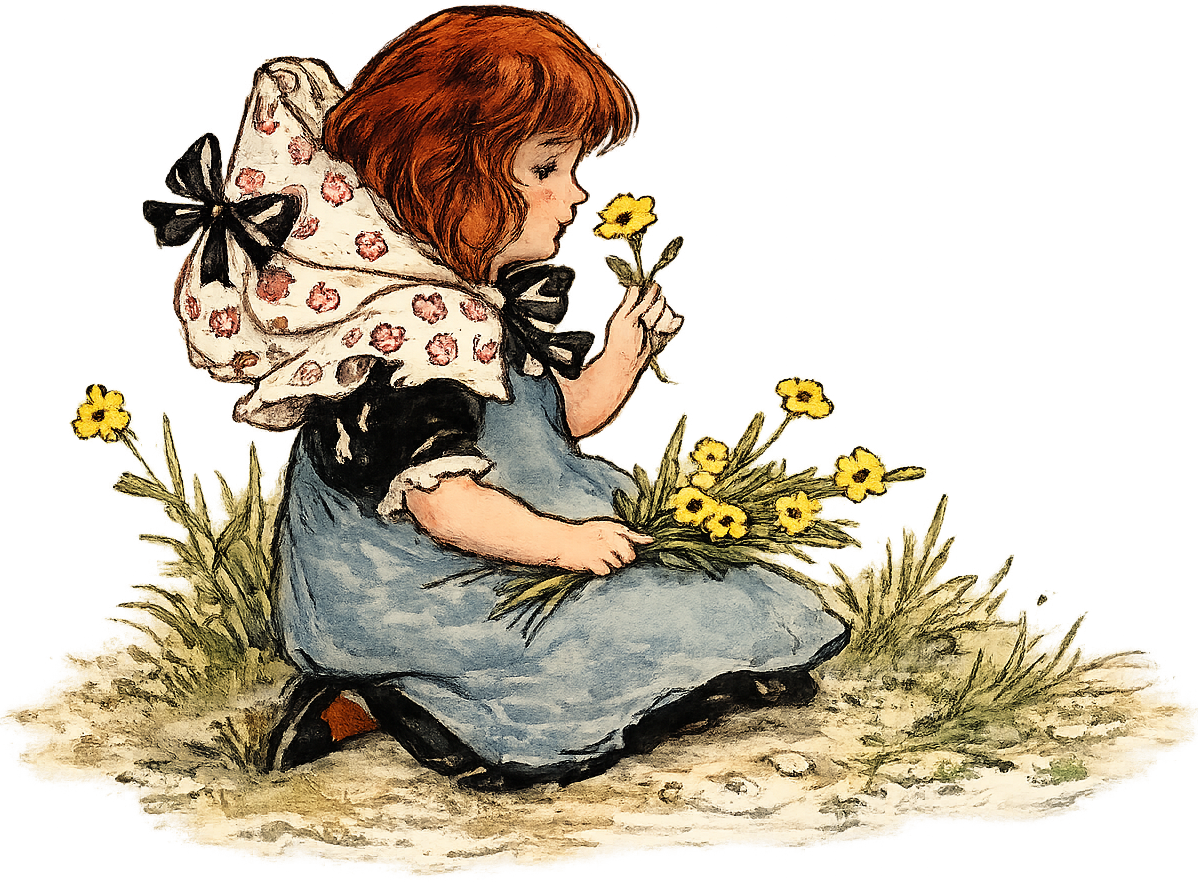
Caran a nim i·lyth dín.
Red and white the flowers its.
(Its flowers are red and white.)
Ab lû, vi laer, gâr lais gelain.
After time, in summer, it has leaves green.
(Afterwards, in Summer, it has green leaves.)
A m’ iavas degif redraith17 .
And in autumn bring-we (exclusive) ladders.
(And in Autumn we bring ladders.)
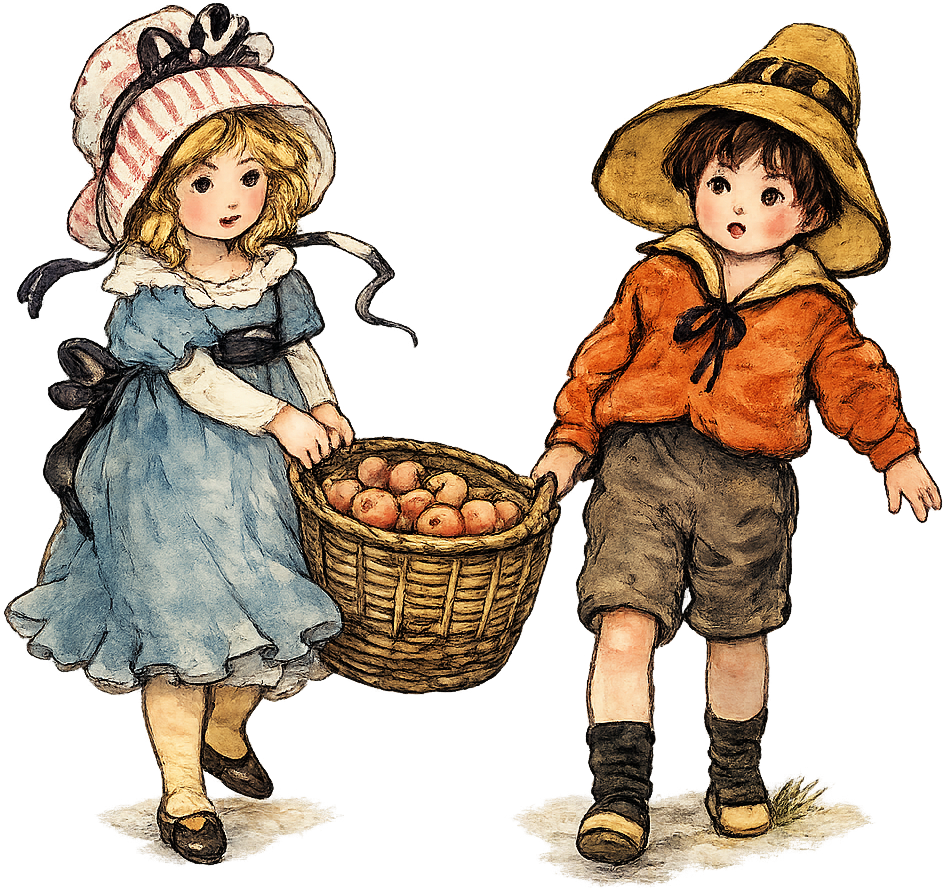
A sestof in·yrf vi ‘wirchylch18 .
And set-we (exclusive) the apples in baskets.
(And we put the apples into baskets.)
Glennanneg ah egíneg e·rídhas?
Traveled-you (familiar) and saw-(you) familiar the farmlad?
(Have you ever been to the farm?)
Ni ennas orvedui.
Ni (was) there yesterday.
(I was there yesterday.)
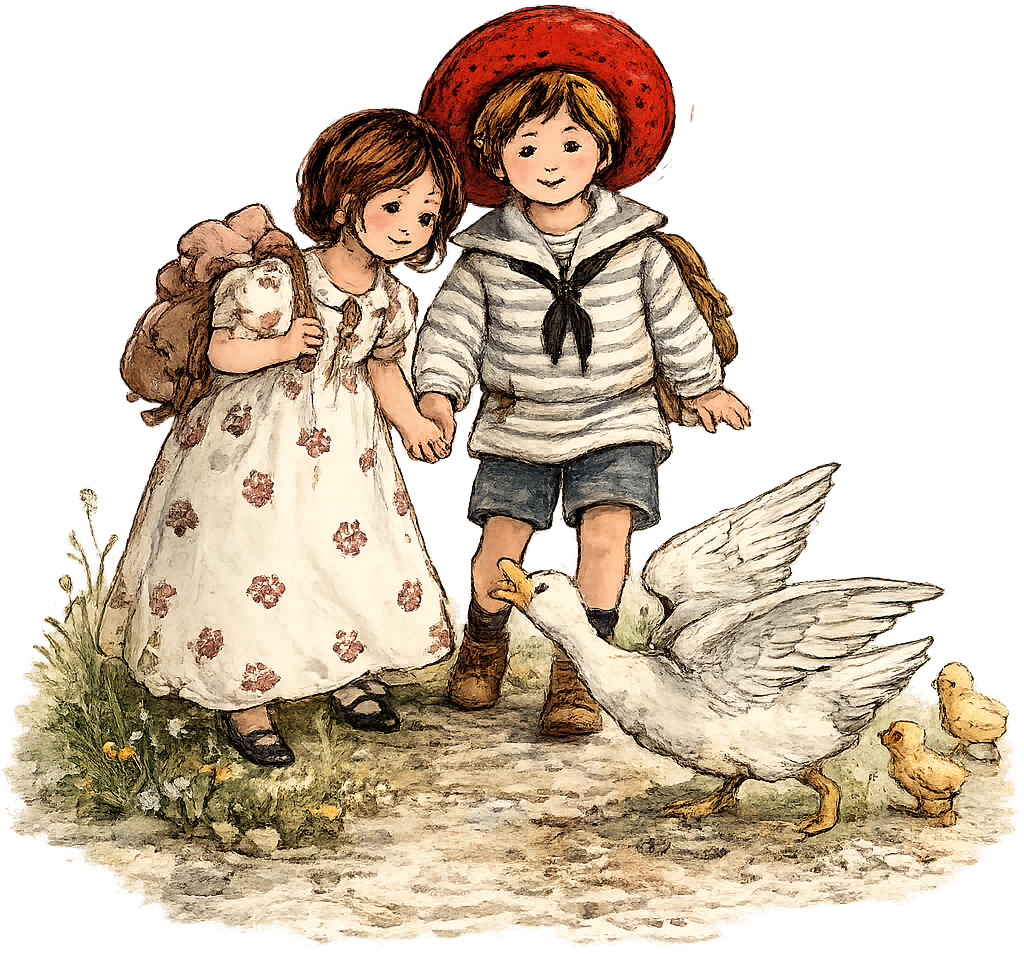
Egínen i·semmyr, i·ñgwoen, i·pherechuil.
Saw-I the ducks, the geese, (and) the hens.
(I saw the ducks, the geese, and the hens.)
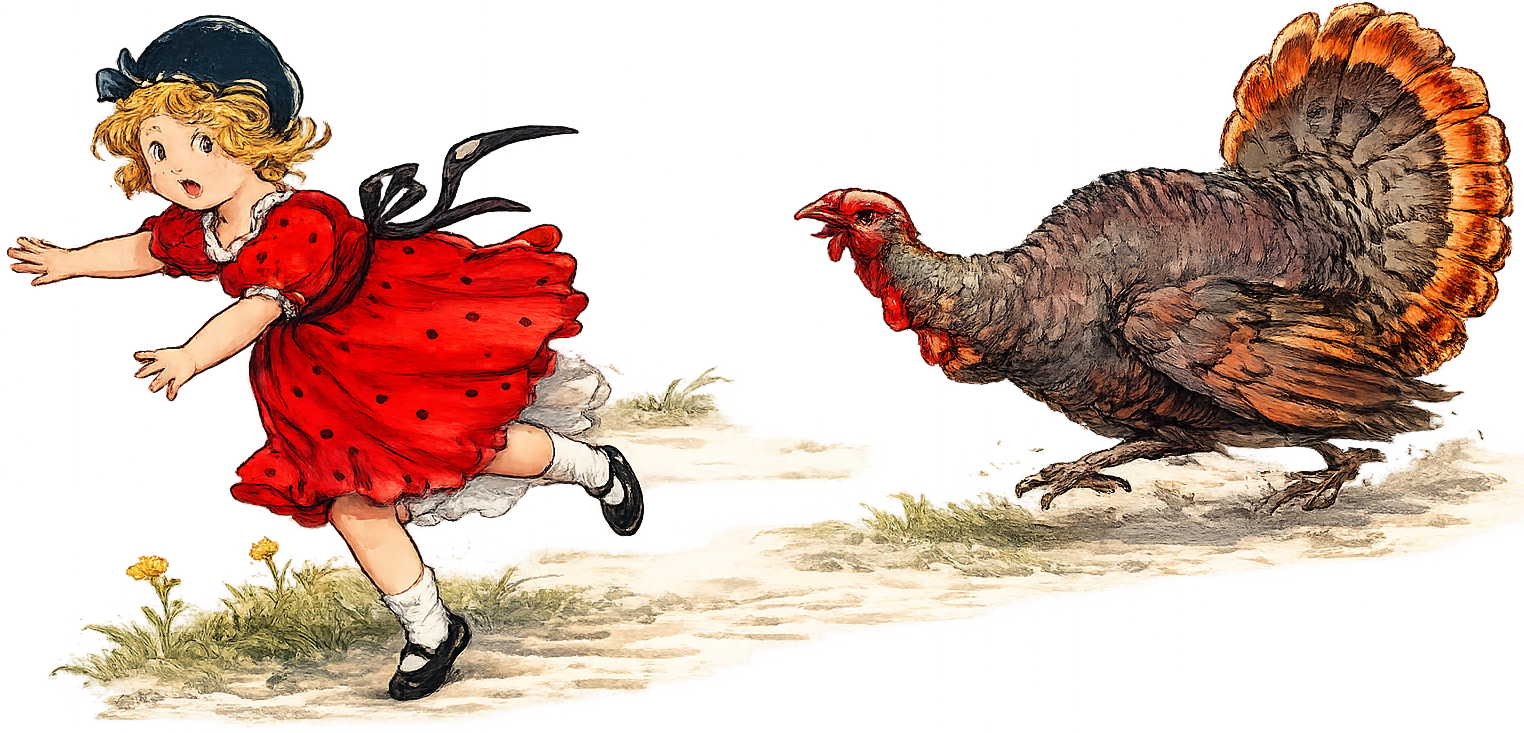
Ach ‘ostannen e·narborog dhaer.
Red and white (are) the flowers its.
(But I was afraid of the big turkey.)
Câr law ‘aer!
Makes-(he) (a) awful sound!
(He makes such a frightful noise!)
i·Chebaid gerain
Min/M’ in oer anann ‘wenwin, neth aur chebaid gerain.
In the days long departed, (little) girl possessed shoes red.
(Once upon a time there was a little girl who had red shoes.)
Evil i·chebaid gerain dín.
Love-(she) the shoes red her.
(She was very fond of her red shoes.)
Ah anírast badrad vi chebaid/v’ i·chebaid hin.
And desired-(she) to walk in the shoes these.
(And she wanted to go out for a walk in these shoes.)
“Ilphen,” ebent, canathar, “A! ti vain!”
“Everyone,” said-(she) cry-will-they, “Oh! they (ar) beautiful!”
(“Everybody,” said she, will cry, “Oh! how beautiful they are !”)
Nalla
Ach nae! Badrast vim madha/vi e·vadha, i ú-egin.
But alas! Walked-(she) in the mud, that not-saw-(she).
(But alas ! she walked in the mud, which she had not seen.)
A feithennin i·chebaid gerain.
And spoiled (were) the shoes red.
(And the red shoes were quite spoilt.)
Ú-alwed nad darlang ovor.
Not-fortunate (is) to be proud abundant.
(It is a pity to be too conceited.)
Eithro io ben ‘âr chebaid gerain.
Even when one possesses shoes red.
(Even when one has red shoes.)
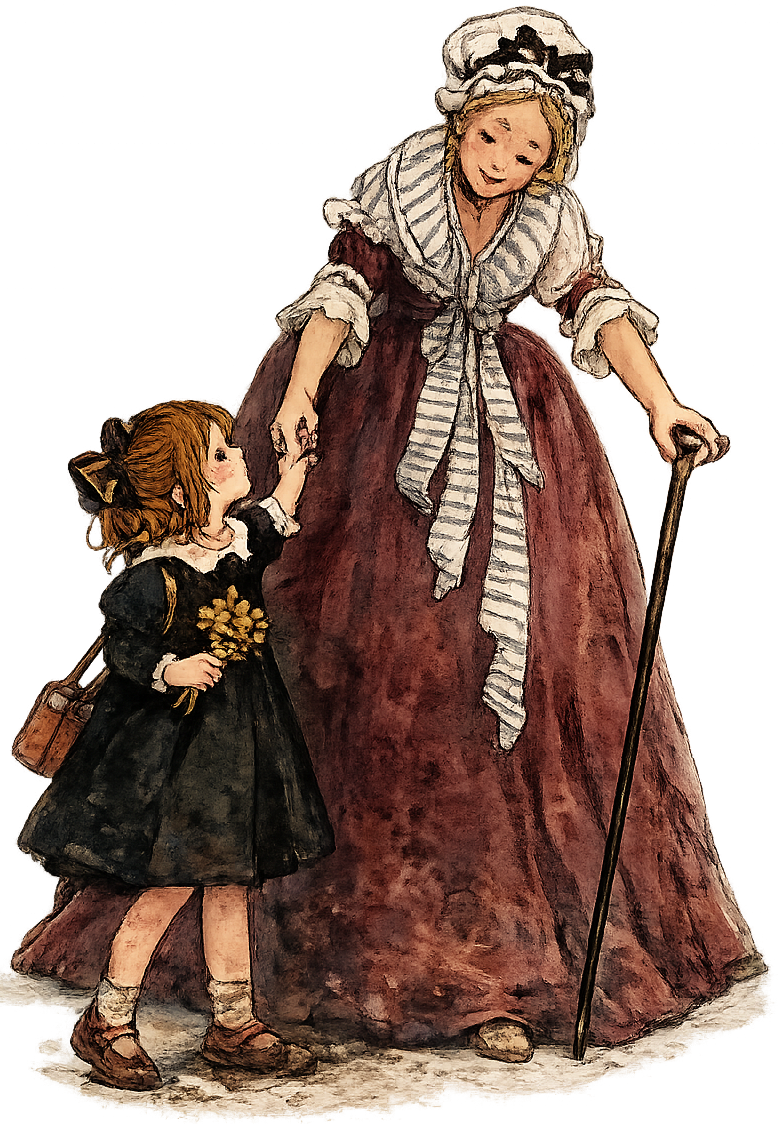
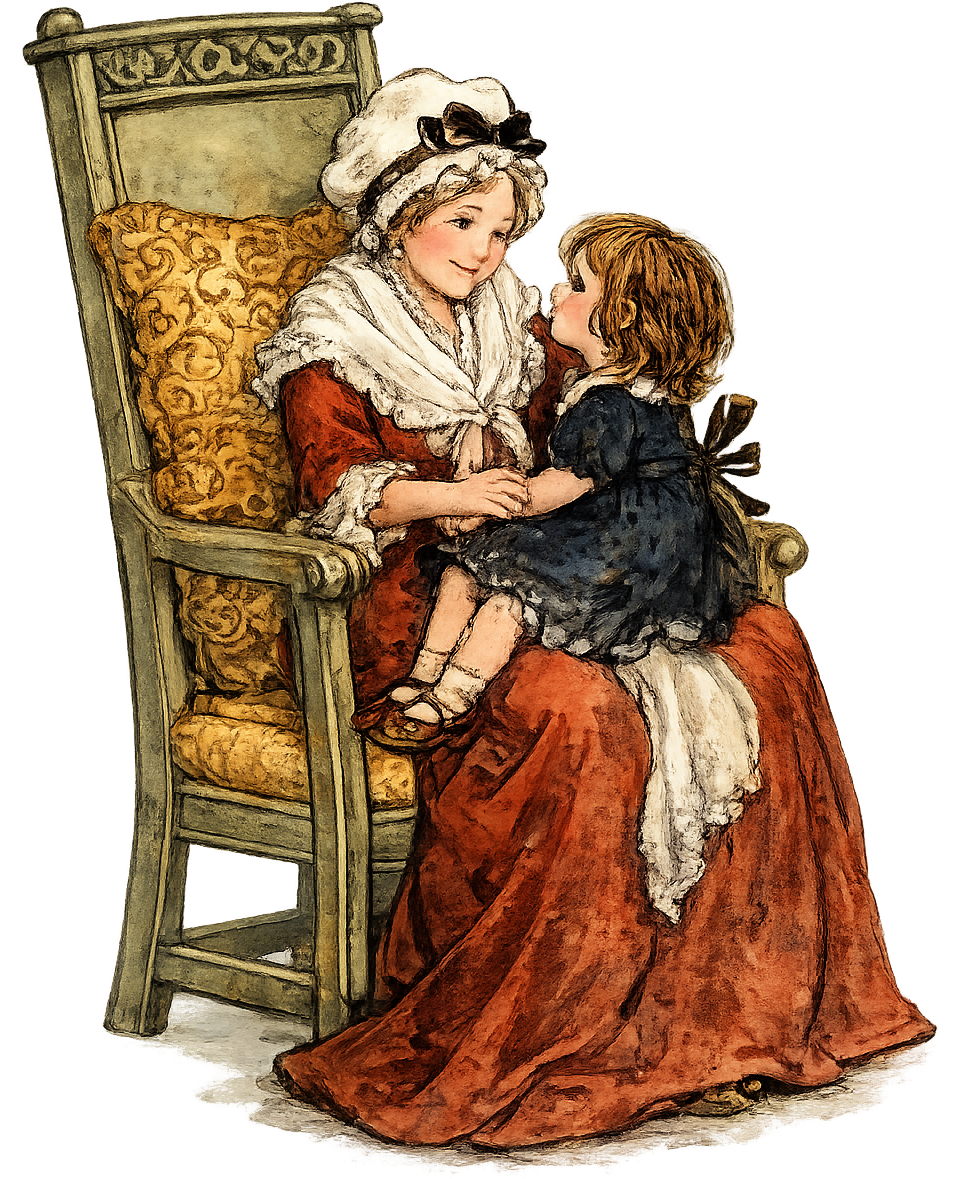
e·Vam nín
Dae iaur e·Vam nín.
Very old (is) the grandmother my.
(My Grandmother is very old.)
Dae hithren e·finnel dín.
Very gray (is) the hair her.
(Her hair is quite grey.)
A phadrast guir ‘ui vang dín.
And desired-(she) to walk in the shoes these.
(And she wanted to go out for a walk in these shoes.)
Miñ chadhu/mi e·chadhu
A phadra guir ‘ui vang/‘u e·vang dín.
And walks-(she) slow (together) with the staff her.
(And she walks very slowly with her crutch.)
Pîd19 il aur viñ chadhu/vi e·chadhu daer dín.
Knits-(she) all day in the chair big her.
(She knits all day in her big chair.)
A threnar annin i·phent rovain.
And recounts-(she) to me the stories most-beautiful.
(And she tells me the most beautiful stories.)
Melin e·vam nín.
Love-I the grandmother my.
(I love my grandmother very much.)
en·Ionn bîn
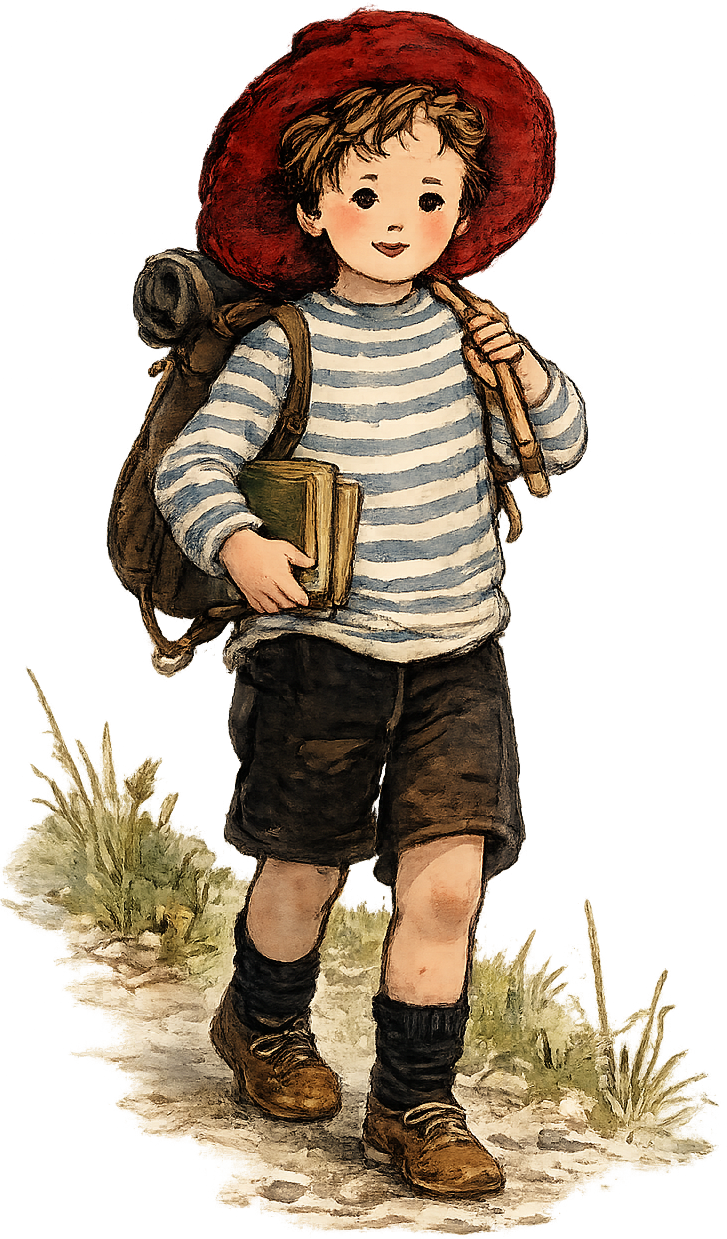
Gonchil21 ionn bín.
Peter (is a) little boy.
(Peter is a little boy.)
Te ifant eneg.
He (is) aged six.
(He is six-and-a-half years old.)
Mên na ‘olbar ail amor.
Goes-(he) to school every morning.
(He goes to school every morning.)
Leutha lyth
Ach de nevui ui ediw iest golbar.
But he (is) nearly always misses (the) beginning (of) school.
(But he is nearly always late.)
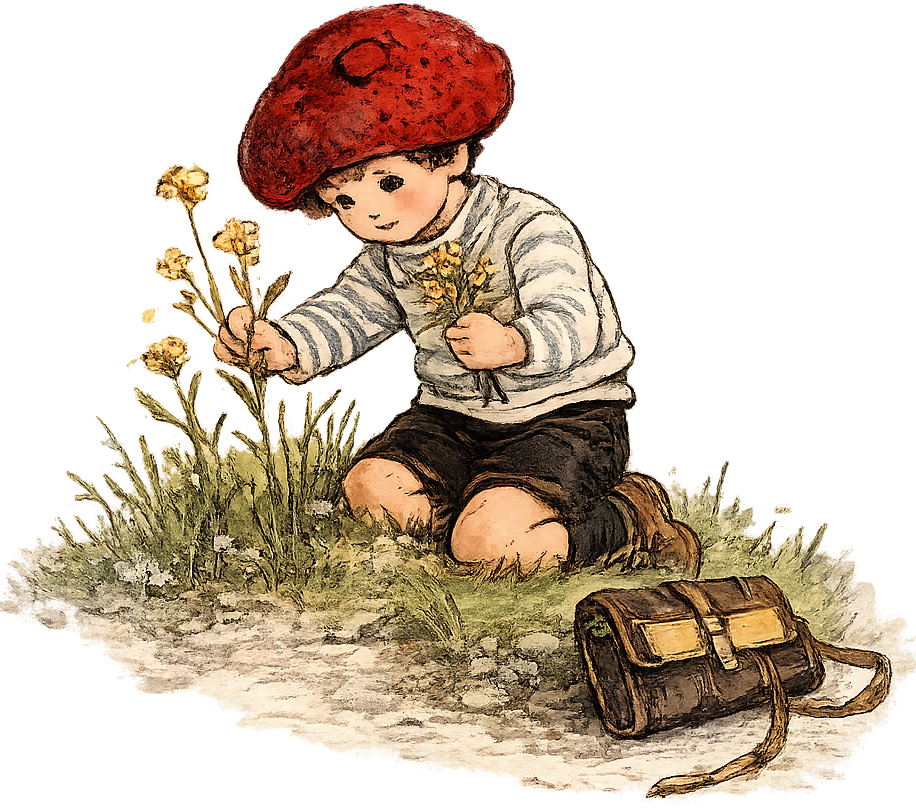
Adh rêth anann leuthol lyth bela e·vên.
For remains-(he) for long picking flowers along the way.
(Because he stays too long picking flowers by the way.)
en·Eirin leythennin
en·Adar nín bêd annin orvedui, “Tolo vi pherth/v’ i·pherth.”
The father my spoke to me yesterday, “Come in the fields.”
(My father said to me yesterday, “Come into the fields.”)
Ni ‘lassui mened.
Ni (am) happy to go.
(I was only too pleased to go.)
Hostannen eirin ennas.
Gathered-I daises there.
(I gathered daisies there.)
e·Vâf bîn
Egínen nethor moef.
(Saw-I (a) flock (of) sheep.)
I saw a flock of sheep.
Medir e·‘lae galen.
Eat-they the grass green.
(They were eating the green grass.)
Ah in·ŷl bîn adórer ha din.
And the lambs little stood beside them.
(And their little lambs stood near them.)
Dae bain voef a ŷl.
Very beautiful (are) sheep and lambs.
(Sheep and lambs are very pretty.)
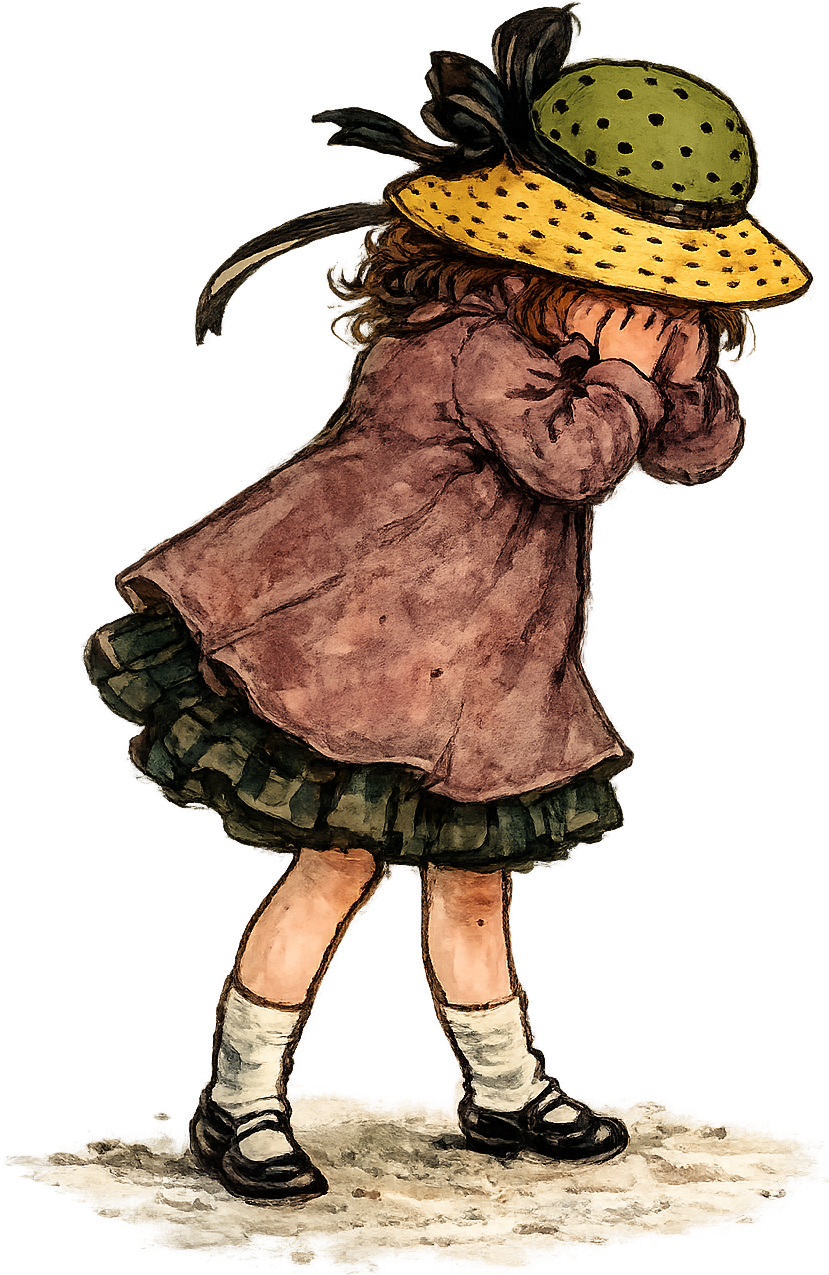
e·Neth
Am man gaeth nallog, Gaervir?
For what reason cry-you (familiar), Maggie?
(Why are you crying, Maggie?)
Ci lhaew?
You (familiar) (are) ill?
(Are you ill?)
Û, Nallon al líthannen e·chû bîn nín.
No, Cry-I for lost-I the dog little my.
(No, I am crying because I have lost my little dog.)
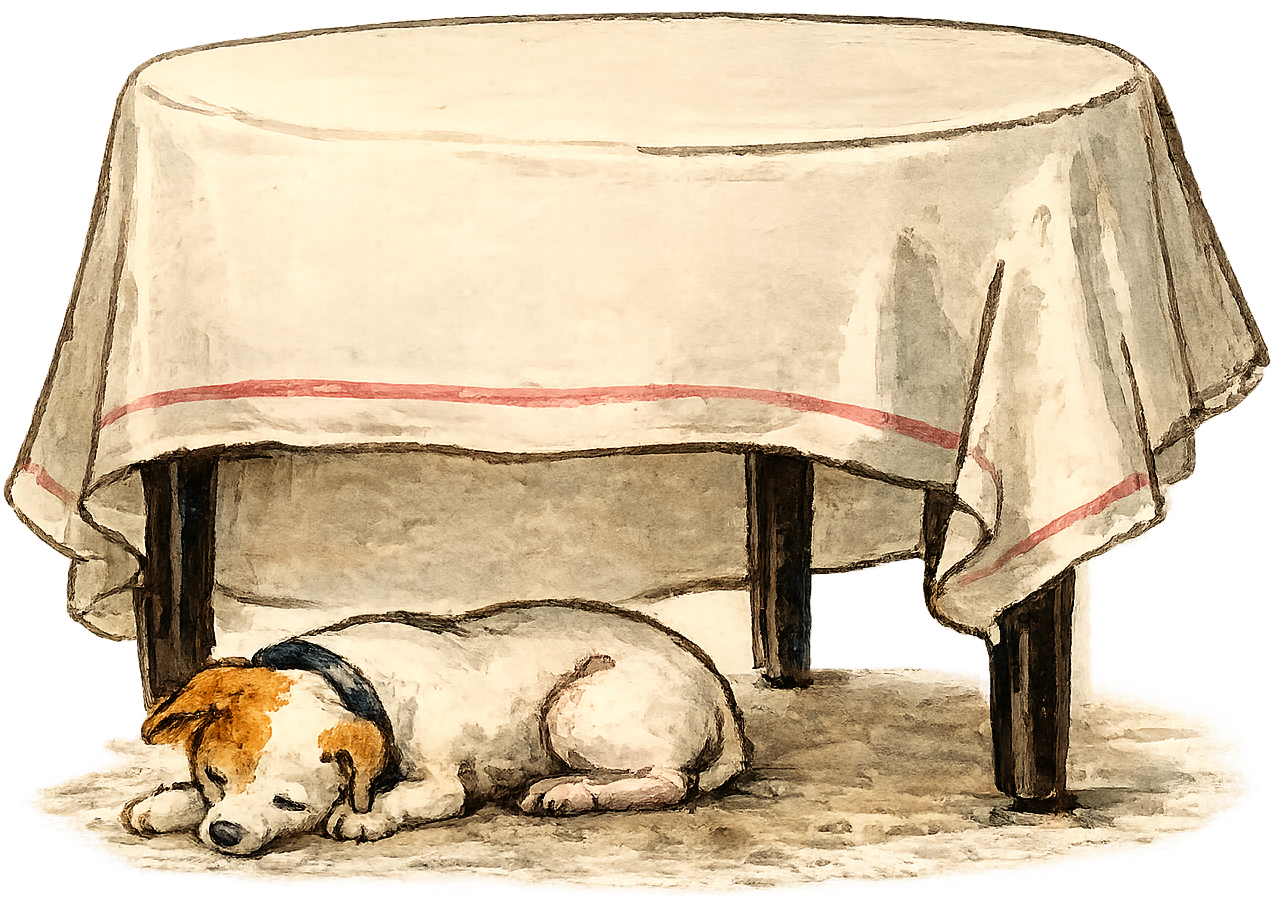
Lorn nui hardh/nu e·hardh
Istog oh ias e·had dín?
Have knowledge-you (familiar) about where the spot his?
(Do you know where he can be?)
Egínen den dhû veth.
Saw-I him night last.
(I have not seen him since last night.)
Te lorn nui hardh/nu e·hardh.
He (is) asleep under the table.
(Then he was asleep under the table.)
Listo ‘resto nin hired den.
Please help me to find him.
(Please do help me to find him.)
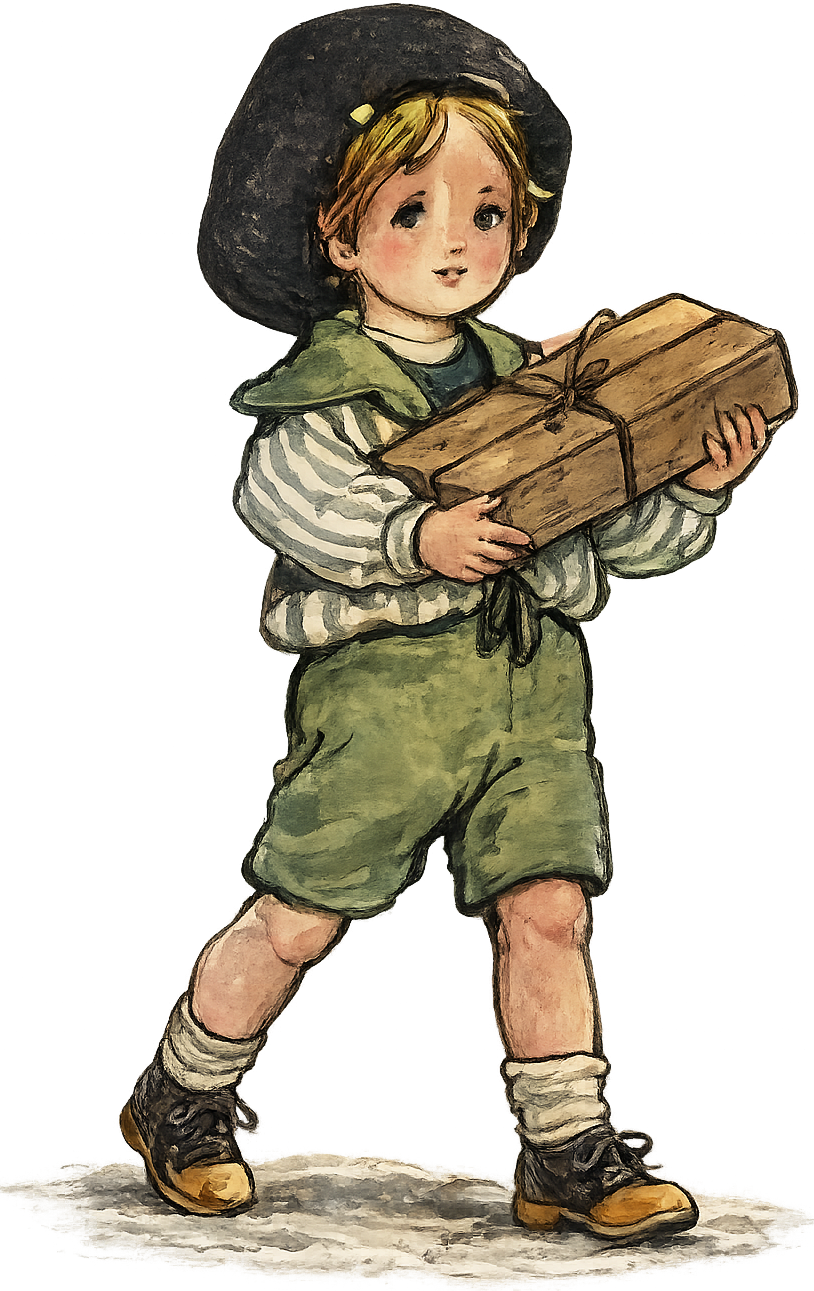
en·Ann
Man ‘erig?
What have-you?”
(What have you there?)
Gerin ann i chanar en·adar nín anna annin.
Have-I (a) gift that (the) brother (of) the father my gave to me.
(I have a present that my uncle has given me.)
Te il vraethannen vi barlas varan.
It (was) all wrapped in parchment brown.
(It was all wrapped up in brown paper.)
Colch bathrast ‘u ndoeg tingin
Lediannen den, a man vedhig echíren?
Opened-I it, and what judge-you (familiar) found-I?
(I opened it, and what do you think I found?)
Colch elvain bathrast ‘u ndoeg tingin.
(A) box filled (together) with soldiers metal.
(A splendid box full of tin soldiers.)
A! Ni ‘lassui!
Oh! I (am) happy!
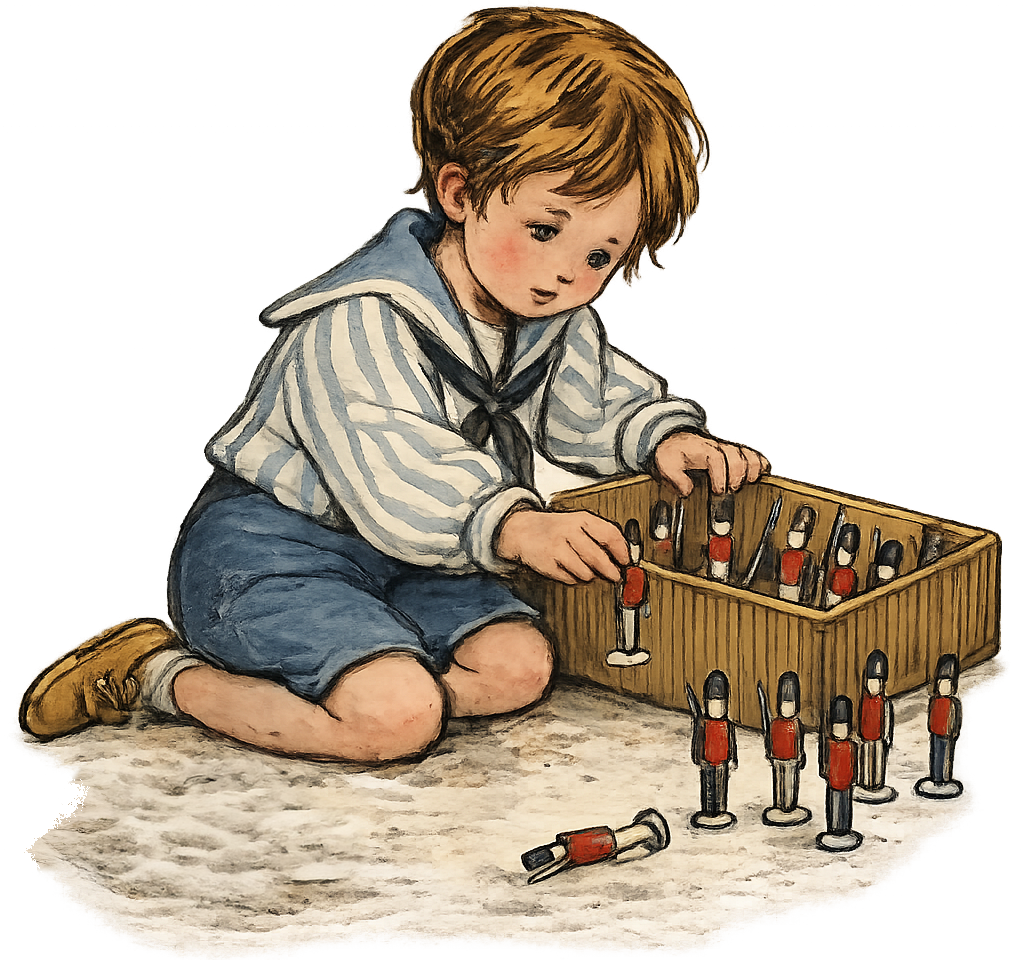
(Oh! How happy I am!)
e·Neth
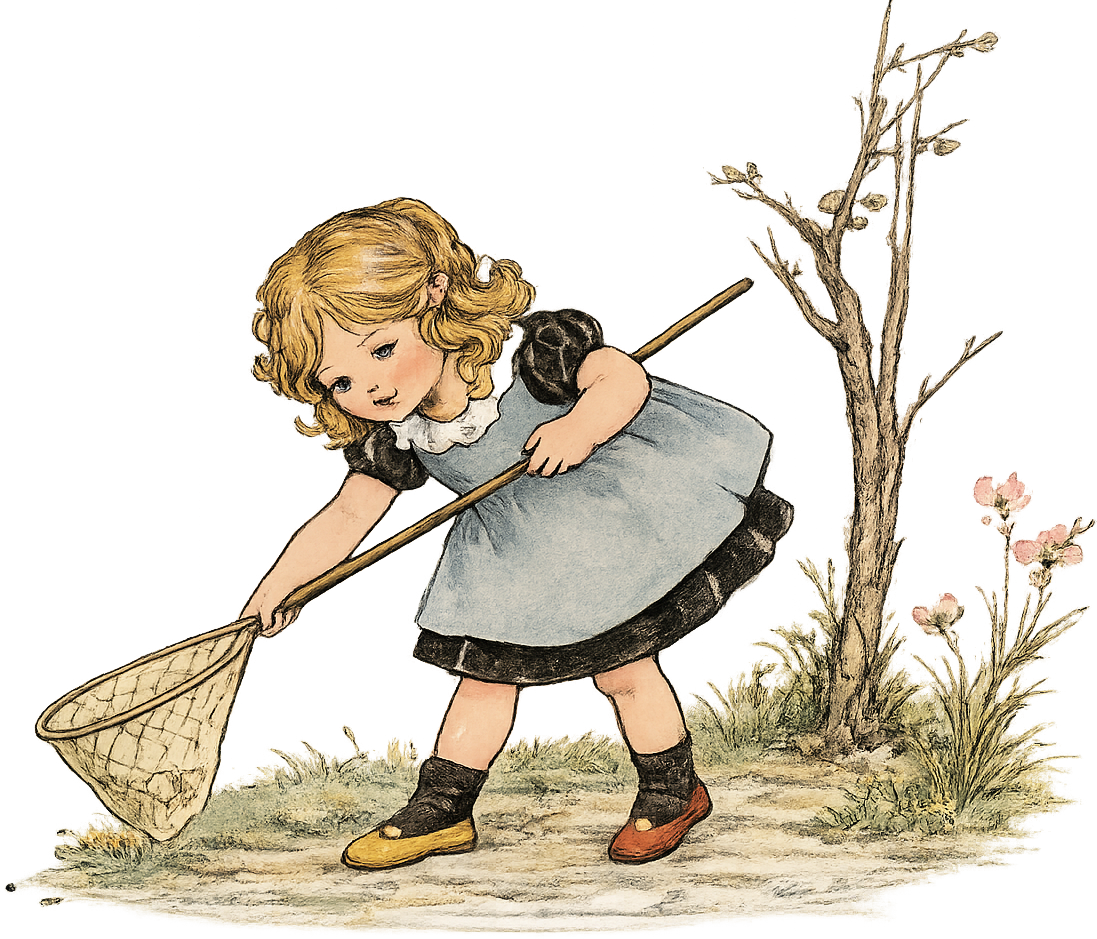
Raedannen ‘wilwileth.
Caught in a net-I (a) butterfly.
(I have caught a butterfly.)
Bain den?
Beautiful (is) it?
(Isn't it pretty?)
Tiro idh·roe dín ah idh·rais dín.
Look at the wings it and the horns it.
(Look at its wings and its little horns!)
Merin nad ‘wilwileth.
Like-I to be (a) butterfly.
(I should very much like to be a butterfly!)
Colch bathrast ‘u ndoeg tingin
Madathon aen ‘lî ail aur.
Eat-will-I should honey every day.
(I should eat honey every day.)
Ach chen ú-‘âr roe.
But (a) child not-possess wings.
(But a child has no wings.)
Ú-bôl gwiled o loth na loth.
Not-(physically) able-(she) to fly from flower to flower.
(She cannot fly from flower to flower.)
Se tho aen lallen!
This will be should funny!
(How funny it would be if she could!)
Lhassog bent Carangol Bîn?
Heard-you (familiar) (the) story (of) Redhood Little.
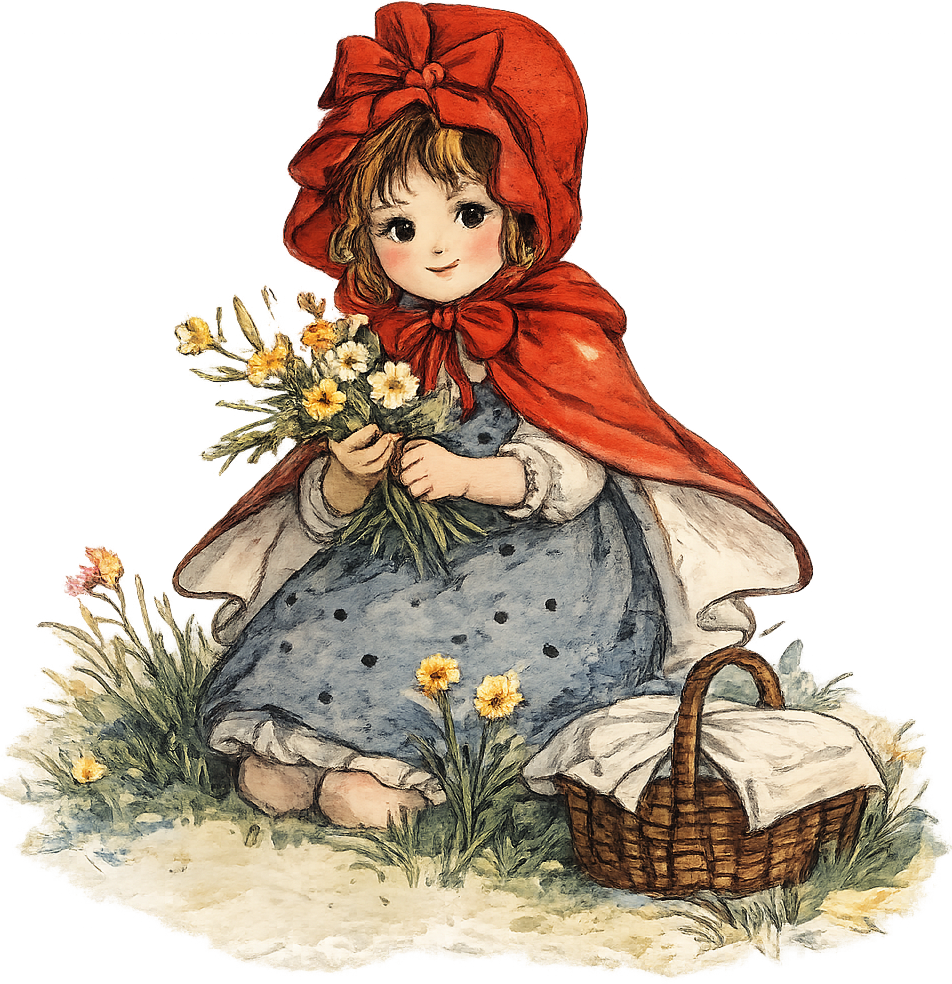
(Have you ever heard of little Red Riding Hood?)
Te neth vaer ui ‘obel/o e·‘obel.
She (was) (a) (little) girl from the village.
(She was a good little village girl.)
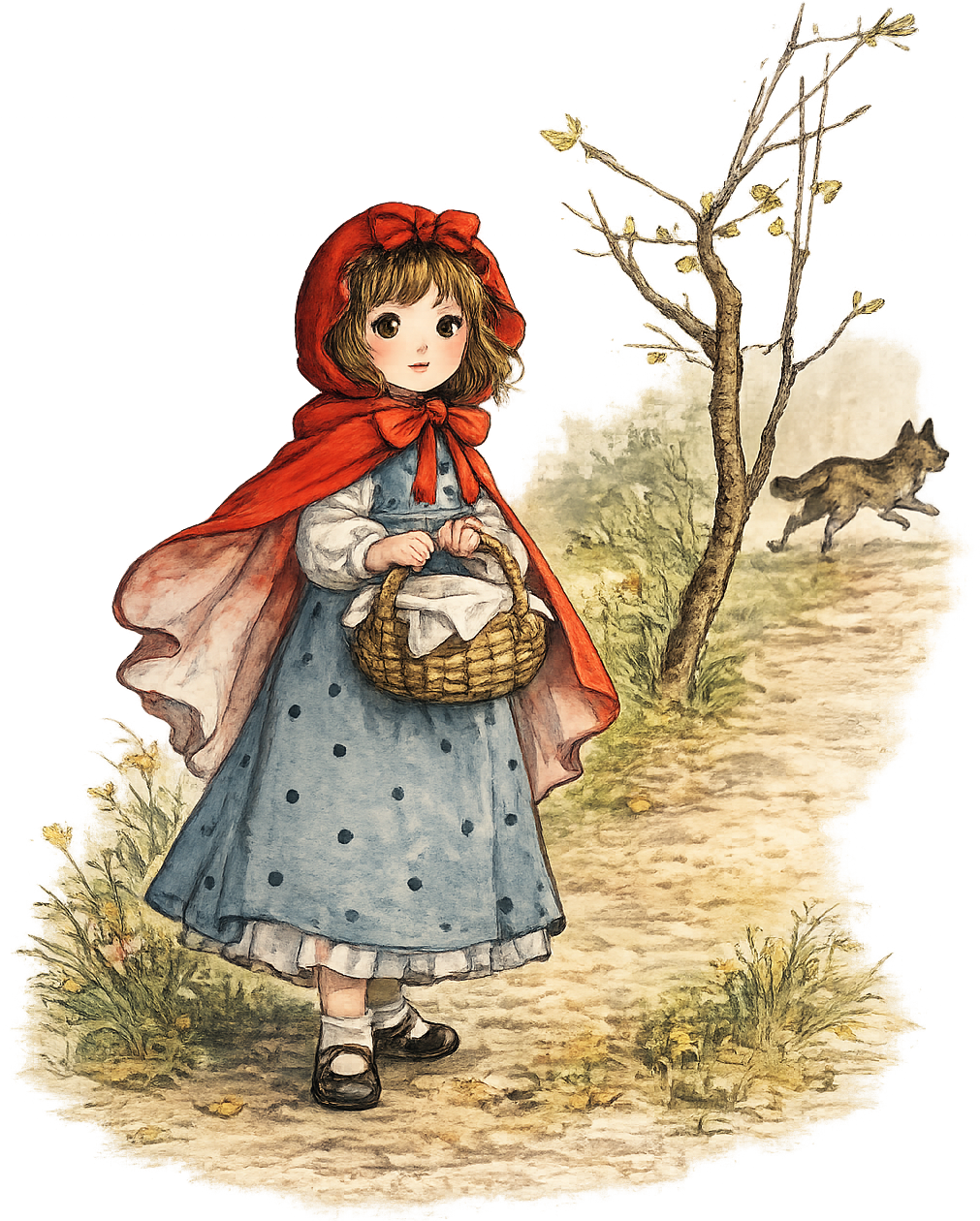
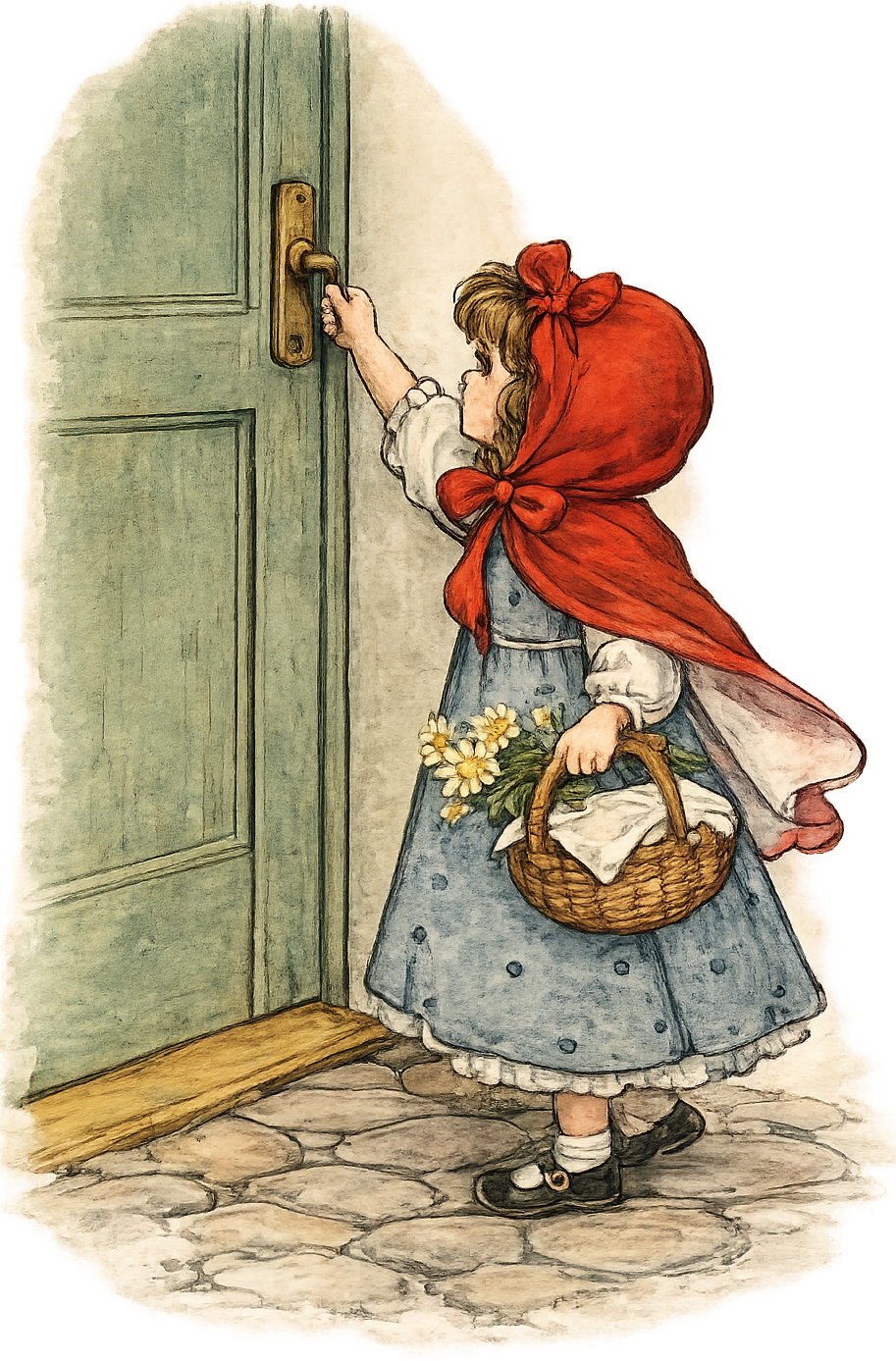
Er aur en·emel dín ebent andin, “Meno, a thogo e·‘wircholch hen n’ e·vam gín.
One day the mother her said to her, “Go, and bring the basket this to the gramother your (familiar).
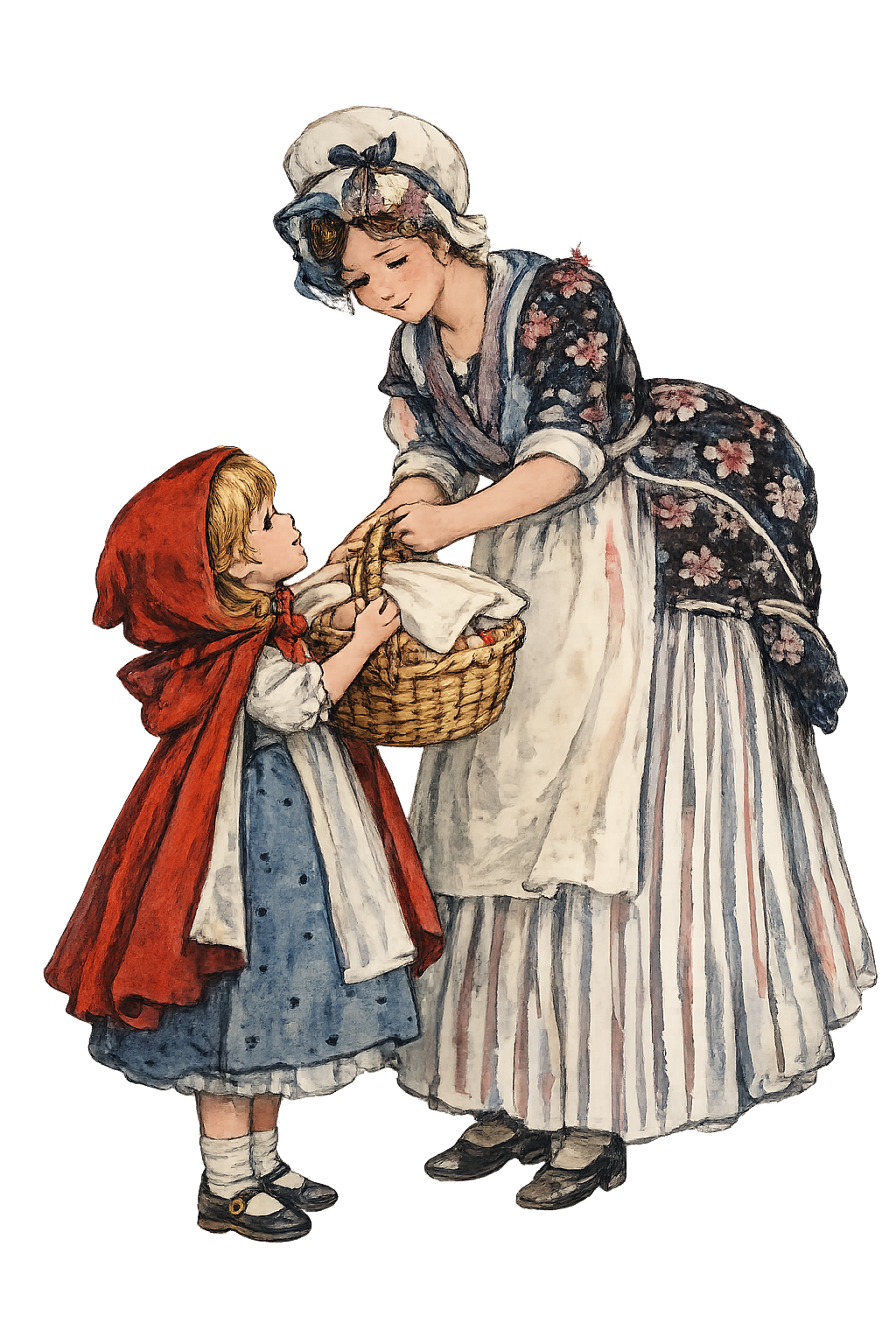
(One day her mother said to her, "Go, and take this basket to your grandmother.)
“Togo anden in·ych hin, e·bîr hin, a pherol bîn e·vang hin.”
Bring to her the eggs these, the cream this, and jar little (of) the butter this.
(Take her these eggs, this cream, and this little pot of butter.)
min eryn.
A Charangol Bîn anw.
And Redhood Little departed.
(And little Red Riding Hood went off.)
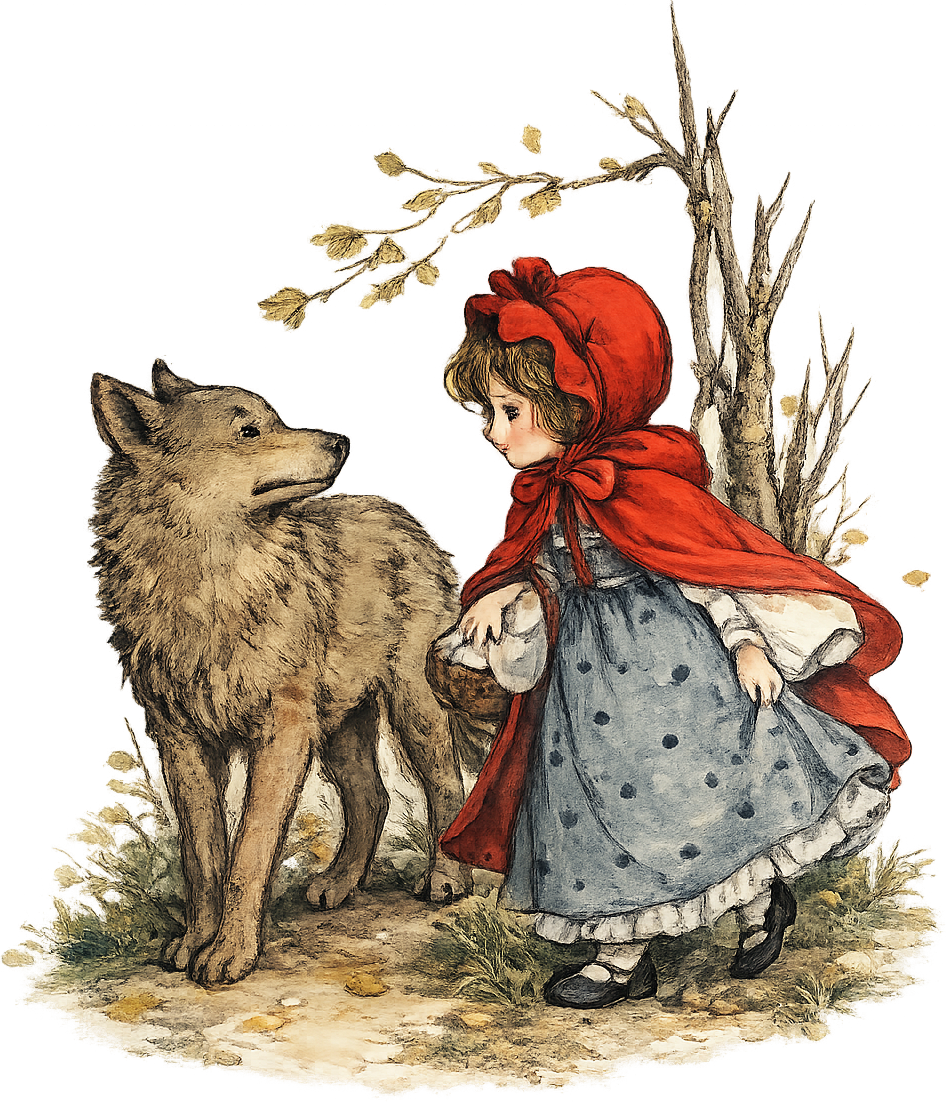
Ach min eryn/m’ in·eryn govant Dhraug Rhû Hîr.
But in the woods met-(she) (a) Wolf Wicked Master.
(But in the wood she met Mr. Wicked Wolf.)
“Mas gwael?” ebent e·dhraug anden.
“Where (are) go-you (polite)” said the wolf to her.
(“Where are you going ?” said the wolf to her.)
Dambent, glennon cened e·vam nín.
Answered-(she), travel-I to see the grandmother my.
(She replied, “I am going to see my grandmother.”)
e·Dhraug
e·Draug anírant maded den.
The wolf desired to ead her.
(The wolf wanted very much to eat her.)
Ebent, “Aníron glennad a chened e·vam lín eithro.”
Said-(he), “Desire-I to travel and to see the grandmother your (polite) also.”
(He said, “I should like to go and see your grandmother too.”)
Ebent, “Davo ammen cened bi delin ennas fo len.”
Said-(he), “Allow for us to see if come-I there before you (polite).”
(He said, “Let us see if I get there before you.”)
e·Dhraug nôr
A chesta nored na mbar e·vam.
And began-(he) to run towards home (of) the grandmother.
(And he began to run towards the grandmother's cottage.)
Ach Garangol Bîn ú-rongast.
But Redhood Little not-hastened.
(But little Red Riding Hood did not hurry herself.)
Agor ‘elyth bîn.
Made-(she) inflorescences little.
(She made bouquets of little flowers.)
Ah onur raedad ‘wilwilith.
And ran-(she) to catch in a net butterflies.
(And she ran after butterflies.”)
e·Dhraug
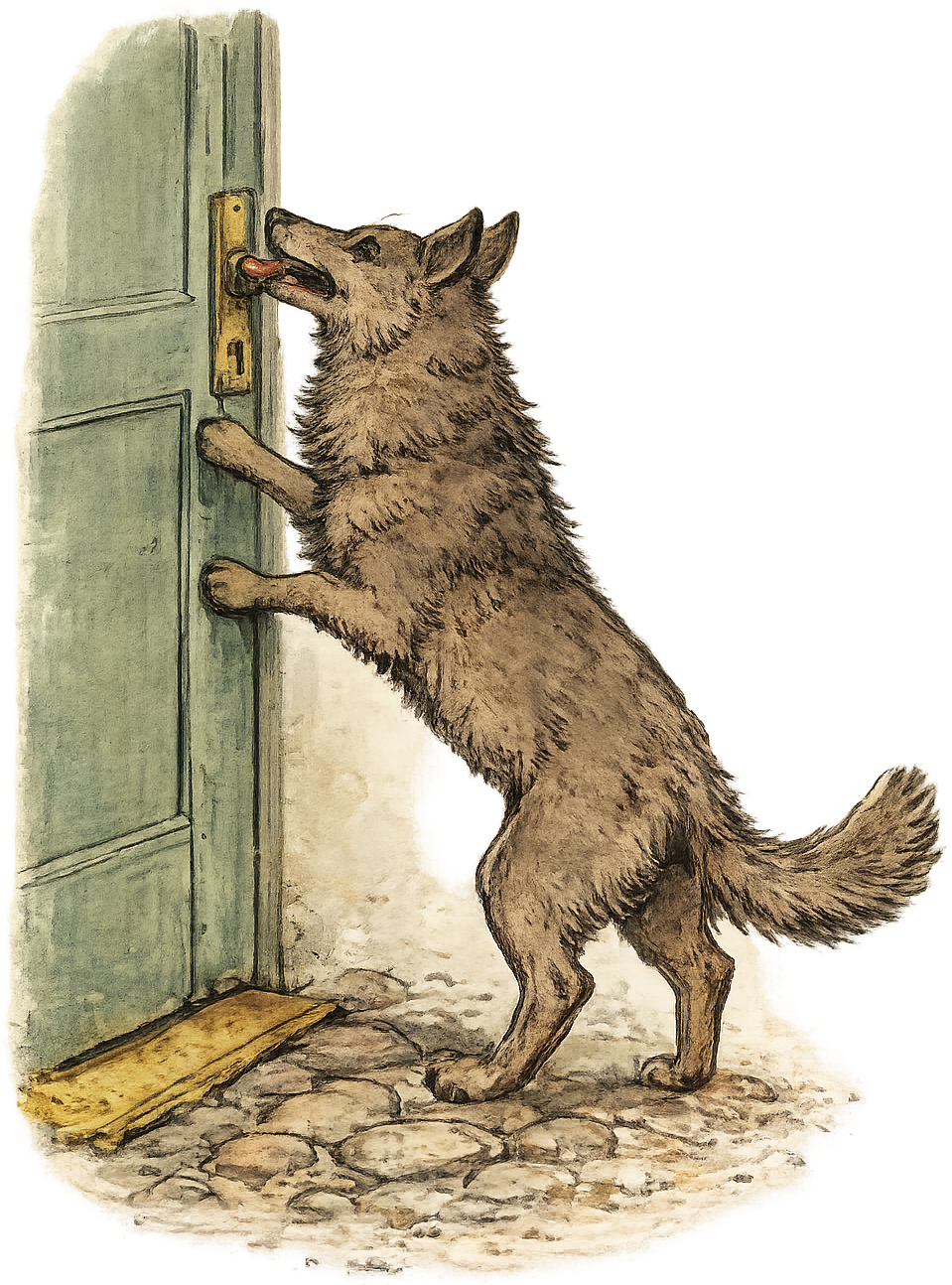
Io e·draug odul na mbar e·vam, tammast!
When the wolf came to house (of) the grandmother, knocked-(he)!
(When the wolf came to grandmother’s, he knocked, toc, toc!)
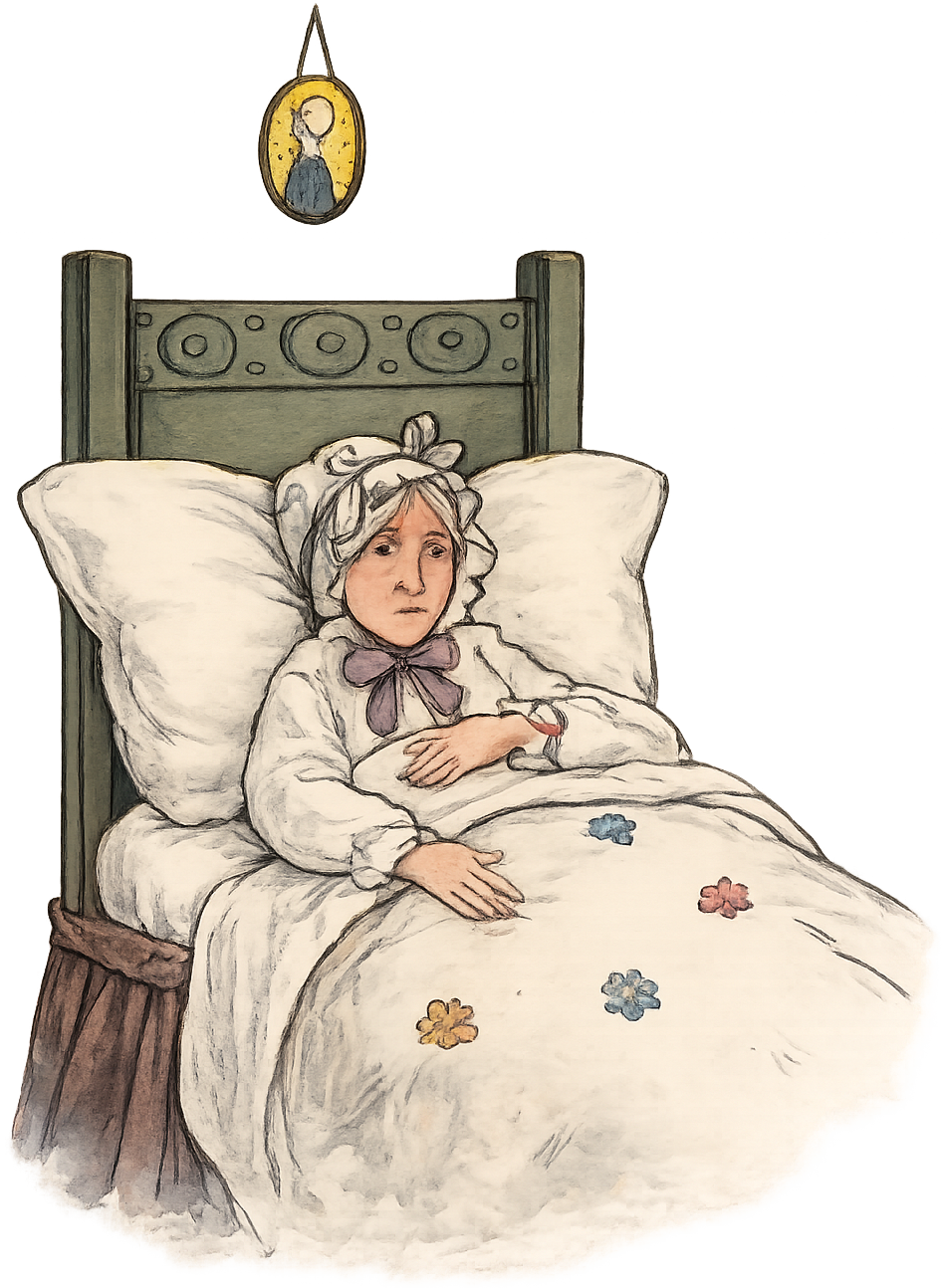
A mam, i gaedast lhaew vi chaust, agon “Man ennas?”
And grandmother, who lay down ill in bed, cried “Who (is) there?”
(And Grandmother, who lay ill in bed, cried “Who’s there?”)
e·Dhraug ebent, “Im, Carangol Bîn.”
The wolf said, “Myself, Redhood Little.”
(The wolf said, “It is I, little Red Riding Hood.”)
e·Mam lhaew
“Thago e·dholt a lhediatha,” ebent e·vam.
“Pull the knob and open-will-(it),” said the grandmother.
(“Pull the bobbin and the latch will go up,” replied the Grandmother.)
To6 e·dhraug rhû vinnast.
Then the wolf wicked entered.
(Then the wicked wolf went in.)
Ah avant en·ioreth, a chaedast viñ chaust/vi e·chaust dín.
And ate-(he) the old woman, and lay down in the bed her.
(And he gobbled up the poor old woman, and lay down in her bed.)
Tammast boe fend/bo e·fend
Rong Garangol Bîn odul ennas.
Soon Redhood Little came there.
(Little Red Riding Hood soon got there.)
Iestast tammad boe fend/bo e·fend!
Began-(she) to knock on the door!
(She began to knock at the door, toc, toc!)
e·Dhraug agon vi ‘lim liss, “Man ennas?”
The wolf called in (a) voice soft, “Who (is) there?”
(The wolf called out, softening his voice, “Who’s there?”)
“Im, Carangol Bîn.”
“Myself, Redhood Little.”
(“It is I, little Red Riding Hood.”)
e·Dhraug viñ chaust
e·Dhraug ebent, “Thago e·dholt a lhediatha,” ah e·neth vinnast.
“The wolf said, “Pull the knob and open-will-(it),” and the (little) girl entered.
(“The wolf replied, “Pull the bobbin and the latch will go up,” and the little girl went in.)
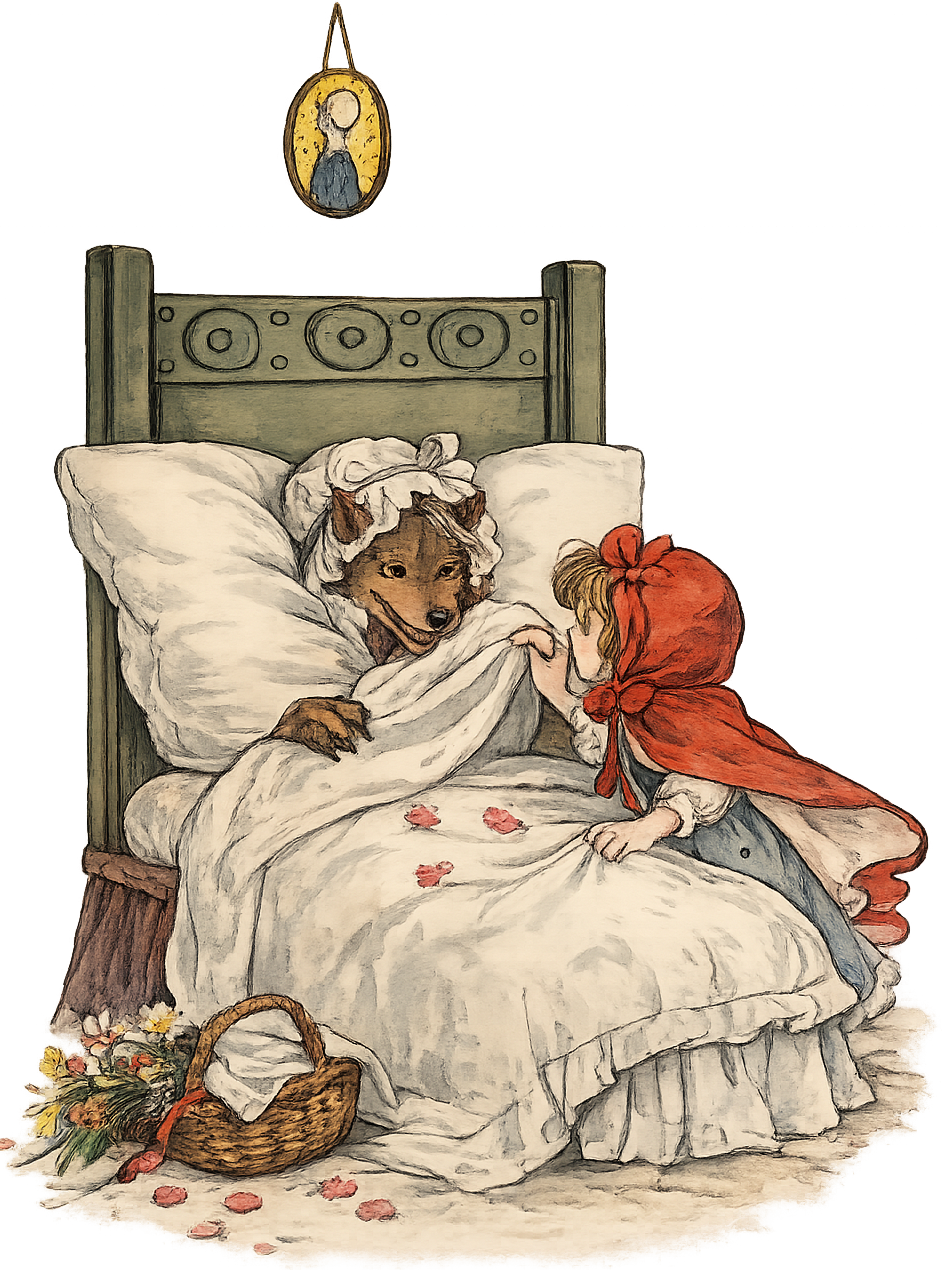
Egin e·draug i doblol nu lann e·dô, ah ebent andin:
Saw-(she) the wolf that hiding under cloth (of) the wool, and said to him:
(She saw the wolf hiding himself under the quilt, and she said to him:)
“Mam, gerig chend dhaer!”
“Grandmother, possess-you (familiar) eyes great!”
(“Grandmother, what great eyes you got!”)
“Devir annin cened gin ammaer, hên nín!” ebent e·dhraug.
“Allow-they for me to see you (familiar) more-good, child my!” said the wolf.
(“The better to see you with, my child!” said the wolf.)
e·Dhraug gâb na Garangol Bîn
“Mam, gerig lhewig dhaer!”
“Grandmother, possess-you (familiar) ears great!”.
(“Grandmother, what great ears you got!”)
“Devir annin lhassad gin ammaer, hên nín!” ebent e·dhraug.
“Allow-they for me to hear you (familiar) more-good, child my!” said the wolf.
(“The better to hear you with, my child!” said the wolf.)
“Mam, gerig nîl dhaer!”
“Grandmother, possess-you (familiar) teeth great!”.
(“Grandmother, what great teeth you got!”)
“Devir annin maded gin ammaer!”
“Allow-they for me to eat you (familiar) more-good!”
(“The better to eat you!”)
e·Dhraug viñ chaust
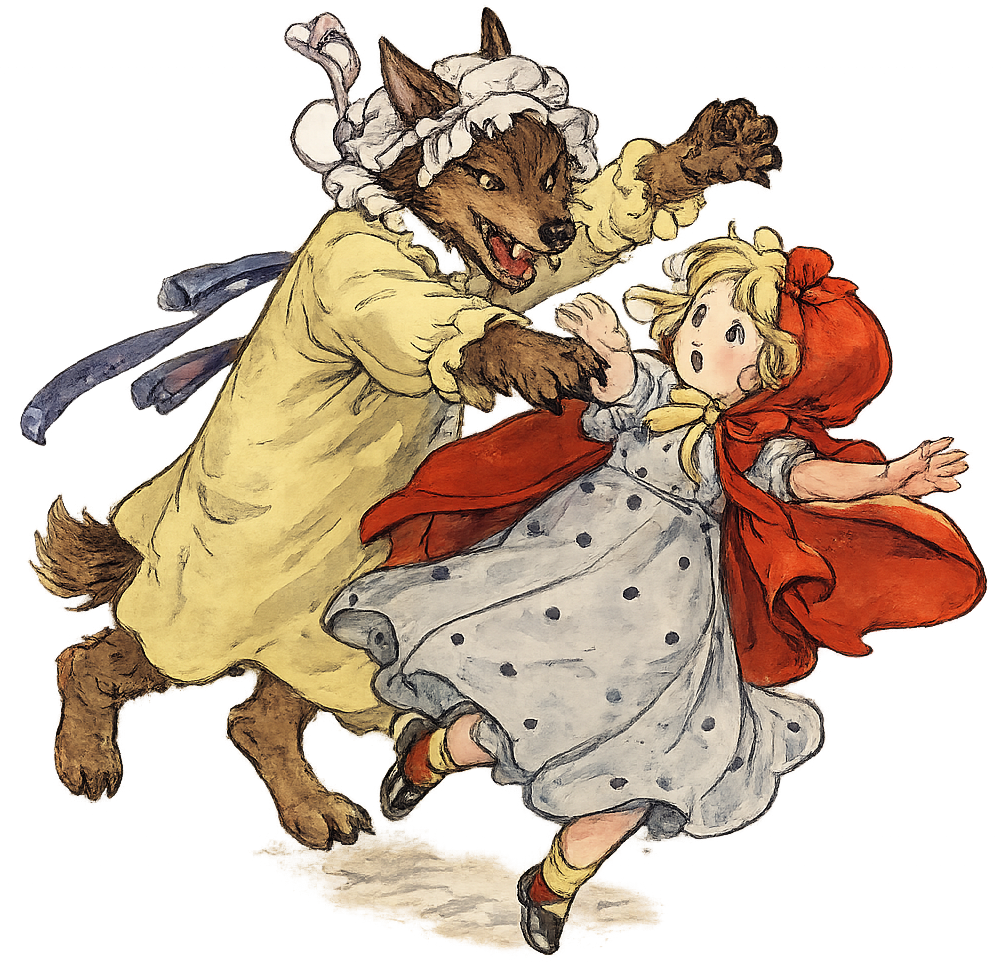
Ah e·dhraug agamp bo Garangol Bîn.
And the wolf jumped on Redhood Little.
(And the wolf sprang upon little Red Riding Hood.)
A nevui avant den.
And nearly ate-(he) her.
(And would have gobbled her up.)
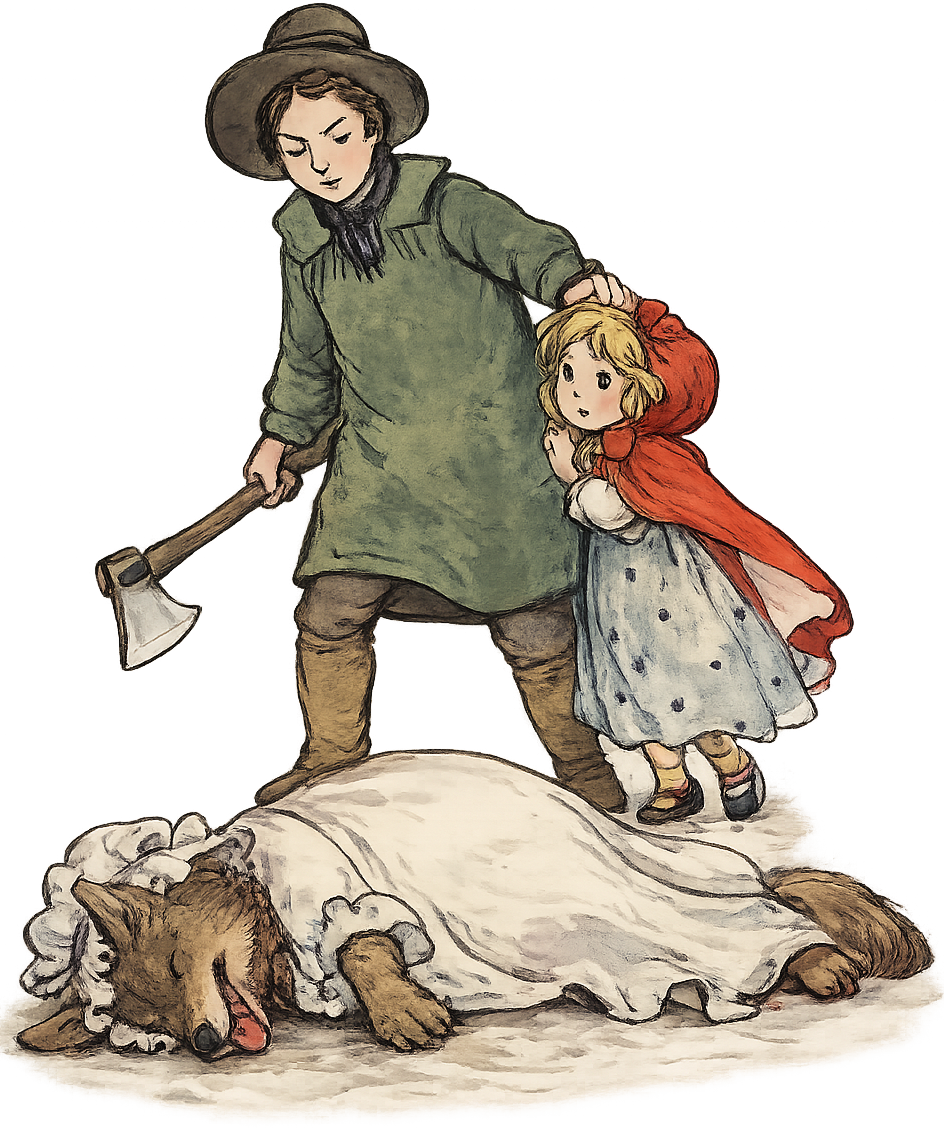
Ach vil luig/vi e·luig han en·adar dín, i dorristor23 , minnast.
But in moment this the father her, i (was) (a) woodcutter, entered.
(But at this moment her father, who was a woodcutter, came in.)
Ah annanc e·dhraug rhû vo e·chathol dín.
And slayed the wolf wicked by (agent of) the axe his.
(And killed the wicked wolf with his hatchet.)
Notes:
1 ias ,
conj. “where [relative], in which place” ⪤ Q.
yassë ,
conj. “where [relative], in which place” [author: unknown]
2 mas ,
adv. “where” ⪤ ᴹQ.
massë¹ ,
adv. “where” [author: unknown]
3 fad- ,
v. “to spill” ⪤ ᴺQ.
hwat- ,
v. “to spill” [author: Elaran]
4 níth ,
n. “piece, bit (of indeterminate size)” ⪤ ᴺQ. !
nihta ,
n. “piece, bit, small part” [author: Rínor]
5 maelengas ,
adj. “well-mannered” ⪤ ᴺQ. !
mailengaitë ,
adj. “well-mannered” [author: Rínor]
6 to ,
adv. “so, then” ⪤ Q.
tá ,
adv. “then, [ᴹQ.] at that time [past]” [author: Elaran]
7 hausteg ,
n. “crib, cradle” from N.
haust n. “bed” + S., N. -
eg ¹ suf. “diminutive/singular ending” [author: Rínor]
8 tuil ,
n. “doll” ⪤ ᴺQ. [ᴱQ.]
toli n. “doll, puppet” [author: Vyacheslav Stepanov]
9 pibingim ,
n. “jam, (lit.) berry-sticky-substance” ⪤ “ᴺQ. !
piohimma , n. “jam, (lit.) berry-sticky-substance” [author: Rínor]
10 palf ,
n. “plate” from √, ᴹ√, ᴱ√
PAL root. “wide, broad, extended; [ᴹ√] wide (open); [ᴱ√] flatness” + ✶-
mā suf. “instrumental suffix” [author: Rínor]
11 teliennad ,
n. “toy (lit.) play-thing” from N.
telien n. “sport, play, [ᴱN.] game” + N., ᴱN., G.
nad n. “thing” [author: Rínor]
12 gwilbog ,
n. “balloon (lit.) float in air bag” ᴺS. [G.]
gwil- , v. “to fly, ⚠️sail, float” + ᴺS. !
pôg ,
n. “bag”[author: Rínor]
13 grithwen ,
n. “nanny, nurse-maid (lit.) care-maiden” from ᴺS. [G.]
grith n. “care, attention, affection” + S., N.
gwend n. “maiden, *young woman” [author: Rínor]
14 noriod ,
n. “car (lit.) run-machine” from √
NOR root. “run (or leap) of animals or men; [ᴹ√] run as of wheels, roll along, [ᴱ√] go smoothly, ride, spin” + N.
gaud n. “device, contrivance, machine” [author: Luinyelle]
15 bachanna- ,
v. “to pay, to give in exchange” from
bach +
anna- [author: Ellanto]
16 nimgaran ,
n. “ladder” from S.
nimp ,
adj. “pale, pallid, white; small and frail, [ᴱN.] wan, sickly” + S.
caran ,
adj. “red” [author: Rínor]
17 redrath ,
n. “pink (lit.) pale-red” from √
RET root. “climb” + S.
rath ,
n. “street, track”> [author: Paul Strack]
18 gwircholch ,
n. “basket” ⪤ ᴺQ. !
vircolca n. “basket, (lit.) woven-box” [author: Eleran]
19 pid- ,
v. “to knit” ⪤ [ᴱ]^ᴺ√
KWIT root. “knit” [author: Rínor]
20 gelior ,
n. “learner, student” from ᴺS. !
gelia- [ng-],
v. “to learn” + S. #
-or ,
suf. “agental suffix” [author: Elaran]
21 Gonchil ,
pn. “Peter” an adapted name from S.
gond ,
n. “stone (general as a substance or material), rock, [N.] stone (as a material), ⚠️[G.] great stone” + S. #
hîl , n. “heir”. [author: Rínor]
22 Gaervir ,
pn. “Maggie, Margaret” an adapted name from S.
gaear , n. “sea” + S., N.
mîr n. “jewel, precious thing, treasure” [author: Fiona Jallings]
23 torristor
n. "woodcutter, lumberjack" from S., N., ᴱN., G.
taur n. “forest, wood, [N.] great wood, [G.] dense wood” + ᴺS. [N.] ^
rista- v. “to cut; to rend, rip” + S., N., G. #
-or suf. “agental suffix”