The following text was taken from “
My very first little German Book. ”. The year of this book is unknown, but I have adapted this book for Elvish purposes, and the sentences will be broken down by Sindarin translation, literal translation, and original text.
e·Barf Edhellen vinui nín.
The book Elvish first.
“My first Elvish Book.”
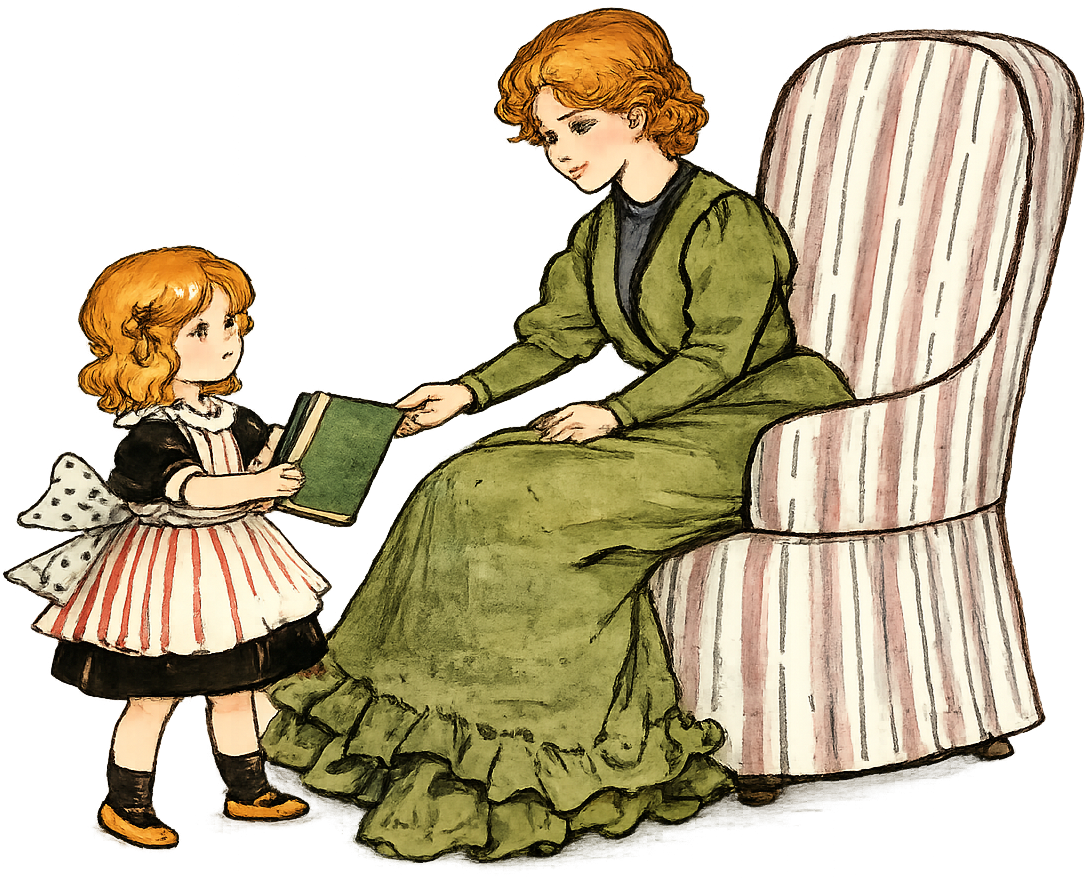
Hi e·berf bîn allen, ias1 ñgeliathol hennad Edhellen. Bedhin mevil den, eithro, Naw, î!
Here the book little for you (polite), where learn-will-you (polite) to read Elvish. Judge-I like-you (polite) it, also, Yes, indeed!
Here is a little book for you, where you may learn to read German. I’m sure you’ll like it, too, Yes, very much indeed!
Añ gaeth i na vinui ú-iston i·phith egelrin, rong istathol din il dhae vael, a gelio din o rened.
For reason that at first not-have knowledge-I the words different, yet have knowldge-you (polite) them all very well, and learn them from remembering.
For though at first you cannot tell the different words apart, yet soon you’ll know them all quite well and get them off by heart.
Ah eithro, pi diril, em vain dhae vi den. Te e·barf bîn rovell. Tolo, davo amben iestad!
And also, if look-you (polite), He the book little most-dear. Come, allow for us to begin!
And there are also, if you look, such pretty pictures in it. It is the dearest little book—come on, then, let’s begin!
e·Vuig nín
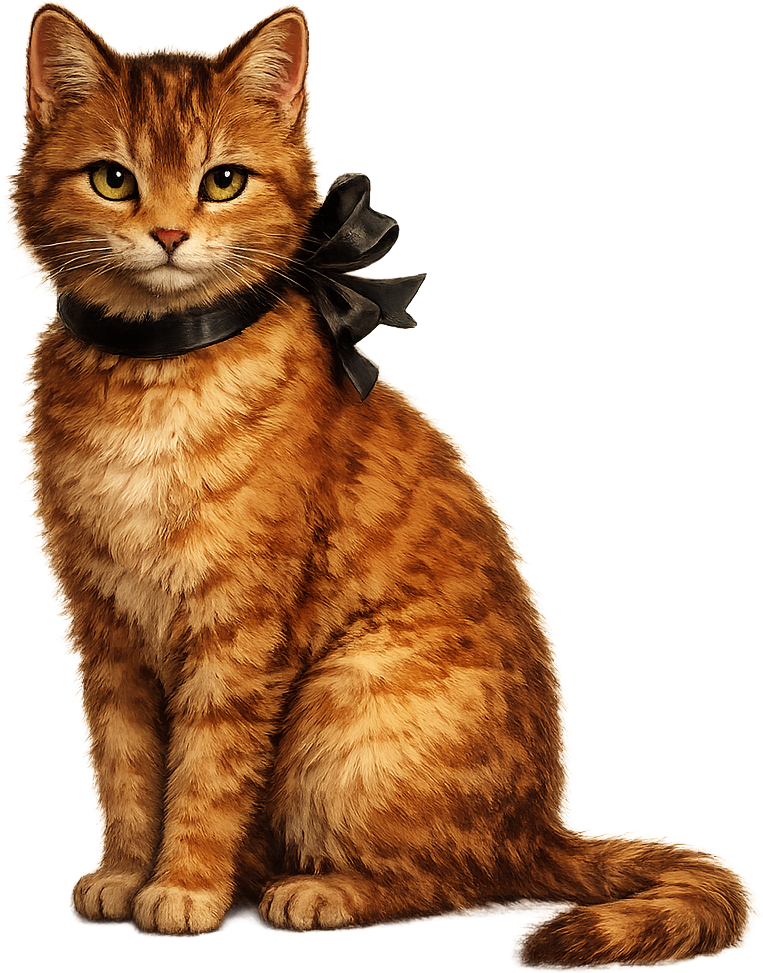
Mas2 e·vuig nín?
Where the cat my?
“Where is my cat?”
Ú-iston.
Not-have knowledge-I
“I do not know.”
e·Thim
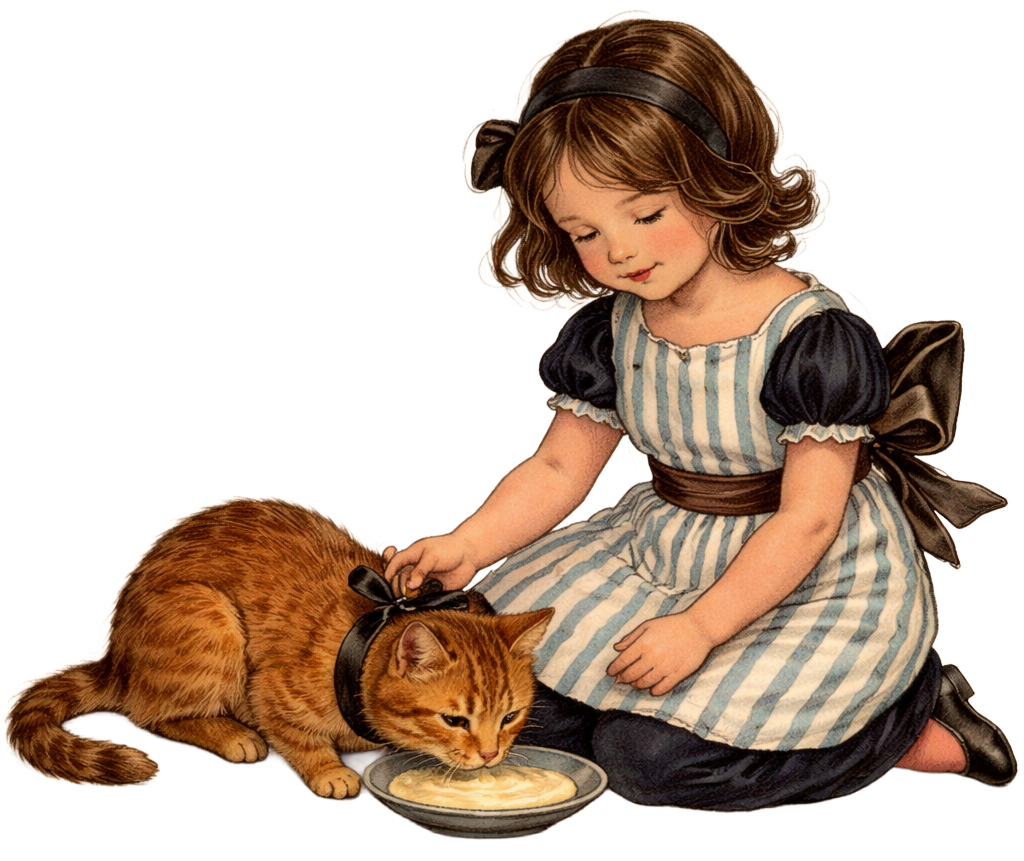
Gerin thim anden.
Possess-I milk for-her.
“I have some milk for her.”
Mâf thim.
Likes-(she) milk.
“She is very fond of milk.”
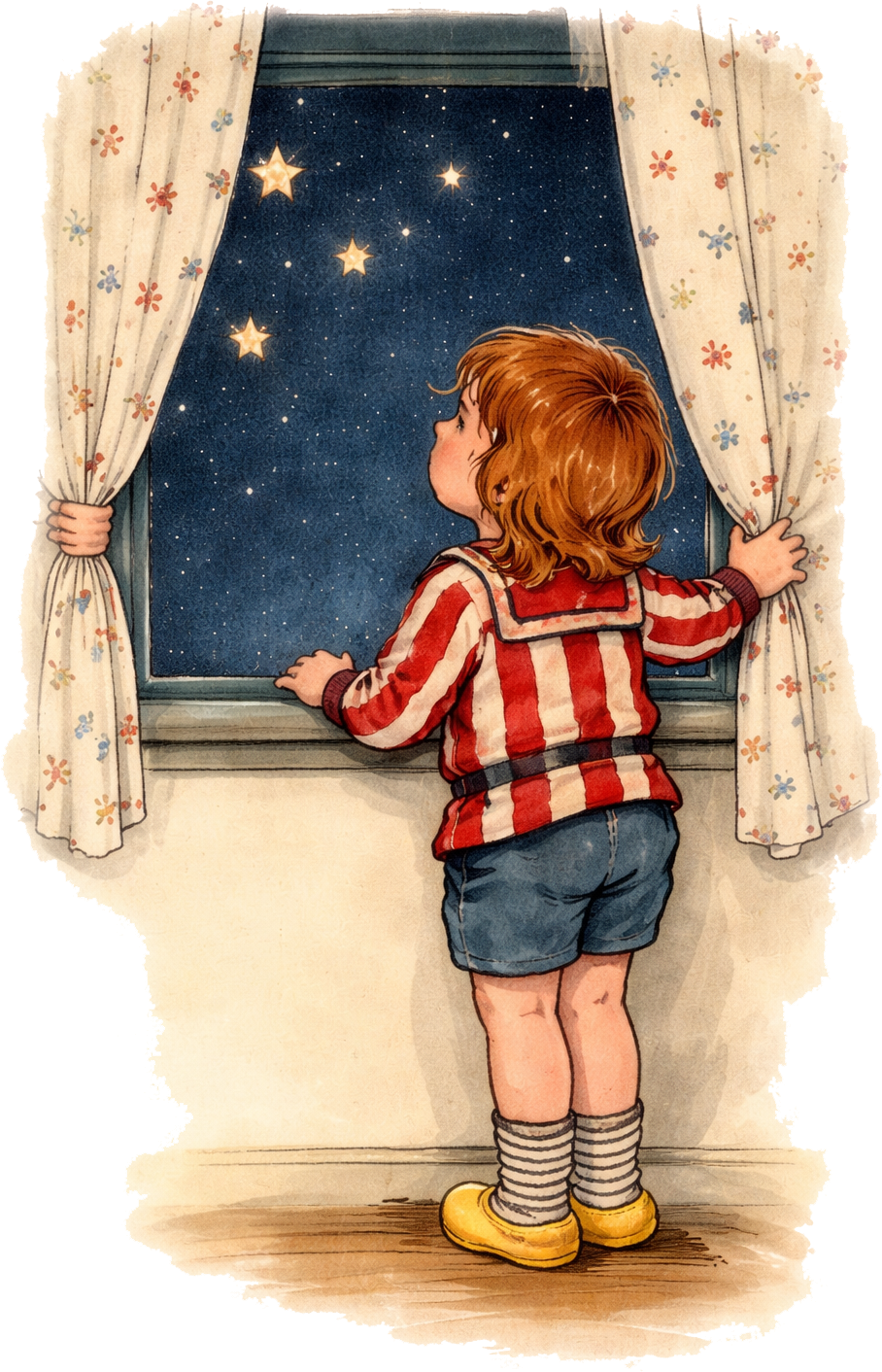
Ithil
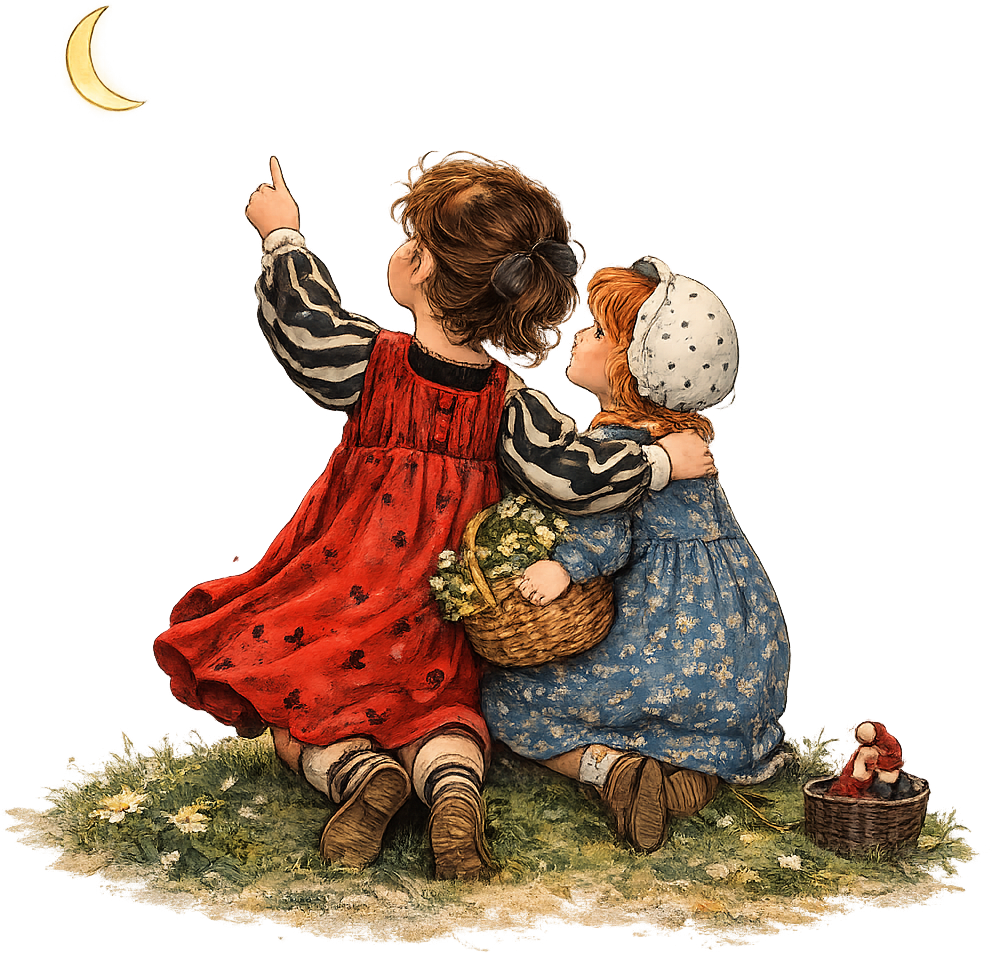
Cenin Ithil
See-I the moon.
“I see the moon.”
Dae gail Ithil.
Very bright the moon.
“It is very bright.”
i·Ñgîl
Eithro dhae bain i·ñgîl.
Also very beautiful the stars.
“The stars are also very beautiful”
Ithil ah i·ñgîl geliar ben.
The moon and the stars illuminate us (inclusive).
“The moon and the stars light us.”
Min hant
Mas2 gin?
Where you (familiar)?
“Where have you been?”
Min hant/Mi e·hant.
In the garden.
“In the garden.”
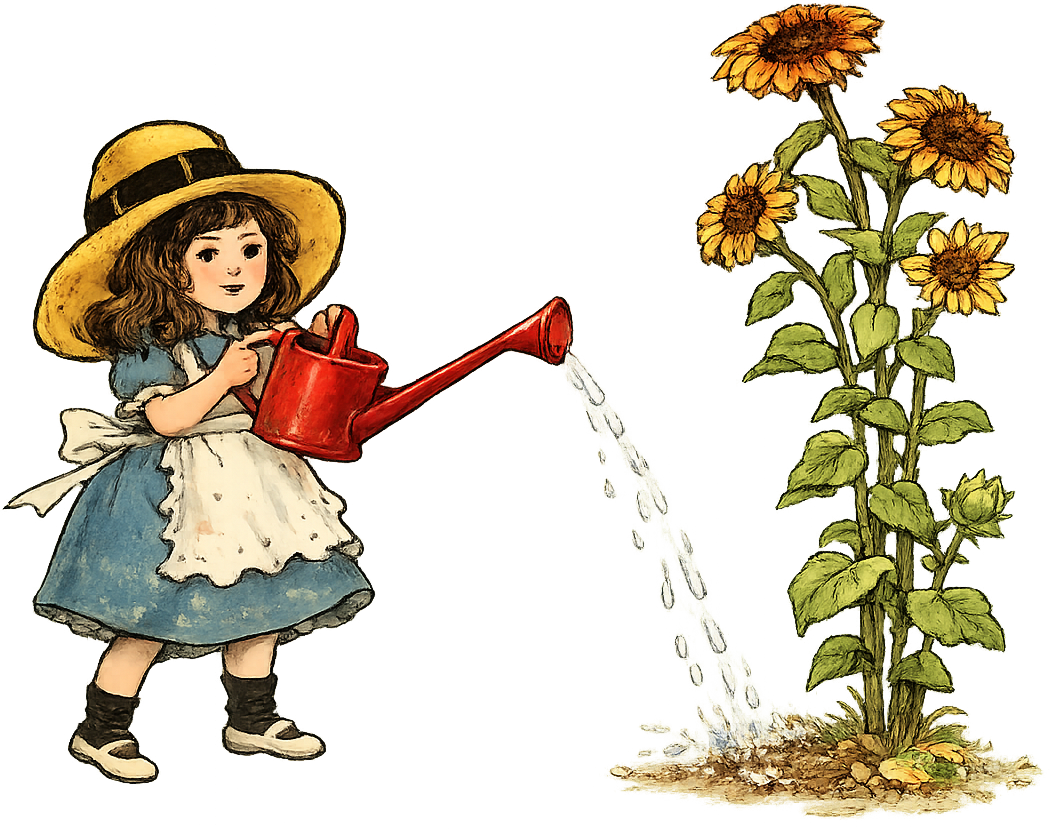
i·Nîw
Egínen i·lyth vain.
Saw-I the flowers beautiful.
“I have seen the pretty flowers.”
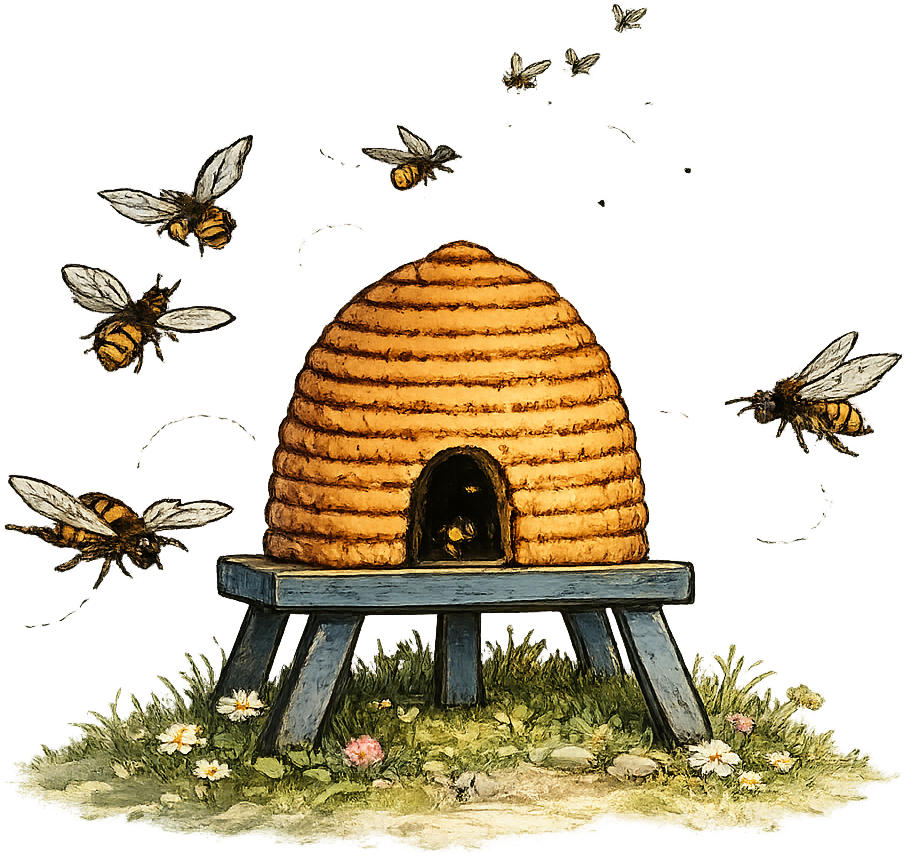
Ah egínen i·nîw i ñgwerir ‘lî.
And saw-I the bees that yield honey.
“And I have seen the bees, which make honey.”
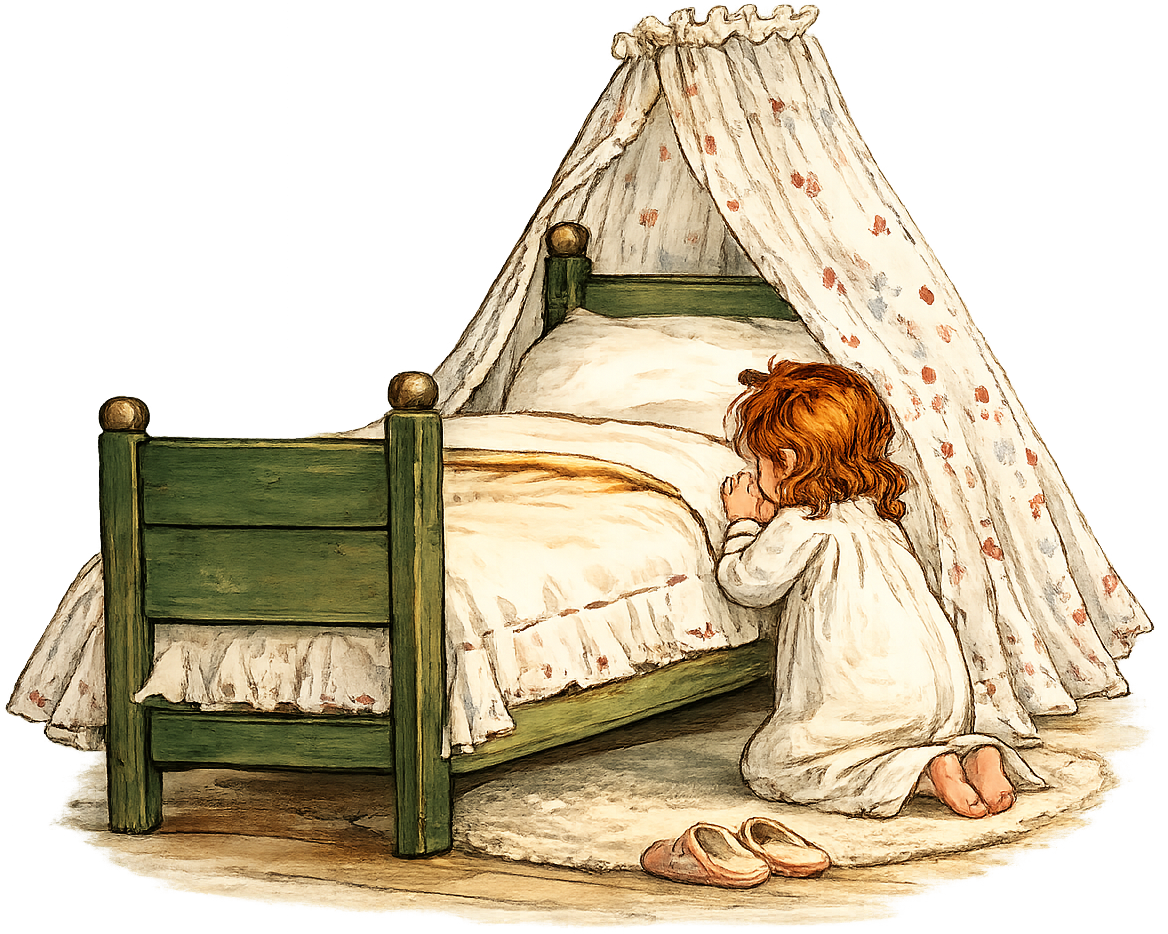
e·Chaust
A! Melin e·chaust bîn nín io ni lom.
Oh! Love-I the bed little my when I tired.
“Oh! how I love my little bed when I am tired.”
Te nim, liss, elvain.
It white, soft, wonderful.
“It is so white, and so soft, and so nice.”
Dû vaer
Sevin uil elvain viñ chaust bîn nín.
Have-I dreams wonderful in the bed little my.
“l have the sweetest dreams in my little bed.”
Merin i hevil dhû vaer, emel.
I wish that you (polite) have night good, mother.
“Good night, Mamma.”
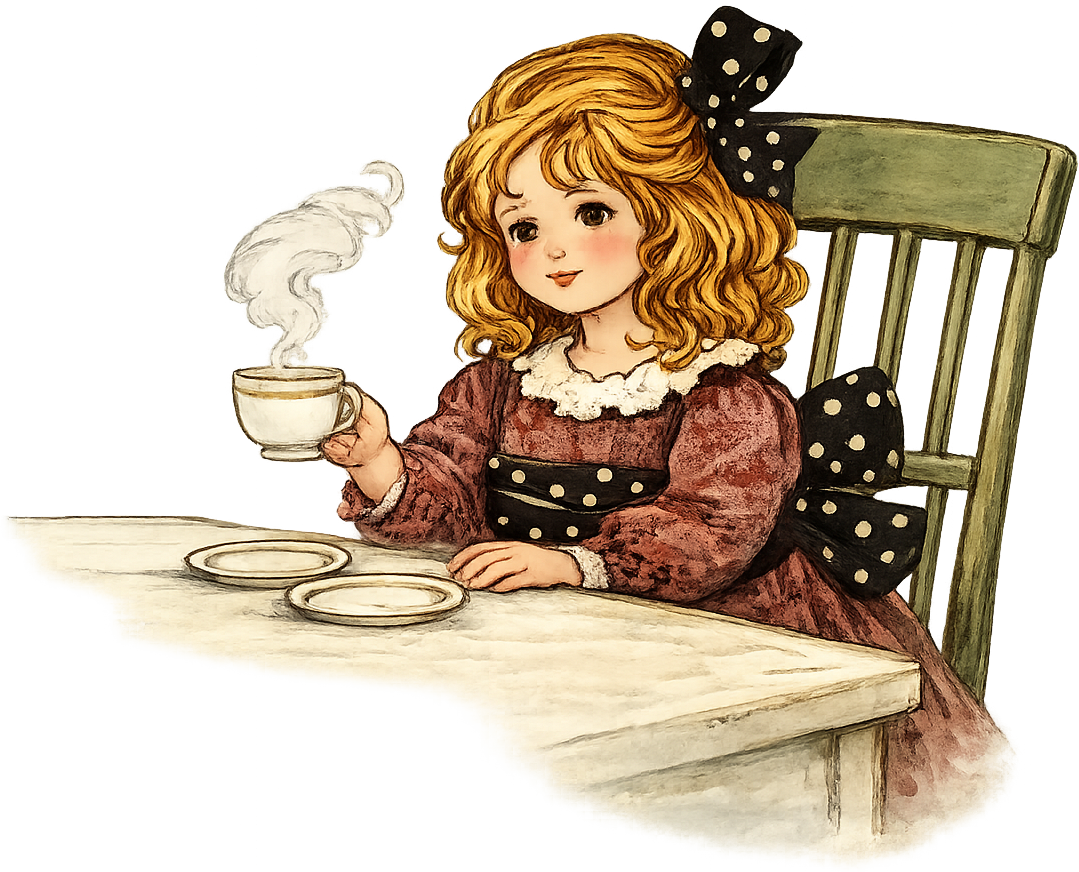
en·Yllas nín
Brassen en·Yllas nín
Very hot the tea my.
“My tea is too hot.”
Ú-belin soged den.
Not-(physically) able-I to drink it.
“I cannot drink it.”
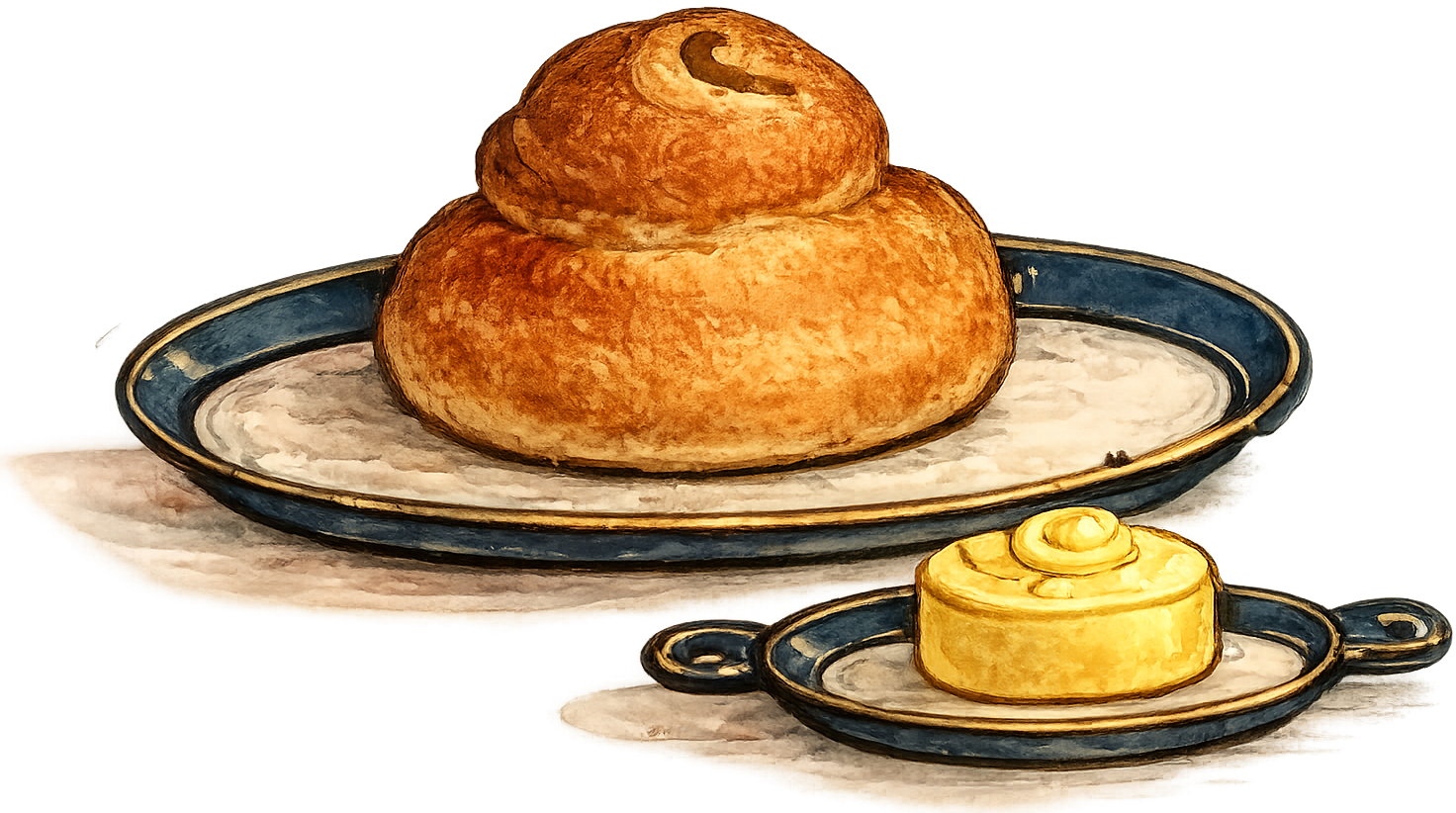
e·Vast ah e·vang
Gritho i ú-fedig3 den.
Mind that not-spill-you (familiar) it.
“Mind that you do not spill it.”
Savo níth4 bast a mang bîn.
Have bread and butter.
“Take some bread and a little butter.”
Neth vaelengas5
Medig Amorvad?
Eat-you (familiar) Breakfast?
“Have you had breakfast?”
Naw, emel.
Yes, mother.
“Yes, mother.”
To6 dogo annin e·barf.
Then bring to me the book.
“Then bring me your book.”
e·Barf
Hennog dhae vael.
Read-you (familiar) very well
“You read very well.”
Ci neth vaer.
You little girl good.
“You are a good little girl.”
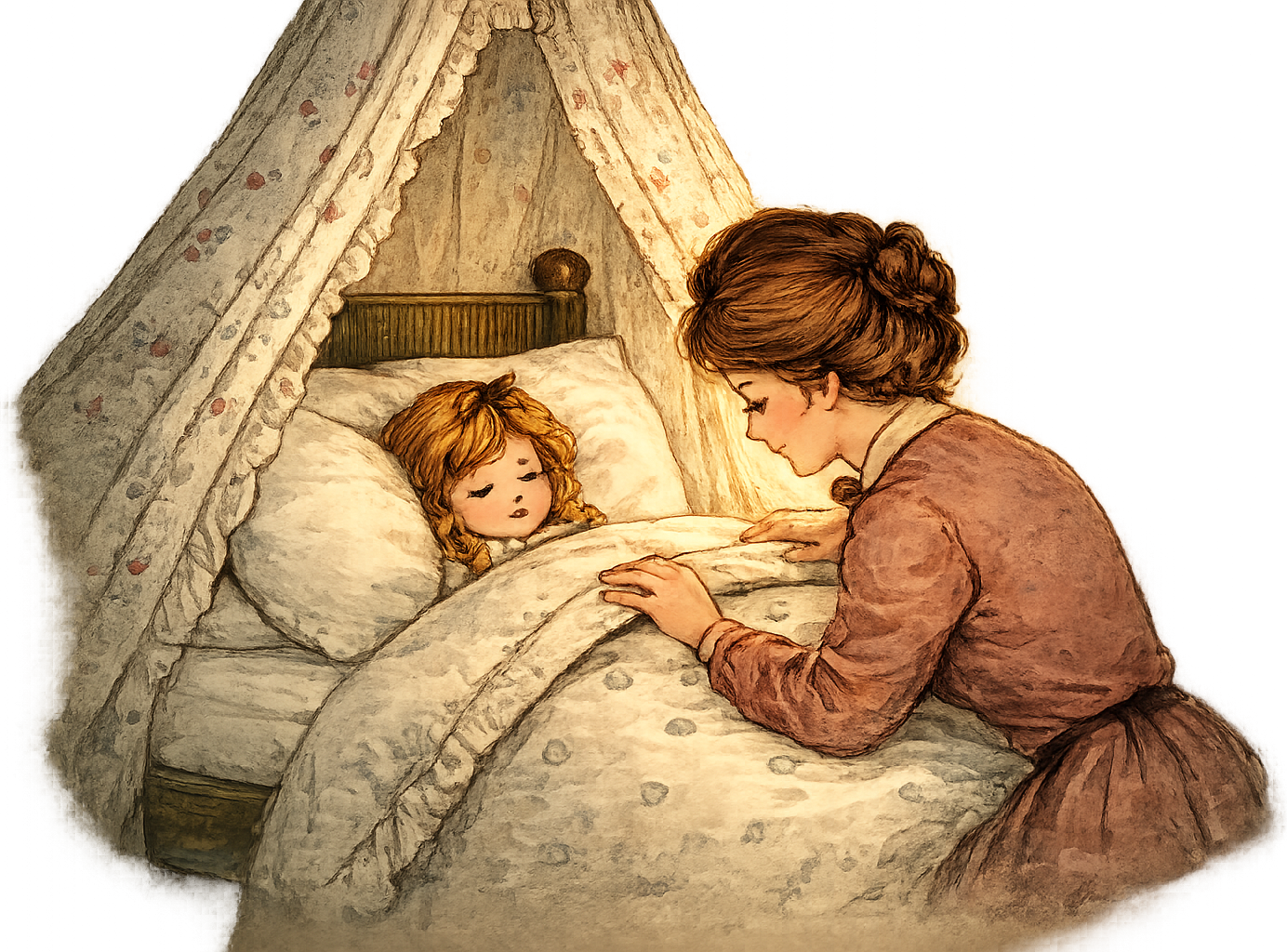
e·Chen bîn
e·Chanar nín lôr.
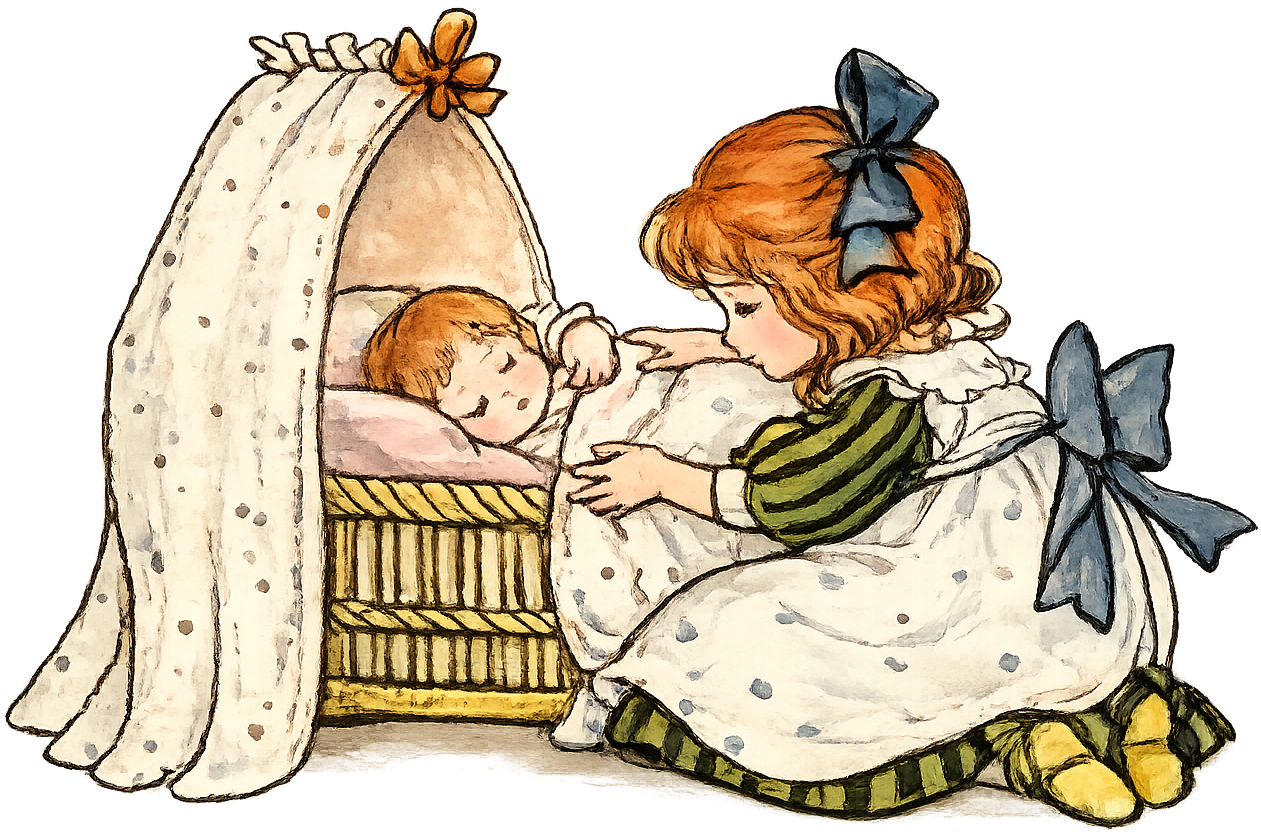
The brother my sleeps.
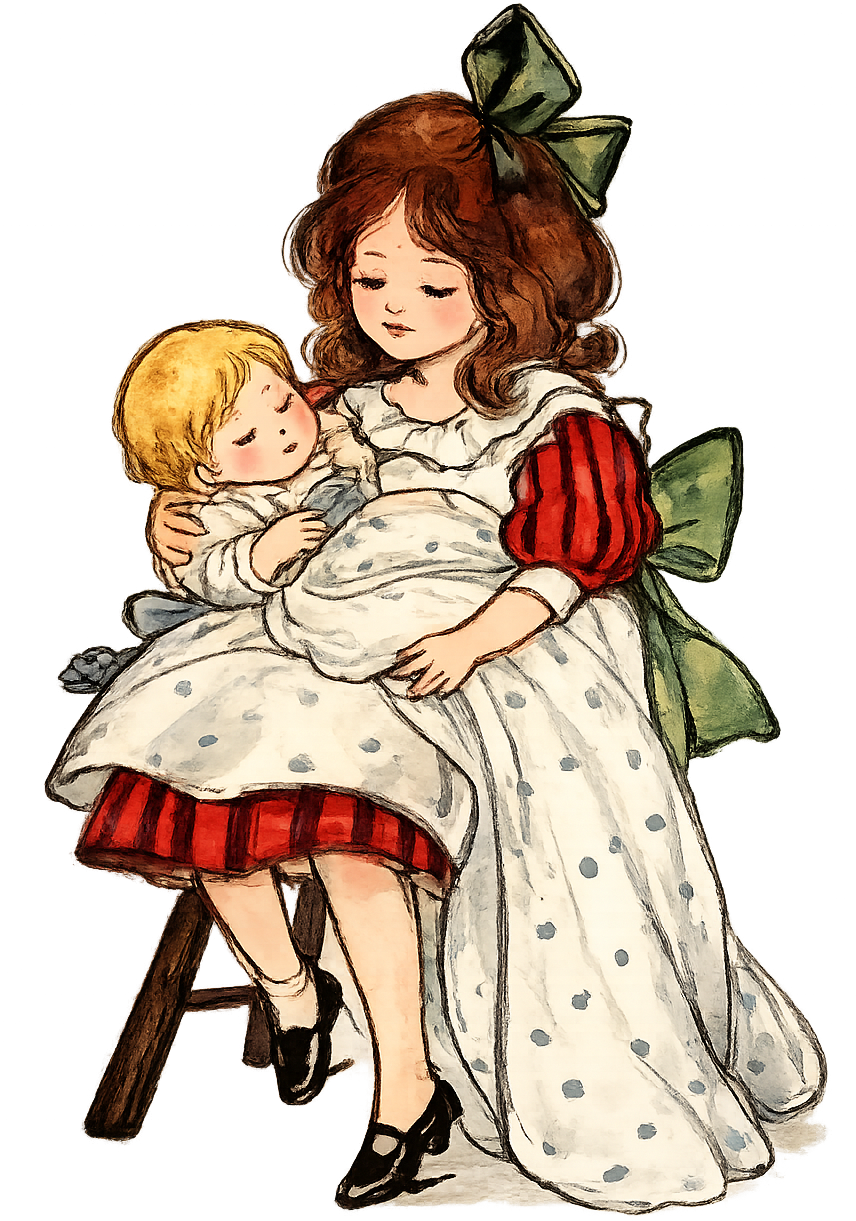
“My little brother is going to sleep.”
Te vîw.
He small.
“He is quite small.”
Gâr chausteg7 ‘u dobas nim.
Has-(he) crib (together) with covering white.
“He has a cradle with white curtains.”
Lôr
Te vain ah ú-bêd.
He beautiful and not-speak-(he).
“He is very pretty; but he cannot speak.”
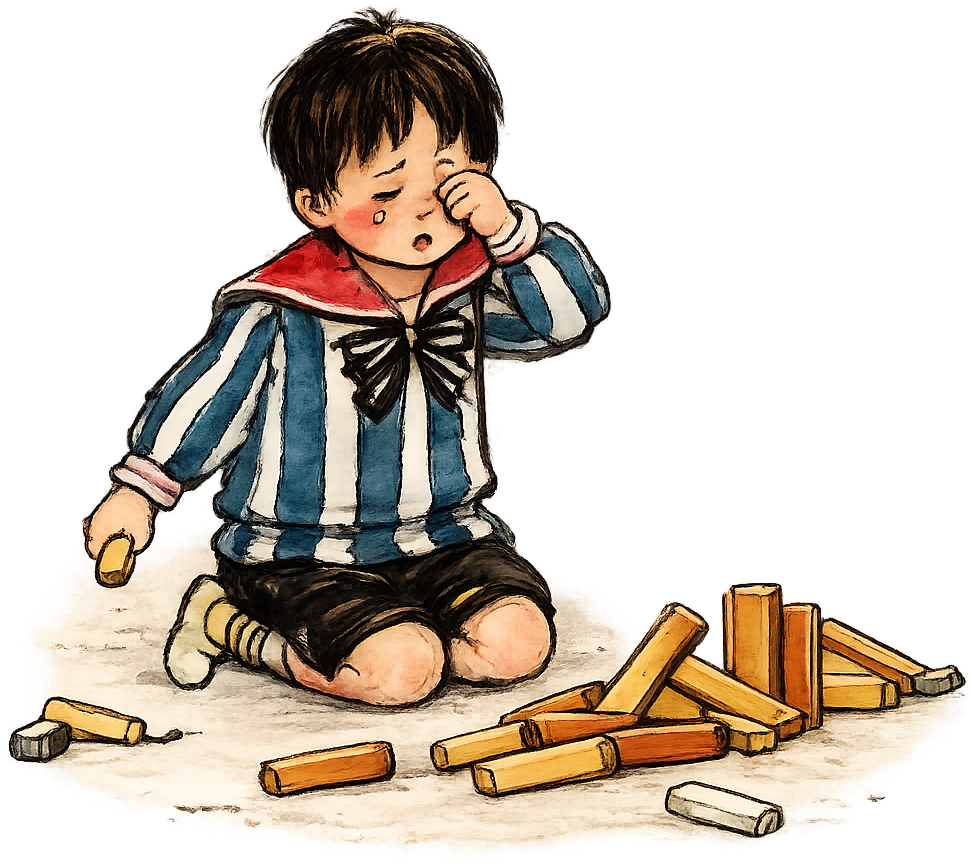
Mevin tired den lo lôr!
Like-I to watch him while sleeps-(he)!
“I do like watching him when he is asleep!”
i·Lebyth
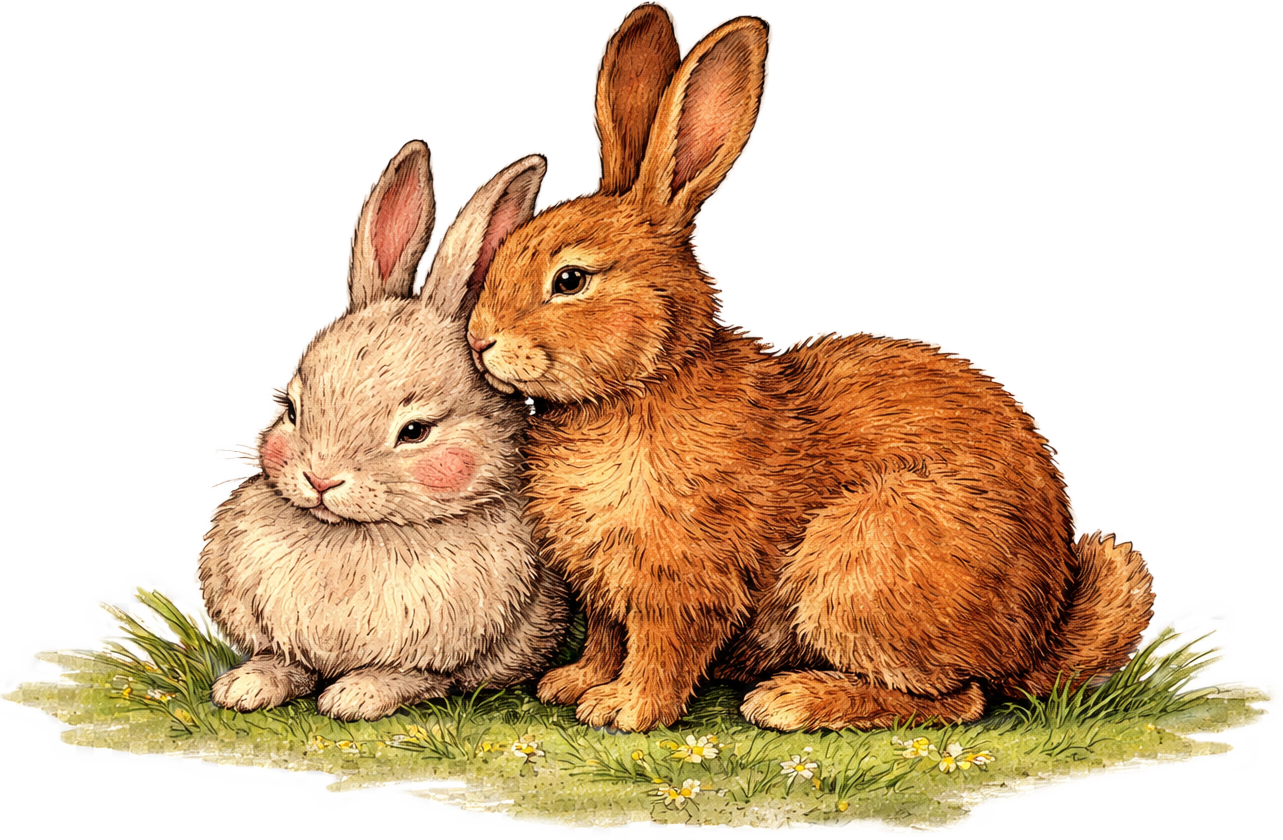
Cenig i·lebyth vín?
See-you the rabbits our (exclusive)?
“Have you seen our rabbits?”
Tolo a cheno din!
Come and see them!
“Come and see them.”
Nim ‘ui pheg vyrn er laboth.
White (together) with spots black one rabbit.
“One is white with black spots.”
Bloss a lhaegas
Ah il vithren en·egel.
And all grey the other.
“And the other is all grey.”
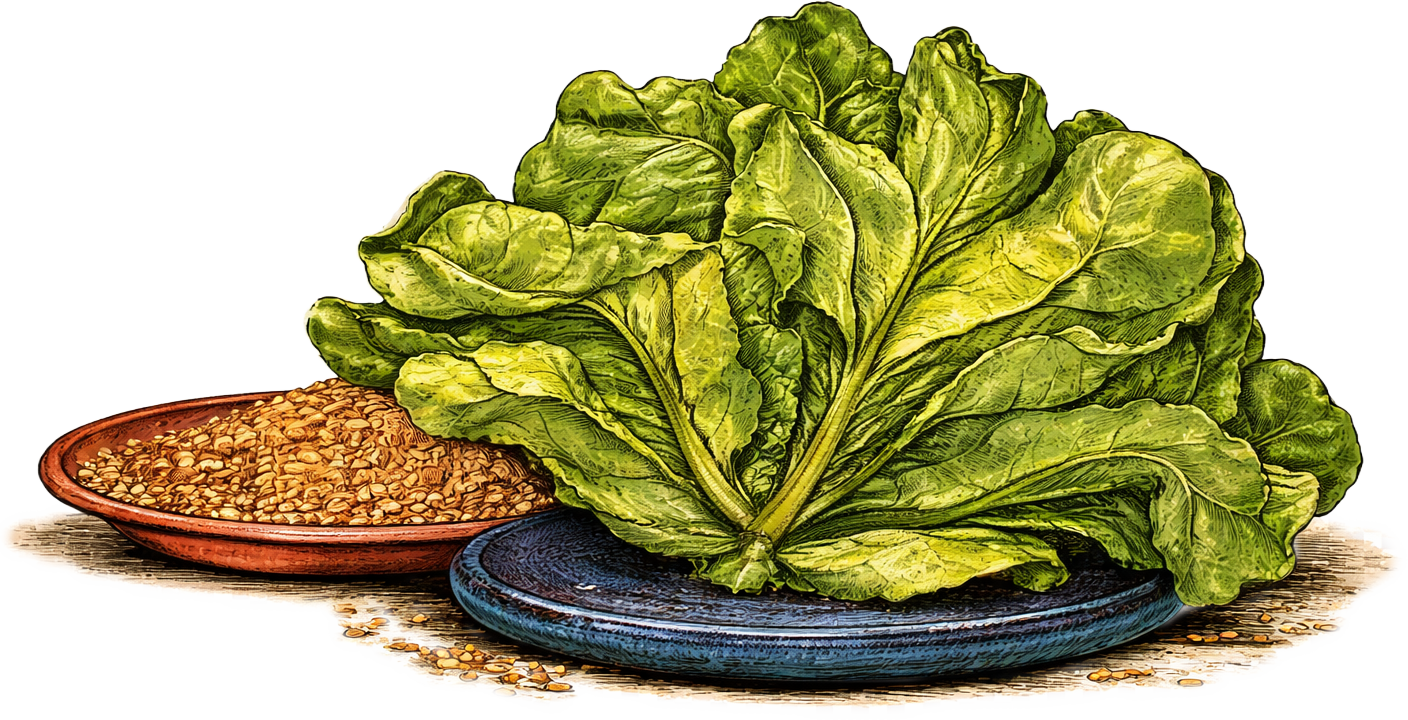
Medir vloss a lhaegas.
Eat-they wheat and greenness.
“They eat bran and lettuces.”
Tiro i·chend hílol dín ah i·lhewig end dín.
Look at the eyes shining their and the ears long their!
“Look at their shining eyes and long ears.”
e·Dhant
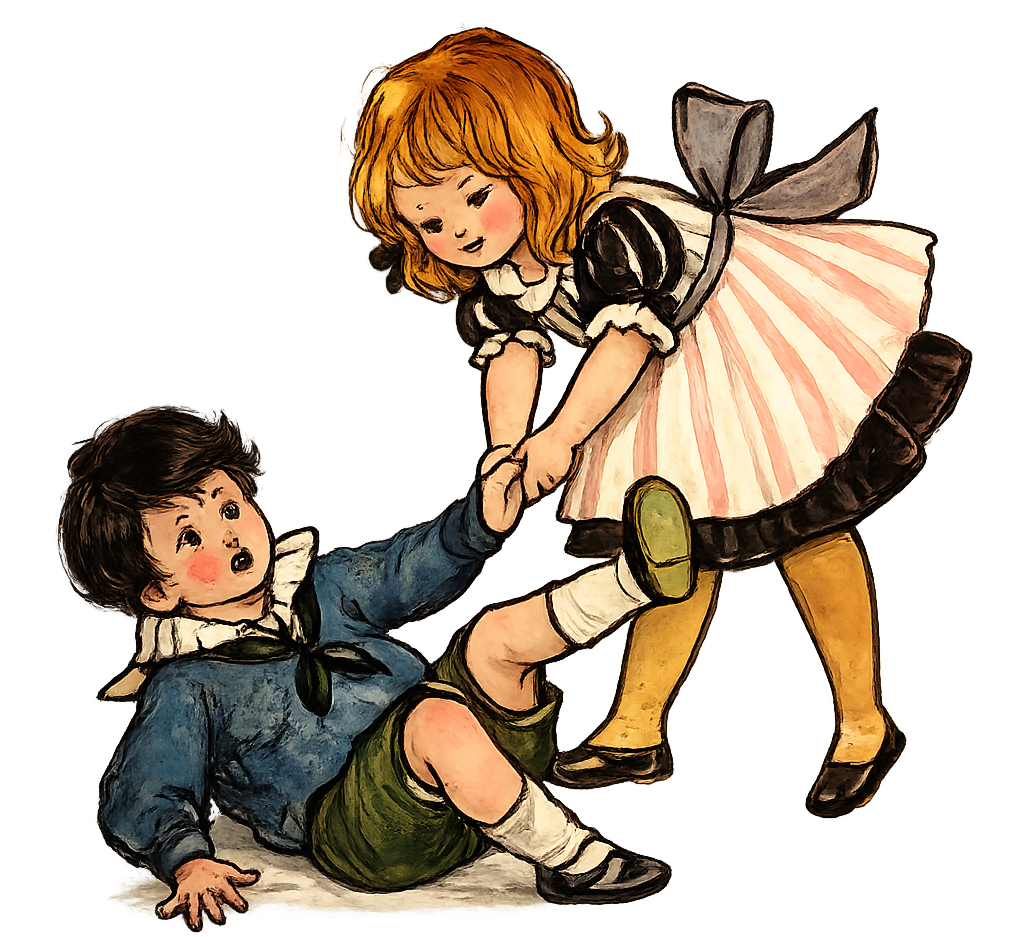
A! Dannassen ah im harnassen.
Oh! I fell and myslef wounded-I.
“Oh! I have fallen down and I have hurt myself.”
Felin naeras angin ionn bîn! Grestathon gin am.
Feel-I sorrow for you boy little! I will help you up.
“Poor little boy! I will pick you up.”
Harnannen e·dhol, e·vâb, e·deleg, en·amoth nín.
Wounded-I the head, the hand, the leg, the shoulder my.
“I have hurt my head, my hand, my leg, and my shoulder.”
Poe hardh/Po e·hardh
A! Felin lhaew dhae.
Oh! Feel-I sick very.
“Oh! I feel very ill.”
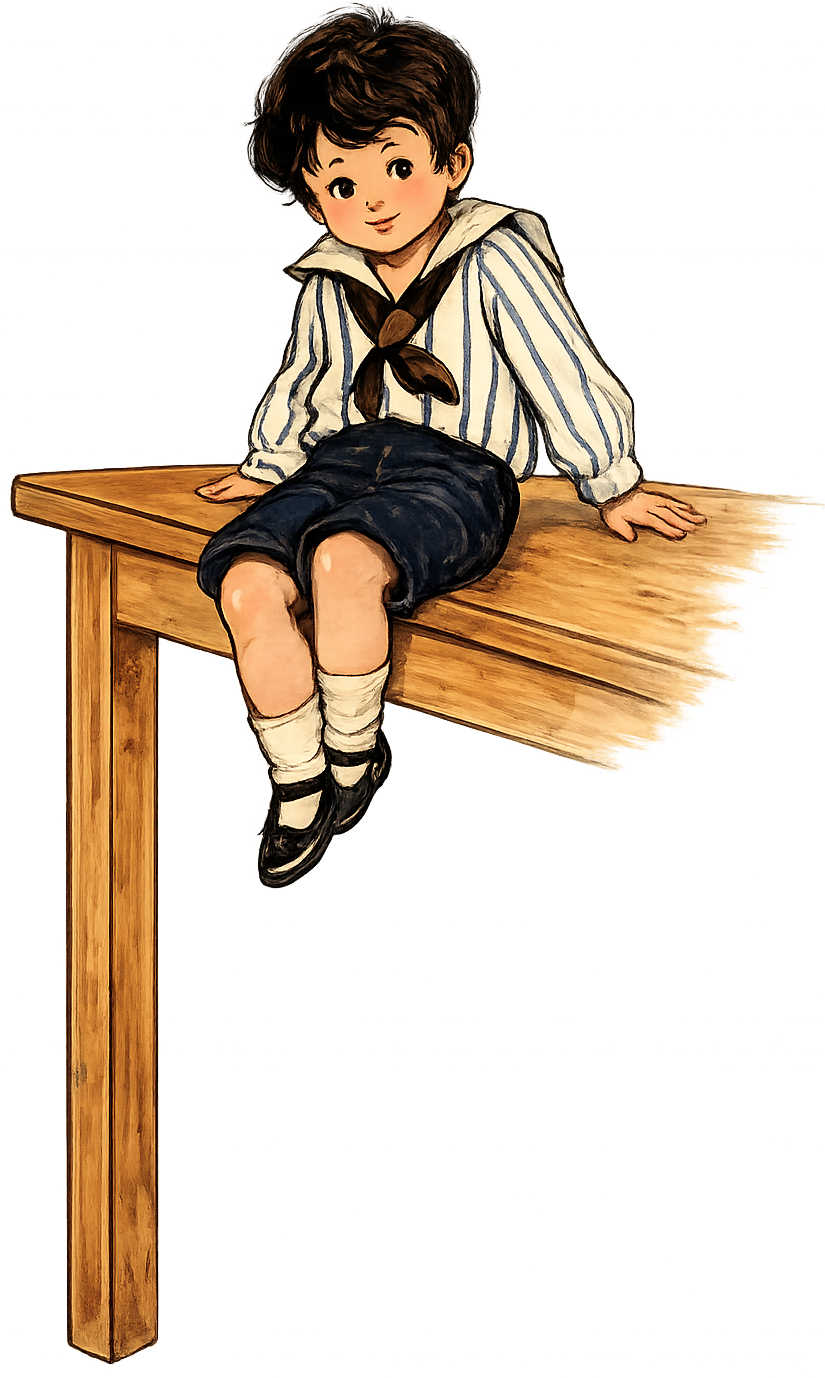
To5 , am man gaeth emredig boe hardh/bo e·hardh bi ú-verig dannad?
Then, for what reason climb-you (familiar) on the table if not-want-you (familiar) to fall?
“But then, why did you climb on the table if you did not want to fall?”
e·Duil8
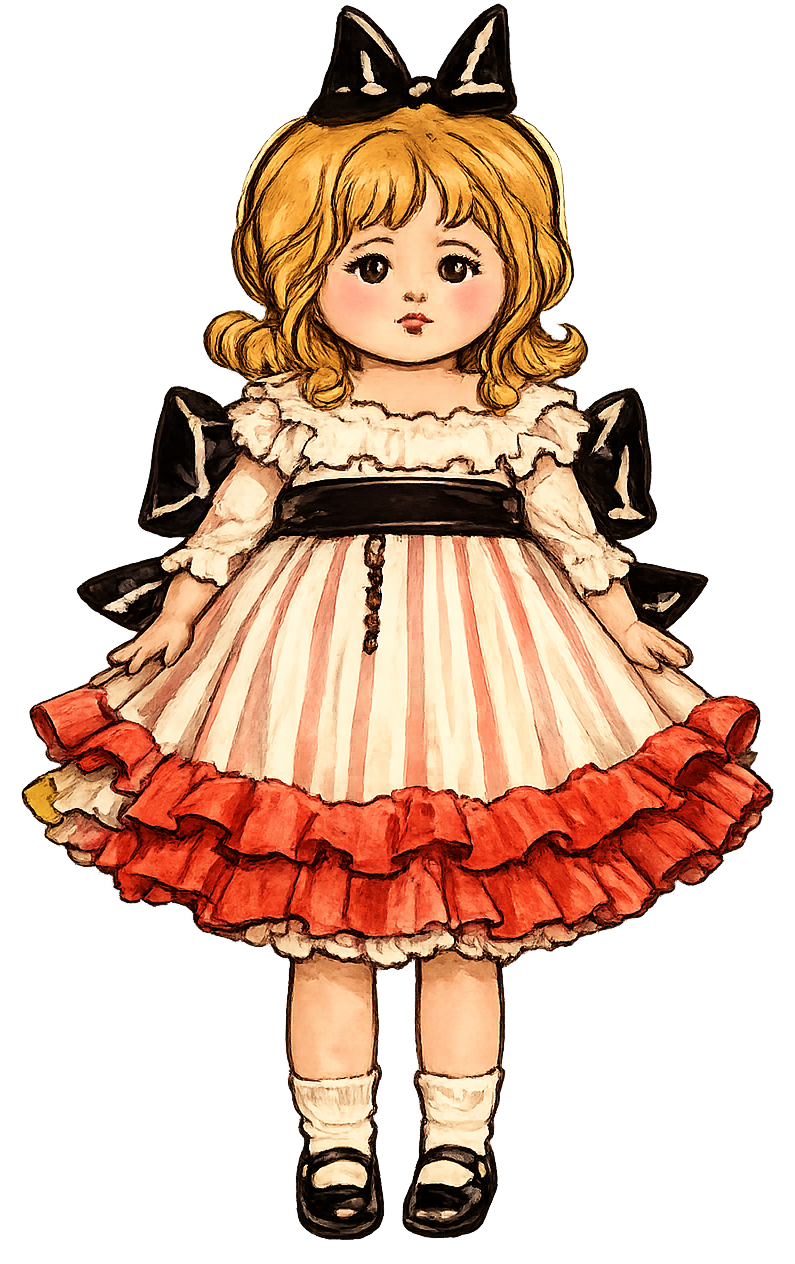
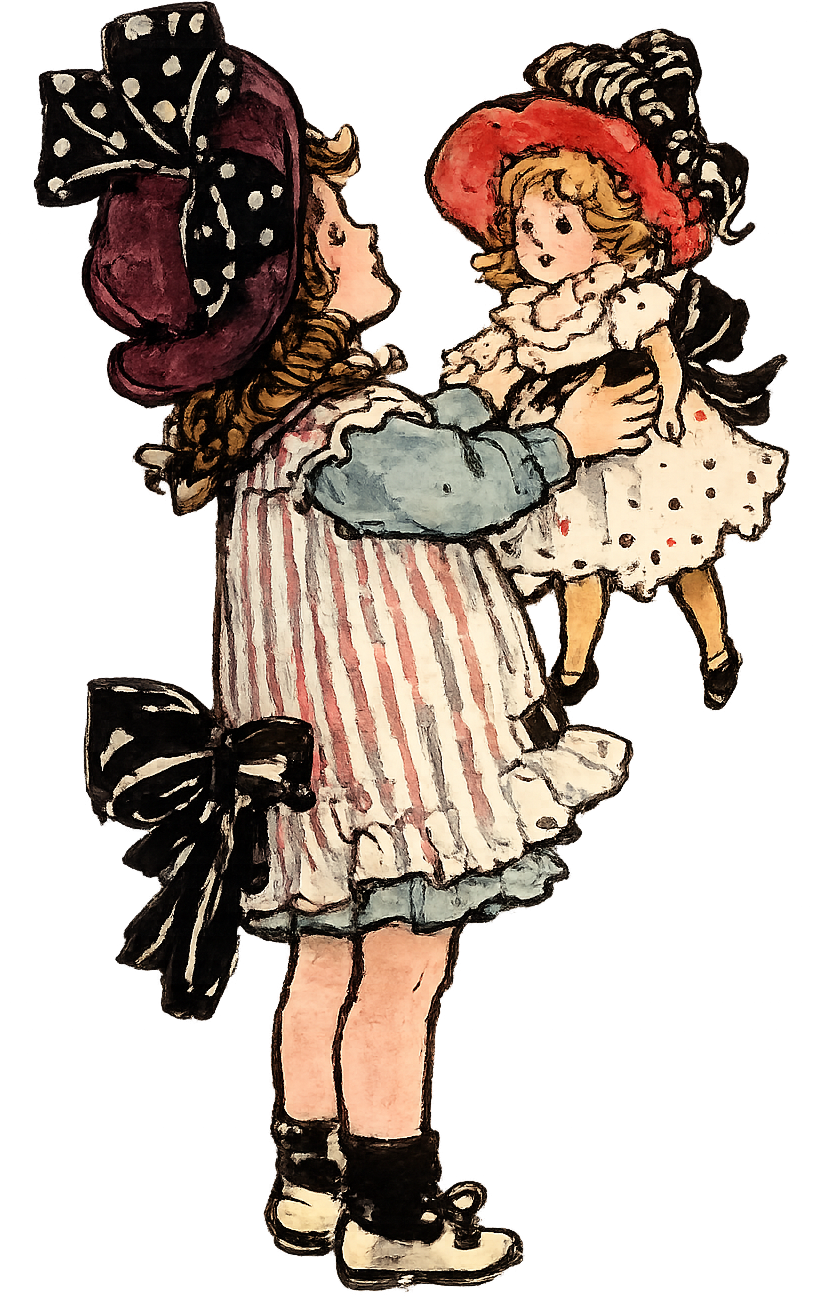
e·Duil8 nín chora nethail en·aduial hen.
The doll my expects guests the evening this.
“My doll expects visitors this evening.”
Boe ammen feriad i·sem.
It needs for us (exclusive) to prepare the rooms.
“We must get the rooms ready.”
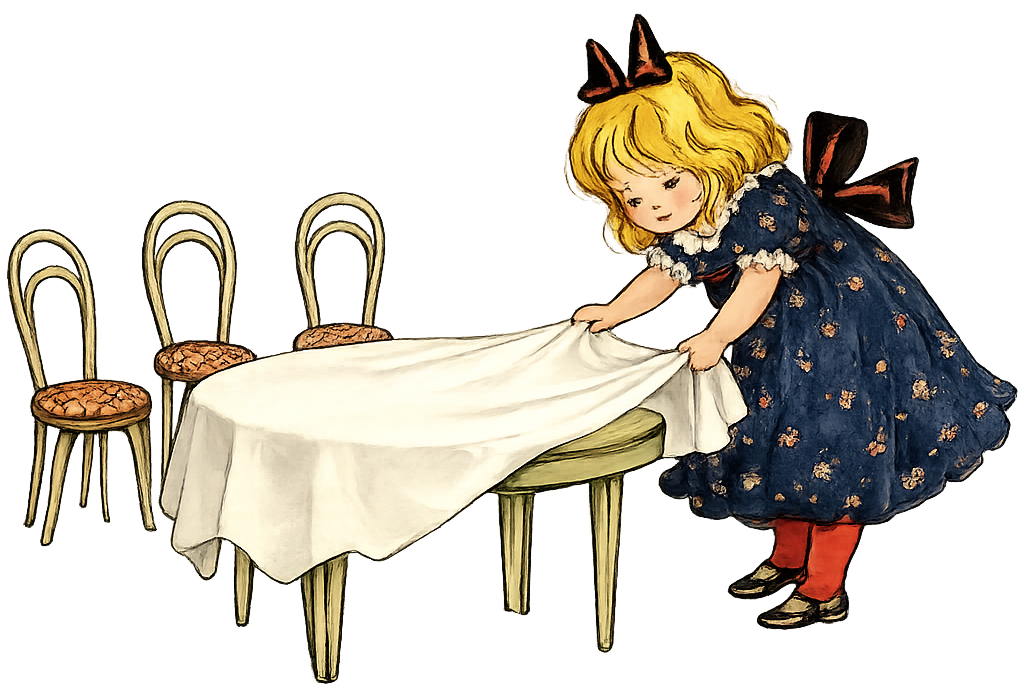
Panno i·chedhy, a sesto e·lann boe hardh/bo e·hardh.
Arrange the chairs, and put the cloth on the table.
“Arrange the chairs, and put the cloth on the table.”
Togo i·phelf ah i·thelphig.
Bring the books and the spoons.
“Bring; the plates and the spoons.”
Tobon e·hardh
Savathof vast laich nan il choest.
Have-will-we (exclusive) bread sweet of all flavors.
“We shall have cakes of all sorts.”
Ah eithro vast, pibingim9 , cream.
And also bread, jams, cream.
“And also bread, jams and cream.”
Ah che balf10 bast a mang.
And perhaps plate bread and butter.
“And perhaps a plate of bread-and-butter”
en·Aew bîn
Hirin aew bîn úvael.
Found-I bird little not-well.
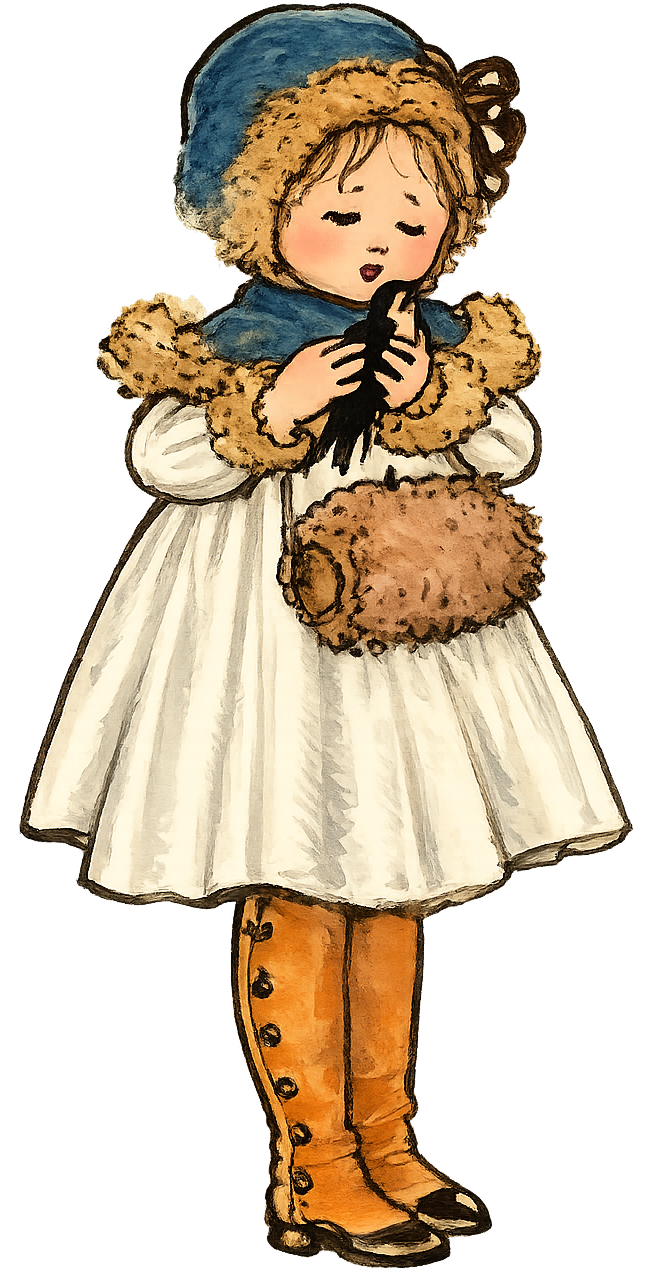
“I have found a poor little bird.”
Te bergorth vedhin.
He half-dead judge-I.
“I believe it is half dead.”
Caedast boe loss/bo e·loss. Ú-obul mened idh·roe dín egor ú-obul linnad.
Lay-(it) on the snow. Not-(physically) able to go the-wings its or not-(physically) able to sing.
“It lay on the snow. It could neither move its wings nor sing.”
Ah e·vuig egin den. Odul ha den, ah evir maded den.
And the cat saw it. Came-(she) beside it, and wanted-(she) to eat it.
“And the cat saw it. She came near it, and wanted to eat it.”
Hoe naur/Ho e·naur
Ach ‘ruithannen den gwahae, ah onúren lim a lheuthannen en·aew bîn úvael.
But frightend-I her away, and run-I quick and picked up-I the bird littl not-well.
“But I frightened her away, and I ran quickly and picked up the poor little bird.”
Orathon den h’ e·naur.
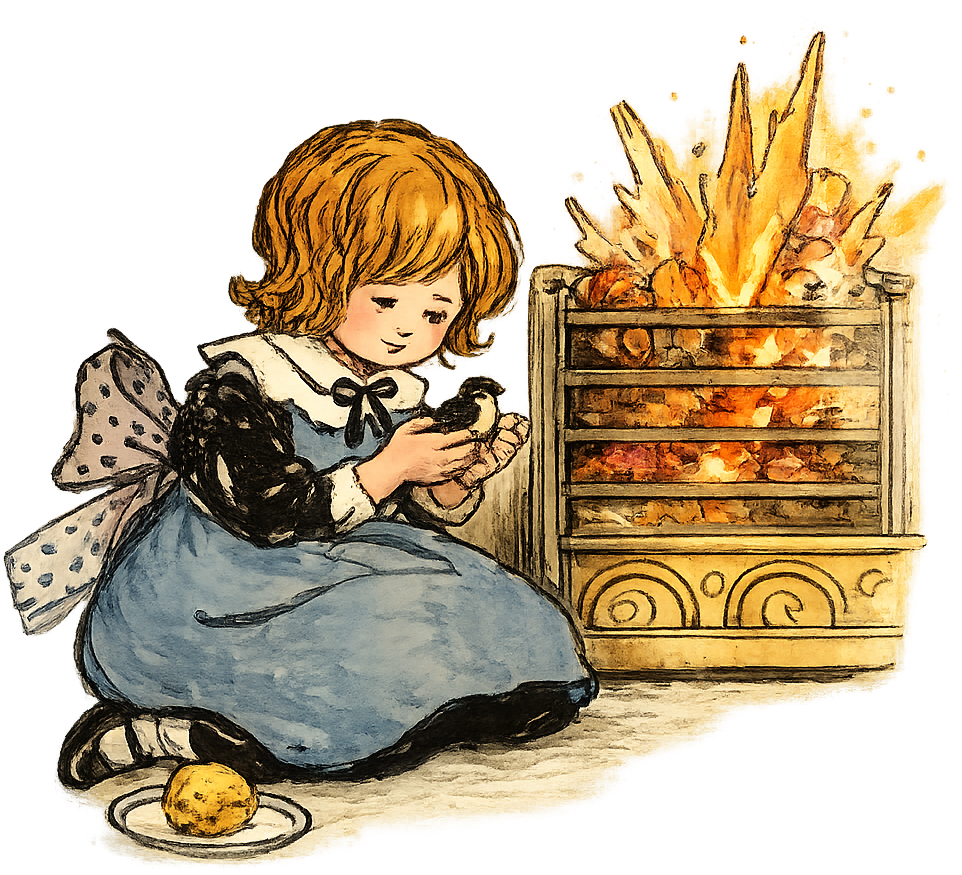
Heat up-I it beside the fire.
“I will warm it by the fire.”
A tho6 annathon den níth4 bîn na vast, a davathon den gwiled gwa.
And then give-will-I it pieces little of bread, allow-will-I it to fly away.
“And then I will give it some crumbs of bread, and let it fly away”
Min eryn/M’ in·eryn
Tolo ‘u nin vin eryn/v’ in·eryn.
Come (together) with me in the woods.
“Come with me into the wood.”
Daer dae i·Ñgelaid.
Big very the trees.
“The trees are so big”
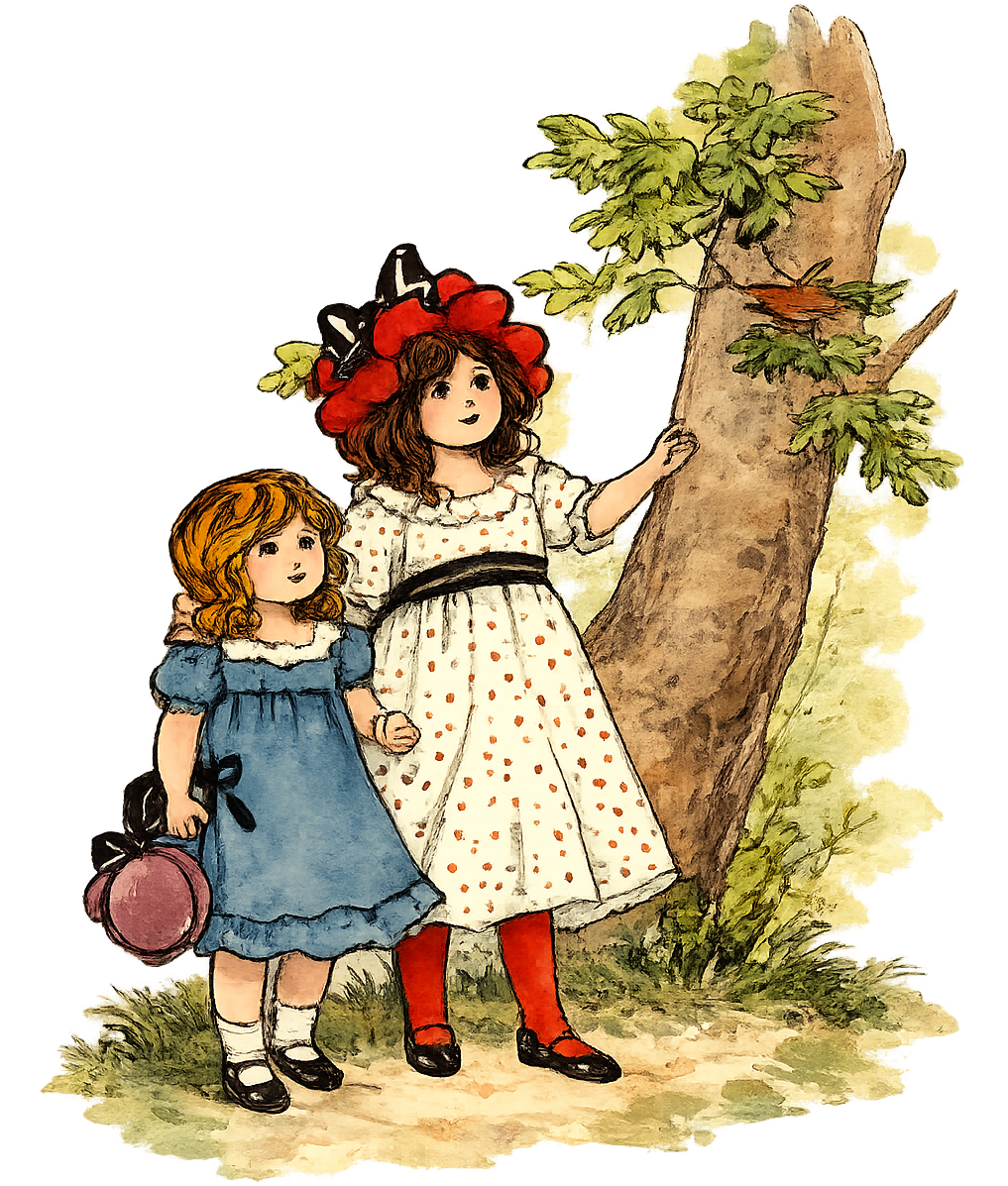
Lasto, dúlin linna vig i·lais.
Listen, nightingale sings among the leaves.
“Listen, a nightingale is singing amid the leaves.”
e·bechof
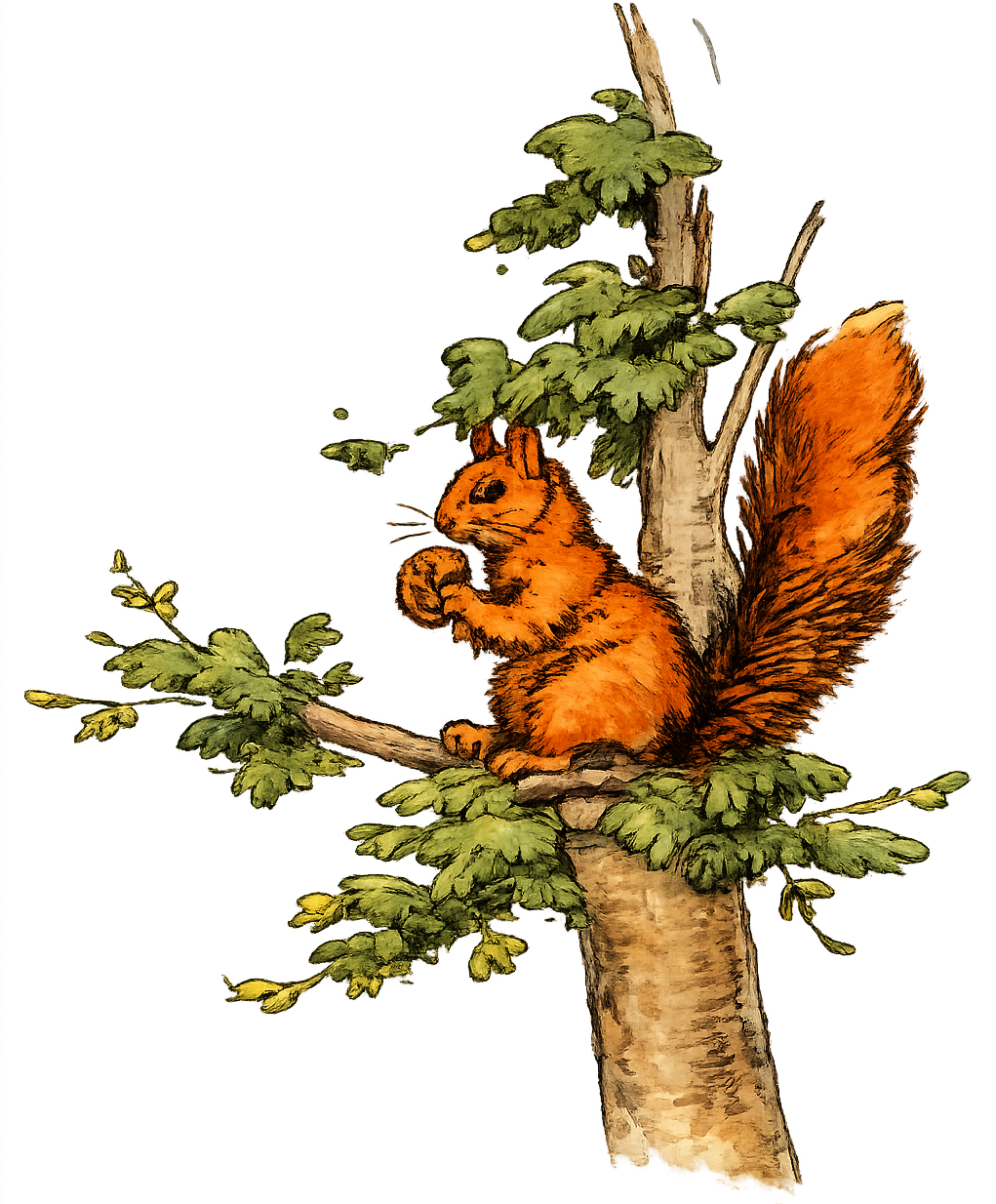
A phechof dha cabol o golf na ‘olf.
And squirrel there is jumping from branch to branch.
“And there is a squirrel jumping from bough to bough.”
A gwí egínen laboth vig i·thuis.
And just now saw-I rabbit among the bushes.
“And I have just seen a hare running among the bushes.”
Min eryn/M’ in·eryn
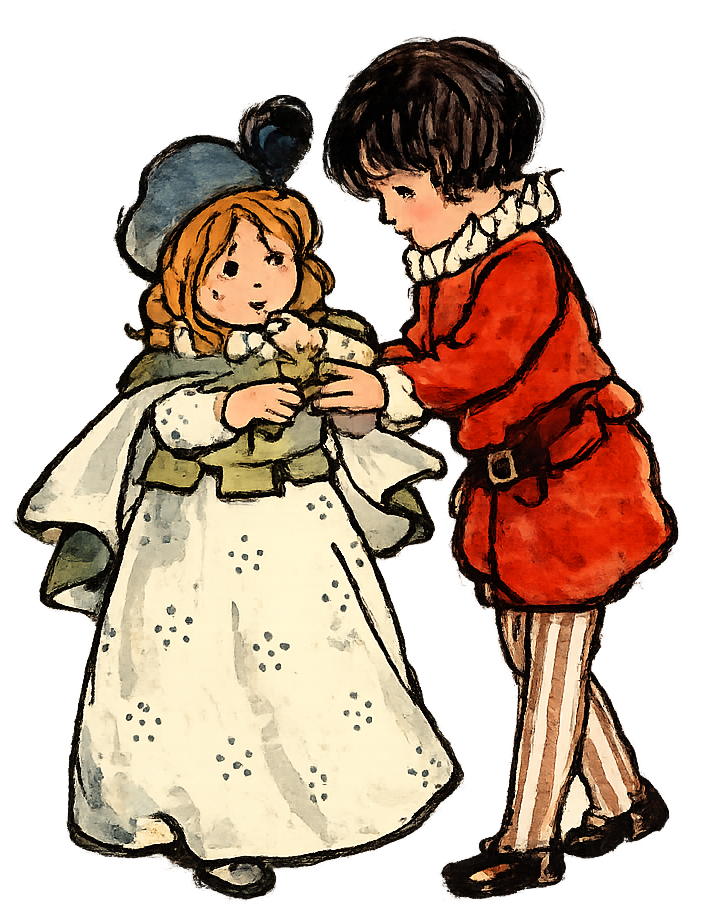
Lhassog bent i·chîn bîn dâd, i líthennin vin eryn/v’ in·eryn.
Hear-you (familiar) story the children little two, who lost in the woods?
“Have you heard the story of the two little children, who were lost in the woods?”
Avanner in·iaif rhoef.
Ate-they the fruits wild.
“They ate wild fruits.”
A na vedui chodar nu ‘aladh.
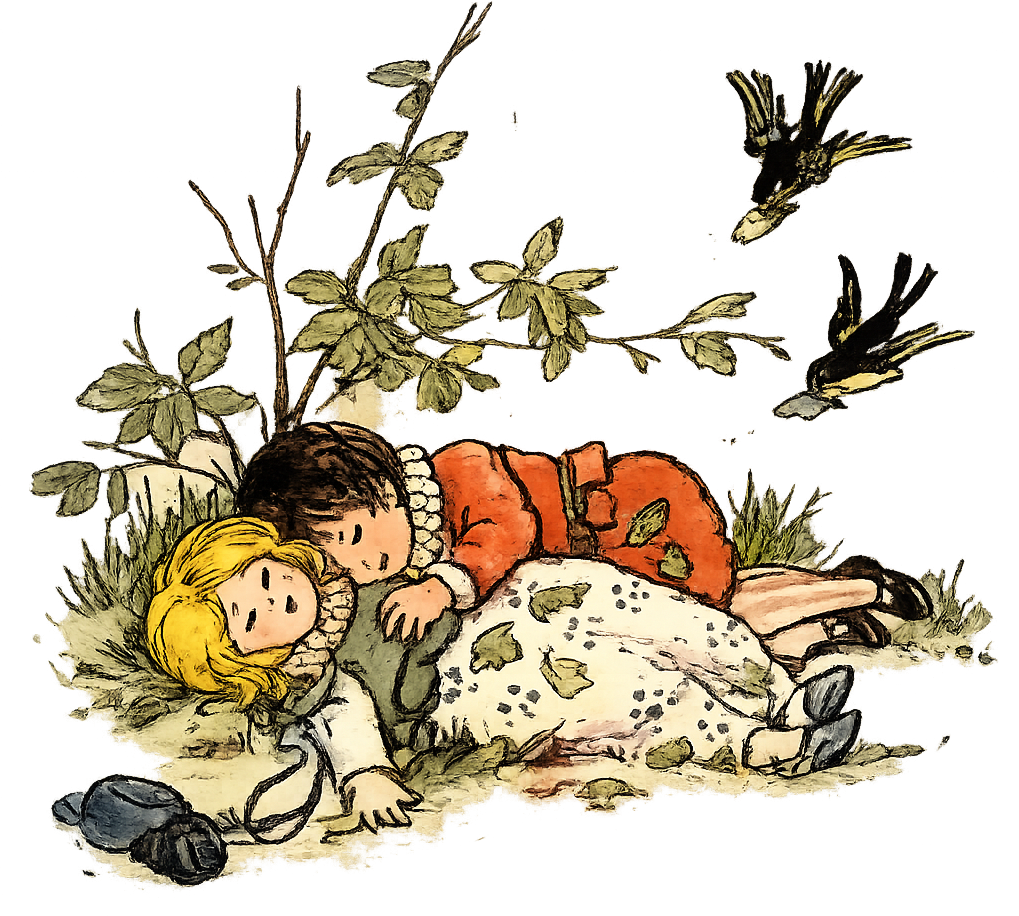
And at last lay down-they under tree.
“And at last they lay down under a tree.”
Ah in·emesgern odúnger lais.
And the robins brought leaves.
“And the red-breasts brought leaves.”
i·chîn nírol
A thobanner i·chîn bîn nírol.
And covered-they the children little sad.
“And coveredup the poor little ones.”
Merin allu olathon líthannen.
Hope-I never become-will-I lost.
“I hope I shall never get lost.”
Tolo, dammínef na mbâr hi!
Come, go back-we (exclusive) to home now!
“Let us go back home at once!”
e·Roch bîn nín dhannast
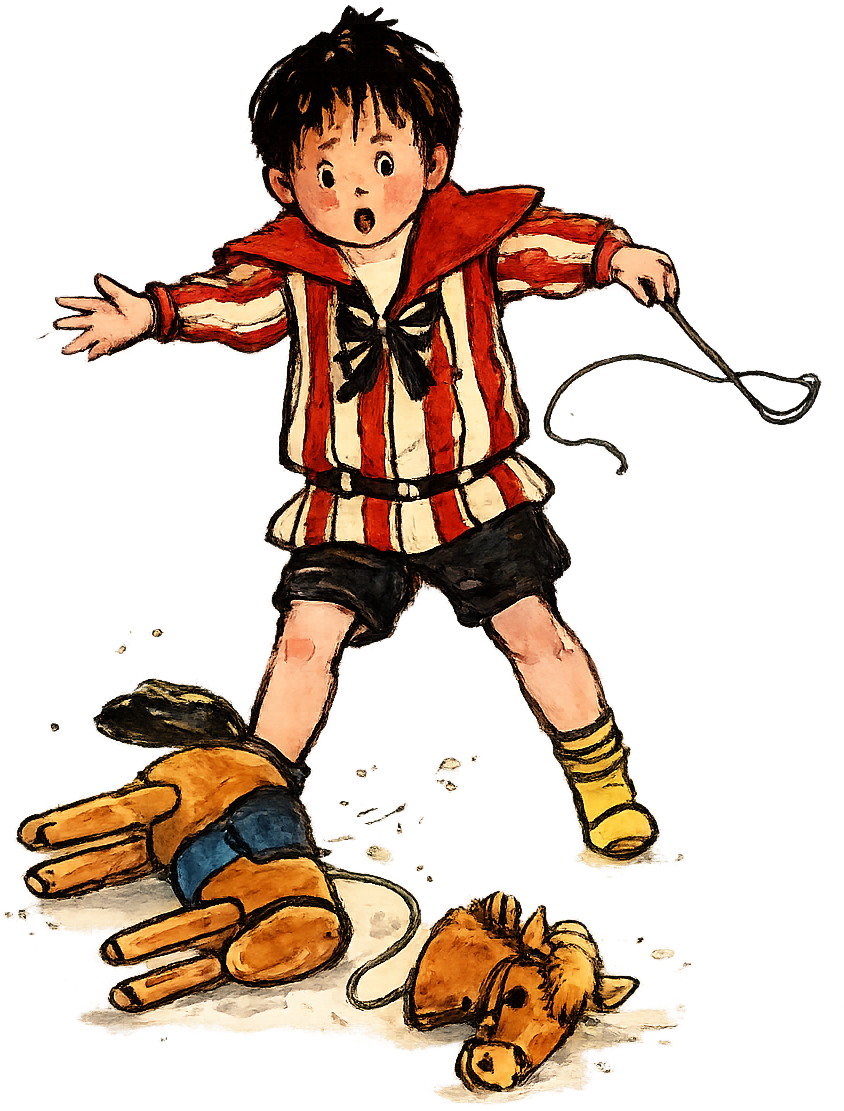
Rengin il i·theliennaid nín. Se naer!
Broken all the toys my. This dreadful!
“My toys are all broken. It is dreadful!”
Ú-geiriannen hen.
Not-caused-I this.
“It is not my fault.”
Aphon e·roch nín, a dannast.
Touch-I the horse my, and falls-(he).
“I touch my horse, and he falls.”
Tirin e·duil nín a dannast laew, a rhâg e·dholl dín.
Look-I the doll my and falls-(she) frequent, and breaks the head her.
“I look at my doll and very often she falls too, and breaks her head.”
in·Edaib nín dhannar ui
e·‘Wilbog12 nín ‘wîl gwa a chinia vi ‘aladh.
The ballon my flies away and sticks in tree.
“My balloon flies away and sticks in a tree.”
Ah in·edaib nín dhannar ui.
And the buildings my fall ever.
“And my buildings always tumble down.”
Se ú-alwed dhae.
This not-fortunate very.
“It really is most unfortunate.”
e·‘Rithwen13
e·‘Rithwen13 nín odunc nin n’ idh·raith.
The nanny my brought me to the streets.
“My nurse took me this morning into the streets.”
i·Lhoe velig ú-adhórer.
The sounds great not-stopped they.
“There was a great noise all the time.”
Egínen dhregyl, resg, neryd14 .
Saw-I carts, wagons, cars.
“I saw carts, carriages, and cabs.”
e·Duil vain nín
Bain dae i·mbengaith.
Beautiful very the markets.
“The shops are very pretty.”
Ach mbangath Teliennaid11 , sa rovaer athar il i·mbengaith!
But market of toys, that most-good beyond all the shops!
“But the toy-shop, that is the best of all!”
Ah e·‘rithwen13 nín mbachón15 nin e·duil8 rovain echir ui.
And the nanny my bought me the doll most-beautiful found ever.
“And my nurse bought me one of the most beautiful dolls to be found.”
e·‘Aear
A! Daer e·‘aear!
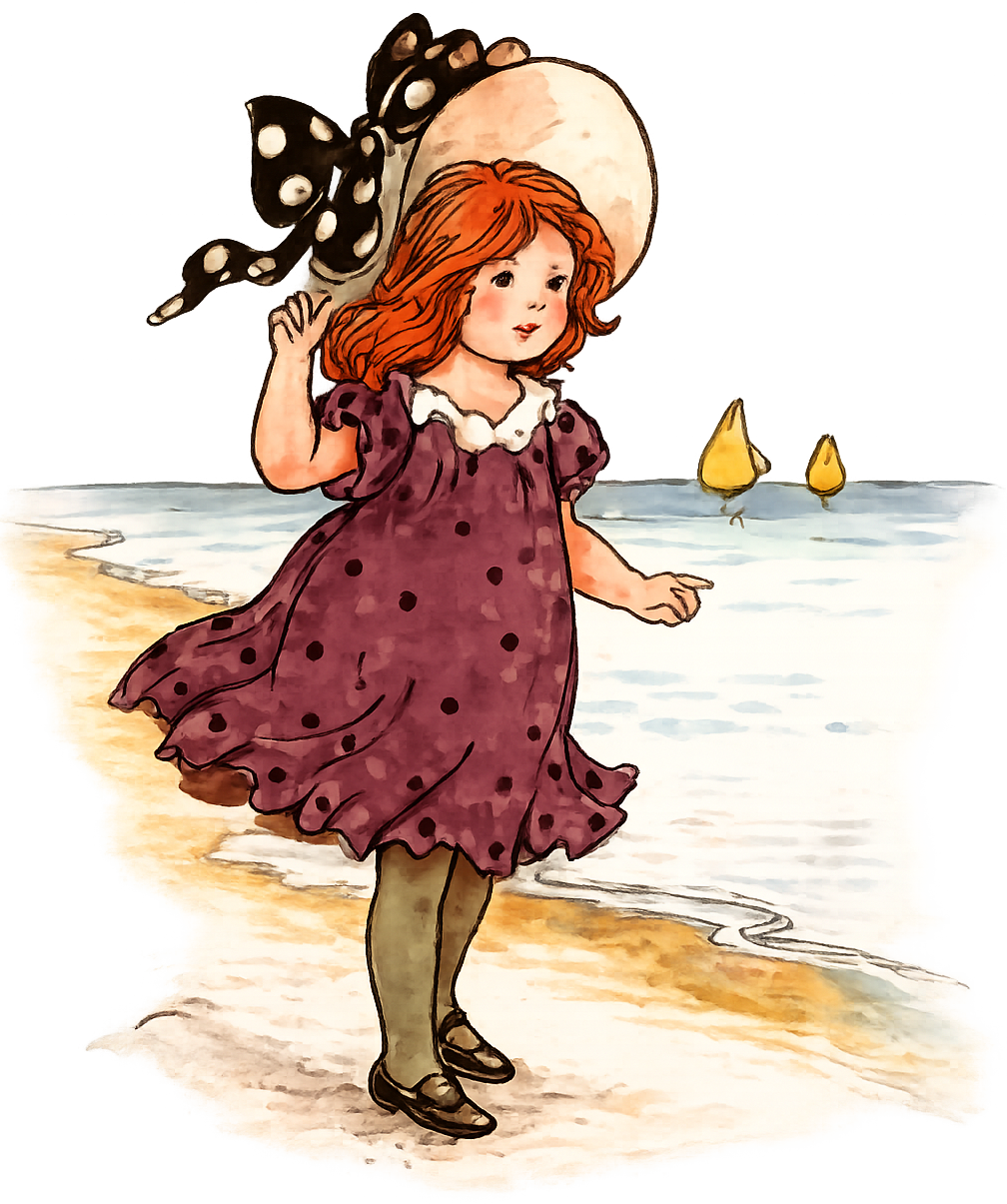
Oh! Big the sea!
“How big the sea is!”
Mi lui laew luin e·‘aear, egor chalen, egor chithren.
In occasions many blue the sea, or green, or grey.
“It is sometimes blue, sometimes green, and sometimes grey.”
Merin olad girion.
Like-I to become sailor.
“I should very much like to be a sailor.”
e·Duil vain nín
Ach ú-verin e·gair nín olad rangen boe falas/bo e·falas.
But not-like-I the ship my to become broken on the shore.
“But I should not like to be shipwrecked.”
Ce dharthathof aen si boe falas/bo e·falas.
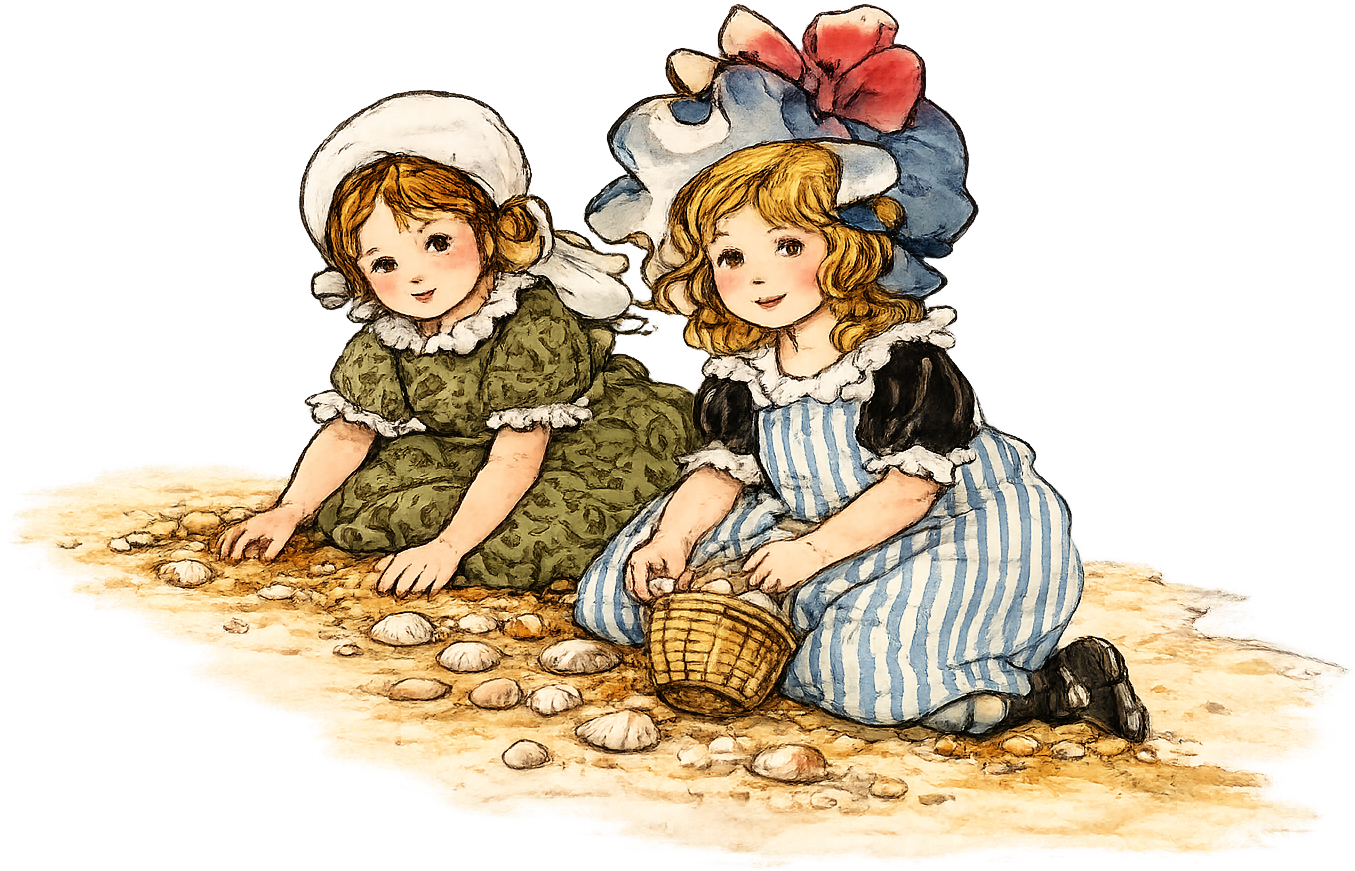
Maybe stay-will-we (exclusive) should here on the beach.
“Perhaps it would be better to stay here on the beach.”
A lheutho helf vain, helf nimgerain16 , helf gyrn.
And pick shells beautiful, shells pink, shells round.
“And pick up pretty shells, pink and round shells.”
e·Chîn vedir in·yrf.
Il chîn vevir yrf.
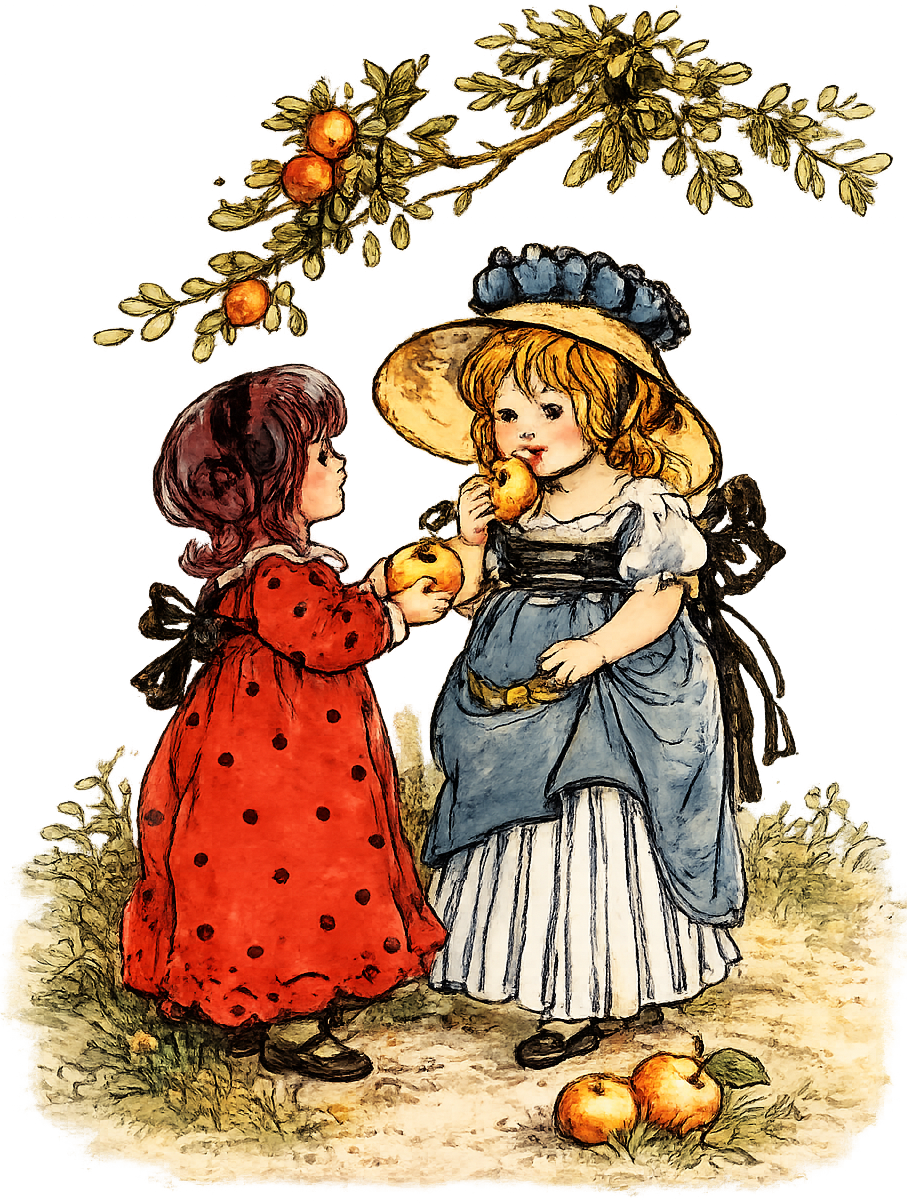
All children like apples.
“All children like apples.”
Galthon dhae ‘aladh yrf vin hant/vi e·hant vín.
Be glad-I there is tree apple in the tree ours (exclusive).
“I am very glad there is an apple tree in our garden.”
Bain e·‘aladh vin ethuil/vi en·ethuil.
Beautiful the tree in the spring.
“The tree is so pretty in the spring.”
Leuthof in·ylf
Caran a nim i·lyth dín.
Red and white the flowers its.
“Its flowers are red and white.”
Ab lû, vi laer, gâr lais gelain.
After time, in summer, it has leaves green.
“Afterwards, in Summer, it has green leaves.”
A m’ iavas degif redraith17 .
And in autumn bring-we (exclusive) ladders.
“And in Autumn we bring ladders.”
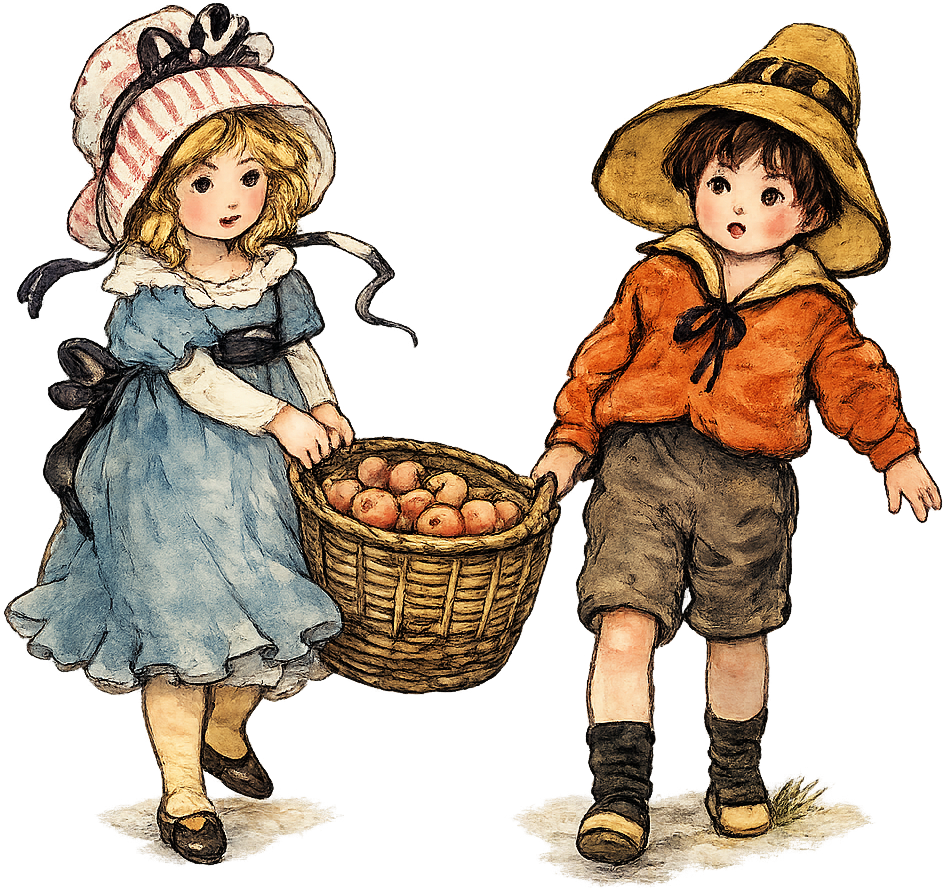
A sestof in·yrf vi ‘wirchylch18 .
And set-we (exclusive) the apples in baskets.
“And we put the apples into baskets.”
Notes:
1 ias ,
conj. “where [relative], in which place” ⪤ Q.
yassë ,
conj. “where [relative], in which place” [author: unknown]
2 mas ,
adv. “where” ⪤ ᴹQ.
massë¹ ,
adv. “where” [author: unknown]
3 fad- ,
v. “to spill” ⪤ ᴺQ.
hwat- ,
v. “to spill” [author: Elaran]
4 níth ,
n. “piece, bit (of indeterminate size)” ⪤ ᴺQ. !
nihta ,
n. “piece, bit, small part” [author: Rínor]
5 maelengas ,
adj. “well-mannered” ⪤ ᴺQ. !
mailengaitë ,
adj. “well-mannered” [author: Rínor]
6 to ,
adv. “so, then” ⪤ Q.
tá ,
adv. “then, [ᴹQ.] at that time [past]” [author: Elaran]
7 hausteg ,
n. “crib, cradle” [author: Rínor]
8 tuil ,
n. “doll” ⪤ ᴺQ. [ᴱQ.]
toli n. “doll, puppet” [author: Vyacheslav Stepanov]
9 pibingim ,
n. “jam, (lit.) berry-sticky-substance” ⪤ “ᴺQ. !
piohimma , n. “jam, (lit.) berry-sticky-substance” [author: Rínor]
10 palf ,
n. “plate” from √PAL+mā [author: Rínor]
11 teliennad ,
n. “toy (lit.) play-thing” [author: Rínor]
12 gwilbog ,
n. “balloon (lit.) float in air bag” [author: Rínor]
13 grithwen ,
n. “nanny, nurse-maid (lit.) care-maiden” [author: Rínor]
14 noriod ,
n. “car (lit.) run-machine” from nor-gautā [author: Luinyelle]
15 bachanna- ,
v. “to pay, to give in exchange” from
bach +
anna- [author: Ellanto]
16 nimgaran ,
n. “ladder” from
nimp +
garan [author: Rínor]
17 redrath ,
n. “pink (lit.) pale-red” from
√RET +
rath [author: Paul Strack]
17 gwircholch ,
n. “basket” ⪤ ᴺQ. !
vircolca n. “basket, (lit.) woven-box” [author: Eleran]
Am