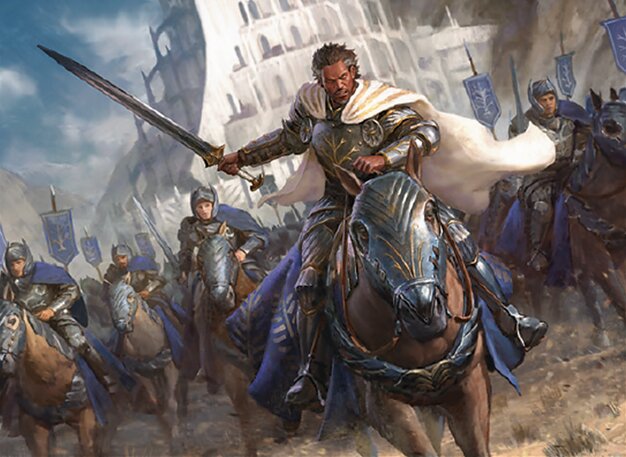
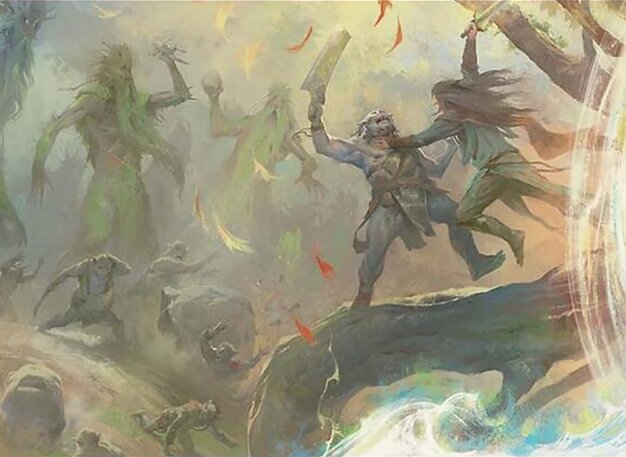
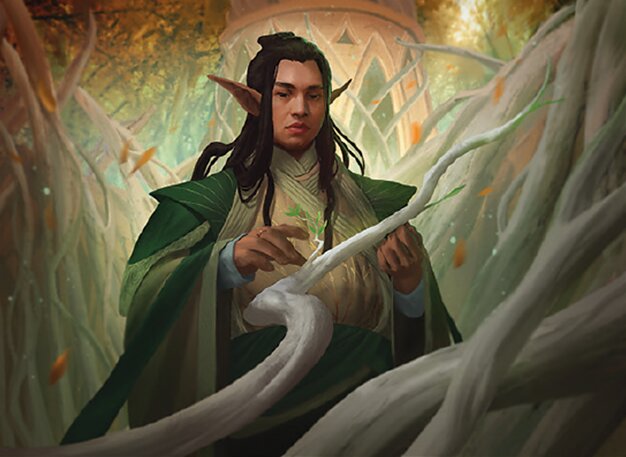
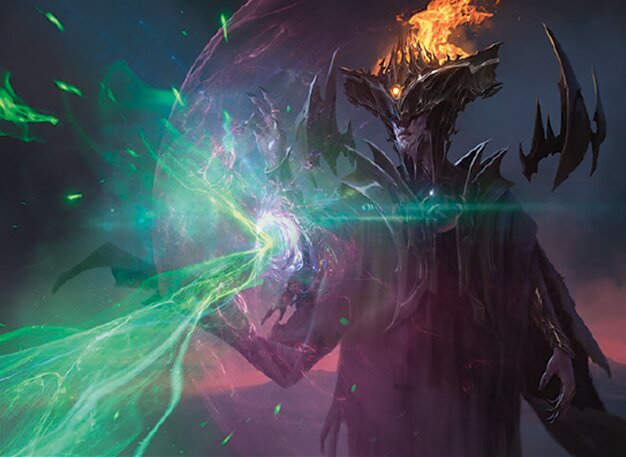
Here you will find my translations of The Lord of the Rings Magic card names into Sindarin and Quenya. I know that some of the art may not accurately reflect certain characters, but this project is not about the artwork, it is about the translation of the card names. All artwork is credited to the rightful artists.
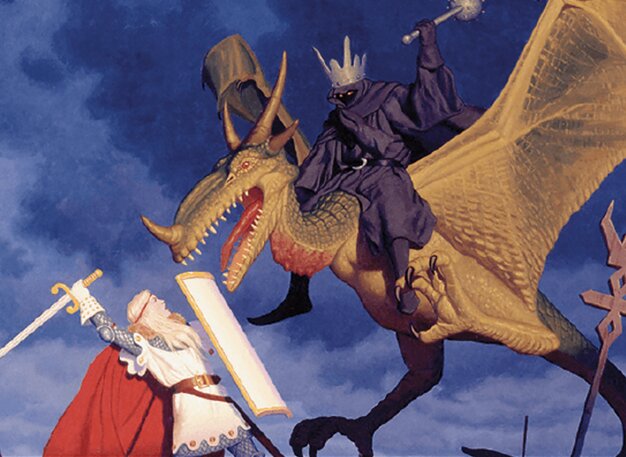
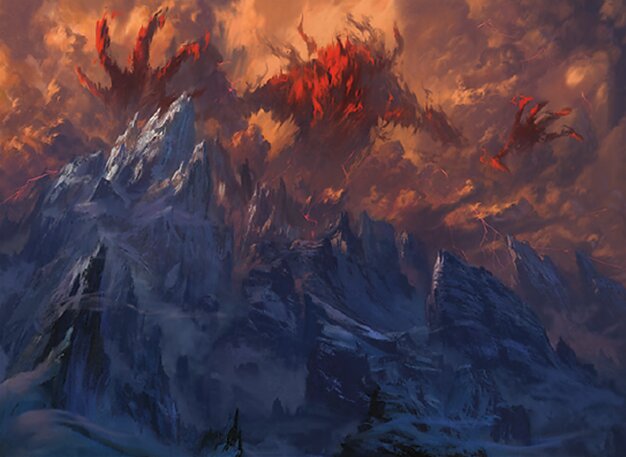
In translating Abyssal Persecutor into Tolkien’s languages, I considered both the literal English title and how official translations across other languages interpret the phrase. Most Romance languages (Spanish, French, Italian, Portuguese) preserve the direct structure “abyssal persecutor,” while some languages such as Japanese and Russian instead express the idea through a relational phrase equivalent to “persecutor of the abyss.” This second pattern aligns well with how titles often function in Tolkien’s languages. For Sindarin, I chose Ruidor e·govn, deriving ruidor “pursuer” from the verb ruida- “to pursue, chase” with the agentive suffix -or, and pairing it with covn “void, emptiness” to represent the abyssal concept. In Quenya, I rendered the phrase as Roitamo i·unduméo, forming roitamo “pursuer” from the verb roita- “to pursue, chase” with the agentive suffix -mo, and combining it with unduméo, the genitive form of undumë “abyss.” Both constructions therefore convey the idea of one who relentlessly pursues from or out of the abyss, while remaining consistent with the grammatical and stylistic conventions of Tolkien’s languages.
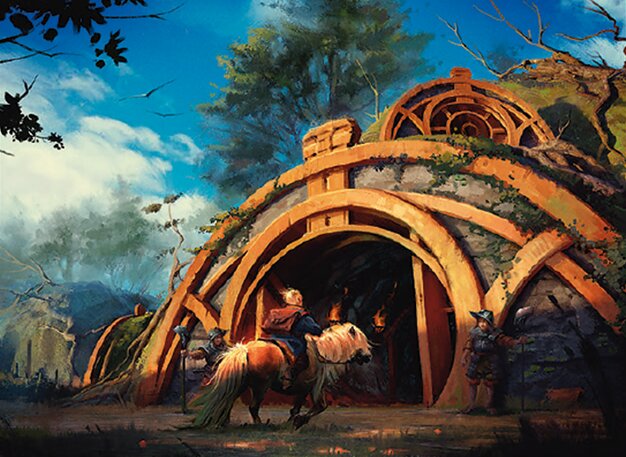
Access Tunnel
Illustrated by Hristo D. Chukov
ES: Túnel de acceso
FR: Tunnel d'accès
DE: Zugangstunnel
IT: Tunnel d'Accesso
PT: Túnel de Acesso
JA: 接続トンネル
ZH: 入口通道
KO: 접근 터널
RU: Входной Туннель
Sindarin
Fela e·viven
Tunnel [of] the entrence
Quenya
Felya i·mitweno
Tunnel the entrence-GEN
In translating Access Tunnel into Tolkien’s languages, I considered both the literal English phrase and how official translations across other languages express the idea. Most Romance languages render the title directly as “tunnel of access,” while several East Asian and Slavic translations instead convey the idea of an “entrance tunnel” or a passage that serves as a way into a place. These patterns suggest that the central concept is not simply a tunnel, but specifically a passage functioning as an entryway. For Sindarin, I chose Fela e·Viven, using fela “mine, boring, tunnel, underground dwelling” as the base noun for the passage itself. To represent the idea of entry or inward access, I coined miven, formed from mi “in” combined with men “road, way,” producing the sense of an inward road or entryway. In Quenya, I rendered the title as Felya i·mitweno, using felya “mine, boring, tunnel” and pairing it with mitweno, the genitive form of mitwen meaning “entrance.” Both constructions therefore express the idea of a tunnel associated with an entryway, reflecting the semantic patterns found across the translations while remaining consistent with Tolkien’s vocabulary and word-formation patterns.
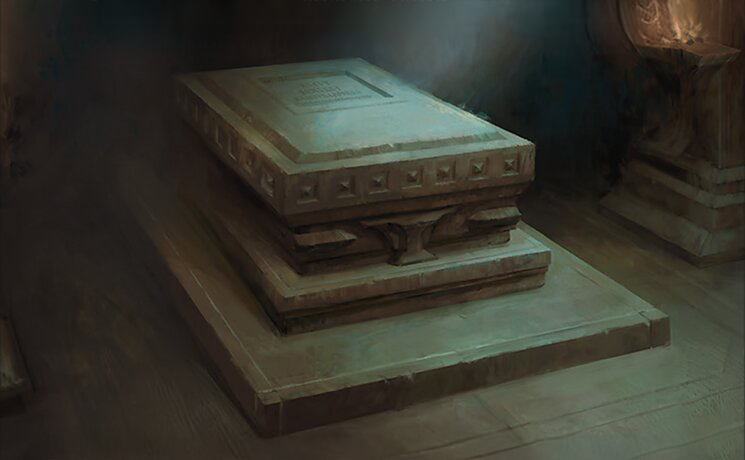
Balin’s Tomb
Illustrated by Anastasia Balakchina
Sindarin
Haudh Balin
Tomb [of] Balin
Quenya
Noire Balinwa
Balin’s Tomb
In translating Balin’s Tomb into Tolkien’s languages, the task was more straightforward since the English title already expresses a simple possessive construction. With no additional contextual translations from other languages to consider, the focus was on rendering the phrase in forms that align naturally with Tolkien’s vocabulary and grammatical structures. For Sindarin, I chose Haudh Balin, using haudh “(funeral) mound, grave, tomb” as the primary noun. The name Balin is preserved directly, as proper names are often retained in Sindarin contexts, and I am unsure if it would become Belin due to i-affection. In Quenya, I rendered the title as Noirë Balinwa, using noirë “tomb” and the possessive form balinwa meaning “Balin’s.” Both constructions therefore follow the natural possessive patterns of Tolkien’s languages while preserving the simplicity and clarity of the original English title.
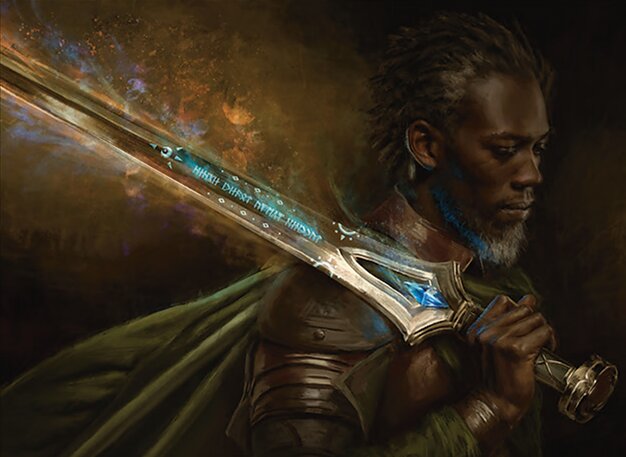
Andúril, Flame of the West
Illustrated by Irvin Rodriguez
ES: Andúril, Llama del Oeste
FR: Andúril, Flamme de L'Ouest
DE: Andúril, Flamme des Westens
IT: Andúril, Fiamma dell'Ovest
PT: Andúril, Chama do Oeste
JA: 西方の焰、アンドゥーリル
ZH: 西方之焰安督利尔
Sindarin
Annúril
Flame of the West
Quenya
Andúril
Flame of the West
In translating Andúril, Flame of the West into Tolkien’s languages, the title required little modification because the name itself already originates within Tolkien’s legendarium. Across the official translations, the sword’s name Andúril is preserved while the descriptive title is rendered as “Flame of the West,” using each language’s equivalent terms for “flame” and “west.” In Sindarin, I rendered the name as Annúril, reflecting the Sindarin phonological form of the name while preserving its original meaning. In Quenya, the form Andúril remains unchanged, as it is already the canonical Quenya name of Aragorn’s sword. The name itself is derived from elements meaning “flame” and “west,” thus both forms ultimately convey the same literal meaning: “Flame of the West.”
In translating Andúril, Narsil Reforged into Tolkien’s languages, the title largely follows the structure of the English phrase, since the names Andúril and Narsil already belong to Tolkien’s legendarium. With no alternate official translations to compare, the task was essentially a direct rendering of the idea “Narsil reforged.” For Sindarin, I rendered the title as Annúril, Narthil adhwagannen, converting the Quenya form of the sword’s name into Sindarin and expressing “reforged” through a coined participial form derived from the prefix ad- “back, again, re-” combined with the verb maga- “to forge metal.” In Quenya, I rendered the phrase as Andúril, nanwacina Narsil, using a participial form based on the prefix en- “re-, again” together with the verb maca- “to forge.” Both constructions therefore follow the simple meaning implied by the English title—Narsil restored and forged anew—while remaining consistent with Tolkien’s word-formation patterns.
Anger
Illustrated by Henry Peters
ES: Enojo
FR: La Colère
DE: Der Ärger
IT: La Rabbia
PT: Ira
JA: 憤怒
ZH: 憤怒
RU: Злость
Sindarin
Rûth
Anger
Quenya
Rúsë
Anger
In translating Anger into Tolkien’s languages, the process was relatively straightforward since the English title is a single abstract noun expressing the emotion of intense wrath or fury. The official translations across other languages follow the same pattern, each using their standard word for anger or rage without additional modifiers or descriptive phrasing. For Sindarin, I chose Rûth, a word meaning “anger” or “wrath,” which captures the same emotional intensity conveyed by the English title. In Quenya, I chose Rúsë, likewise meaning “anger” or “wrath.” Both choices therefore directly mirror the simplicity of the original title, using clear and attested vocabulary in Tolkien’s languages to express the same fundamental concept.
Anguished Unmaking
Illustrated by Liiga Smilshkalne
ES: Fin angustioso
FR: Annulation angoissée
DE: Schmerzerfüllte Auslöschung
IT: Dissoluzione Angosciosa
PT: Desfazer Angustiado
JA: 苦渋の破棄
ZH: 哀恸归虚
KO: 비통한 파괴
RU: Мучительное Уничтожение
Sindarin
Methed naegui
Painful end
Quenya
Naicelea metta
Painful end
In translating Anguished Unmaking into Tolkien’s languages, I considered how the official translations convey the idea of destruction accompanied by intense suffering. Most languages express the concept as a painful dissolution or annihilation, emphasizing both the act of ending and the anguish associated with it. Because Tolkien’s languages do not provide a direct equivalent for the compound phrase “anguished unmaking,” I instead rendered the underlying meaning as “painful end.” For Sindarin, I chose Methed naegui, using methed “end” paired with the adjective naegui “painful,” which I formed from naeg “pain” combined with the adjectival suffix -ui meaning “having the quality of.” In Quenya, I rendered the phrase as Naicelea metta, using the attested adjective naicelea “painful, agonizing” together with metta “ending, end.” Both constructions therefore express the same conceptual idea reflected in many of the translations: an ending marked by suffering or anguish, conveyed in forms that remain natural within Tolkien’s vocabulary and grammatical patterns.
Aragorn and Arwen, Wed
Illustrated by Magali Villeneuve
ES: Aragorn y Arwen, desposados
FR: Aragorn et Arwen, époux
DE: Aragorn und Arwen, das Brautpaar
IT: Aragorn e Arwen, Sposi
PT: Aragorn e Arwen, Casados
JA: 契り結びし、アラゴルンとアルウェン
ZH: 新婚燕尔阿拉贡与阿尔玟
Sindarin
Aragorn ah Arwen Vestannen
Wedded Aragorn and Arwen
Quenya
Verini Aracorno ar Arweno
Married Aragorn and Arwen
In translating Aragorn and Arwen, Wed into Tolkien’s languages, I considered how the official translations convey the idea of Aragorn and Arwen as a married pair. Most languages render the phrase simply as “Aragorn and Arwen, married” or “Aragorn and Arwen, the wedded couple.” For Sindarin, I chose Aragorn ah Arwen Vestennin, using a participial adjective derived from the verb besta- “to wed, marry.” The form bestennin represents a plural participial adjective meaning “wedded” or “married,” agreeing with the two individuals named in the phrase. In Quenya, I rendered the title as Verini Aracorno ar Arweno, using the adjective verin “married” in its plural form verini to describe both Aragorn and Arwen together. Both constructions therefore reflect the idea of the pair as a married couple while remaining consistent with the grammatical agreement patterns of Tolkien’s languages.
Aragorn, Company Leader
Illustrated by Anna Steinbauer
ES: Aragorn, líder de la compañía
FR: Aragorn, chef de la compagnie
DE: Aragorn, Anführer der Gefährten
IT: Aragorn, Capo della Compagnia
PT: Aragorn, Líder da Sociedade
JA: 一行のリーダー、アラゴルン
ZH: 远征队长阿拉贡
Sindarin
Aragorn Caun e·‘oli
Aragorn, Head of the company
Quenya
Aracorno Cáno i·oliéo
Aragorn, Head of the company
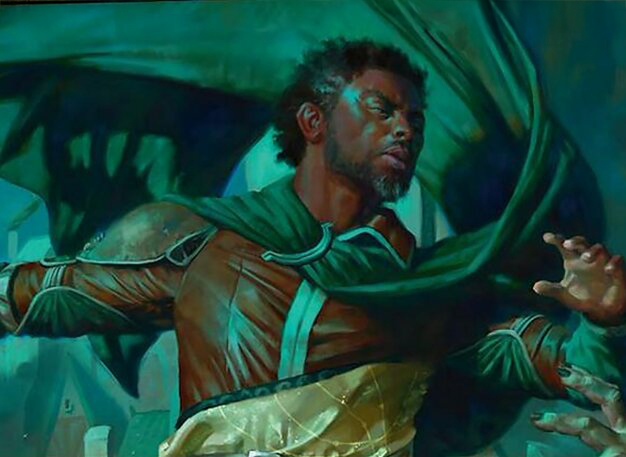
In translating Aragorn, Company Leader into Tolkien’s languages, I considered how the official translations render the idea of Aragorn as the leader of a fellowship or group traveling together. Many languages express this concept directly as “leader of the company,” though some, such as German and Chinese, interpret the phrase more broadly as the leader of a fellowship or expedition. For Sindarin, I rendered the title as Aragorn Caun e·‘oli, using caun “prince, chief, head” to represent Aragorn’s role as leader. The word goli was coined as a Sindarin cognate of the Quenya olië “company, people together,” drawing from the elements go- “together” and lî “people (of one kind or origin)” to convey the sense of a gathered group or fellowship. In Quenya, I rendered the title as Aracorno Cáno i·oliéo, using cáno “commander, chief, ruler” paired with oliéo, the genitive form of olië “company, people together.” Both constructions therefore express Aragorn’s role as the head or leader of a fellowship, while remaining consistent with Tolkien’s vocabulary and word-formation patterns.
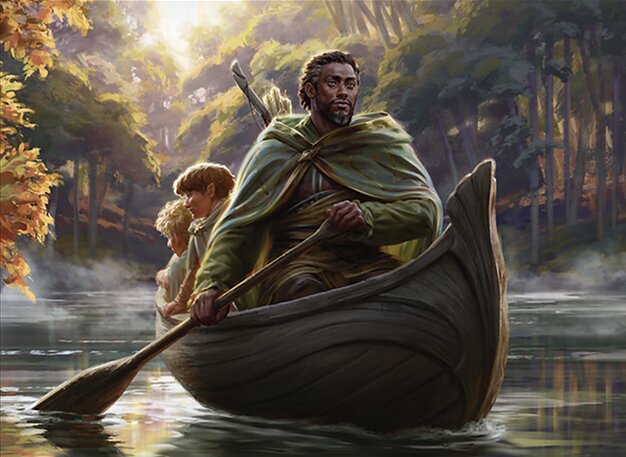
In translating Aragorn, Hornburg Hero into Tolkien’s languages, I considered how the English title refers to Aragorn’s role in the defense of the Hornburg at Helm’s Deep. Because the place-name “Hornburg” is derived from the Rohirric elements meaning roughly “horn-fortress,” I followed the same semantic structure when rendering the location in Tolkien’s languages. For Sindarin, I rendered the title as Aragorn Callon Rassost, using callon “hero” and coining the place-name Rassost to represent “Hornburg.” This formation draws on ras(s) “horn [of both animals and mountains]” combined with ost “fort, fortress, stronghold.” In Quenya, I rendered the title as Aracorno Callo Rassosto, likewise using callo “hero” and forming the place-name from rassë “horn” combined with osto “fortress, stronghold.” The resulting form rassosto appears in the genitive construction to express “Hero of the Hornburg.” Both constructions therefore follow the meaning implied by the English title while remaining consistent with Tolkien’s vocabulary and phonological patterns.
Aragorn, King of Gondor
Illustrated by Yongjae Choi
ES: Aragorn, rey de Gondor
FR: Aragorn, roi du Gondor
DE: Aragorn, König von Gondor
IT: Aragorn, Re di Gondor
PT: Aragorn, Rei de Gondor
JA: ゴンドールの王、アラゴルン
ZH: 刚铎国王阿拉贡
Sindarin
Aragorn Aran Gondor
Aragorn King [of] Gondor
Quenya
Aracorno Aran Ondóreo
Aragorn King [of] Gondor
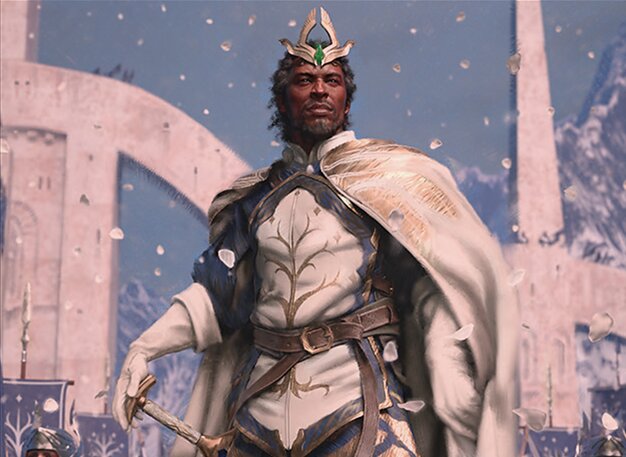
In translating Aragorn, King of Gondor into Tolkien’s languages, the structure of the title follows a very direct and well-established pattern. The official translations across languages consistently render the phrase simply as “King of Gondor,” preserving both Aragorn’s title and the place-name. For Sindarin, I rendered the title as Aragorn Aran Gondor, using aran “king, lord, chief,” a word frequently used in Tolkien’s Sindarin to denote a ruler or lord of a realm. The place-name Gondor, meaning “Stone-land,” remains unchanged as the established Sindarin name of the kingdom. In Quenya, I rendered the phrase as Aracorno Aran Ondóreo, again using aran “king,” paired with Ondóreo, the genitive form of Ondonórë, the Quenya name for Gondor meaning “Stone-land.” Both constructions therefore follow the simple possessive pattern “King of Gondor,” reflecting Aragorn’s royal title while remaining consistent with Tolkien’s vocabulary and grammatical conventions.
Aragorn, the Uniter
Illustrated by Javier Charro
ES: Aragorn, el Unificador
FR: Aragorn, l'unificateur
DE: Aragorn der Einiger
IT: Aragorn, l'Unificatore
PT: Aragorn, o Unificador
JA: 統一王、アラゴルン
ZH: 重联君王阿拉贡
Sindarin
Aragorn Erthor
Aragorn [the] Uniter
Quenya
Aracorno Ertaro
Aragorn [the] Uniter
In translating Aragorn, the Uniter into Tolkien’s languages, I considered how the official translations consistently describe Aragorn as the one who brings peoples or realms together. Most languages render the title with a noun meaning “unifier” or “one who unites,” reflecting Aragorn’s role in reuniting the kingdoms of Men and restoring the line of kings. For Sindarin, I rendered the title as Aragorn Erthor, deriving erthor “uniter” from the verb ertha- “to unite” combined with the agentive suffix -or, which forms nouns meaning “one who performs an action.” In Quenya, I rendered the title as Aracorno Ertamo, forming ertamo “uniter” from the verb erta- “to unite” together with the agentive suffix -mo. Both constructions therefore express the idea of Aragorn as the one who unites peoples and kingdoms, while remaining consistent with Tolkien’s word-formation patterns and grammatical conventions.
Arboreal Alliance
Illustrated by Alexander Mokhov
Sindarin
Gwadoras i·thoer
Association [of] the trees
Quenya
Otornie i·aldaron
Alliance of the trees
In translating Arboreal Alliance into Tolkien’s languages, I had fewer external translations to compare and therefore focused primarily on the meaning implied by the English title and the imagery of the card itself. The term “arboreal” refers to something relating to or associated with trees, which is fitting given that the card depicts Ents, the tree-like guardians of Middle-earth. Rather than translating the adjective directly, I rendered the phrase as an alliance or association “of the trees.” For Sindarin, I chose Gwadoras i·Thoer, using gwadoras “union, association, fellowship, society” together with toer, the plural form related to taur “forest, wood, great wood,” to convey the idea of a gathering or alliance connected with the trees or forest. In Quenya, I rendered the title as Otornie i·aldaron, using otornie “company, association, alliance” and aldaron, the genitive plural of alda “tree,” meaning “of the trees.” Both constructions therefore convey the sense of an alliance belonging to or formed by the trees, reflecting the thematic connection to Ents while remaining consistent with Tolkien’s vocabulary and word-formation patterns.
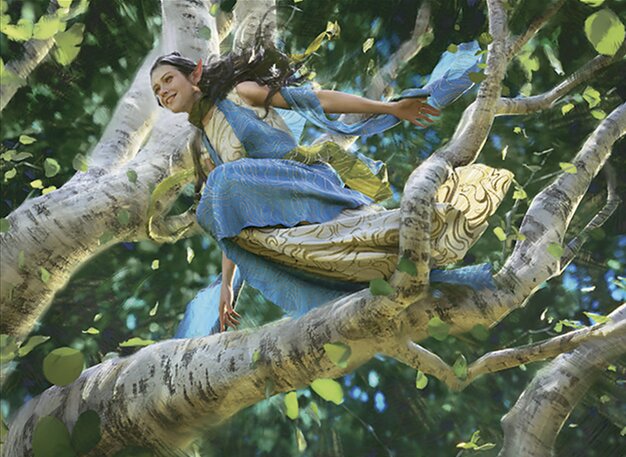
Arbor Elf
Illustrated by Inka Schulz
ES: Elfo enramado
FR: Elfe de la charmille
DE: Lauben-Elf
IT: Elfo Arboreo
PT: Elfo do Arvoredo
JA: 東屋のエルフ
ZH: 乔木妖精
KO: 수목 엘프
RU: Эльф Лесного Свода
Sindarin
Edhel in·eryn
Elf [of] the woods
Quenya
Elda i·toasto
Elf of the grove
In translating Arbor Elf into Tolkien’s languages, I considered how the official translations generally describe an elf associated with trees, woods, or forested places. Most languages render the idea with terms relating to woodland elves or elves connected with trees and groves. For Sindarin, I rendered the title as Edhel in·eryn, using edhel “Elf” combined with eryn “woods, forests,” expressing the idea of an elf belonging to or dwelling among the trees. In Quenya, I rendered the title as Elda i·toasto, using Elda “Elf,” literally “one of the Star-folk,” paired with toasto, the genitive form of töasta “grove.” Both constructions therefore convey the idea of an elf associated with wooded places or groves, reflecting the imagery suggested by the card while remaining consistent with Tolkien’s vocabulary and grammatical patterns.
Arcane Denial
Illustrated by Daarken
ES: Constricción arcana
FR: Déni des arcanes
DE: Mysteriöse Ablehnung
IT: Privazione Arcana
PT: Contradição Arcana
JA: 秘儀の否定
ZH: 玄秘否定
RU: Волшебный Запрет
Sindarin
Úbed nan ist chûl
Denial of secret knowledge
Quenya
Láquetie muina ñóleo
Denial of secret knowledge
In translating Arcane Denial into Tolkien’s languages, I considered how the official translations generally convey the idea of rejecting or negating something mystical or hidden. Because neither Sindarin nor Quenya provides a direct adjective equivalent to “arcane,” I instead expressed the idea through a genitive construction meaning “denial of secret knowledge.” For Sindarin, I rendered the title as Úbed nan ist chûl, using úbed “denial,” derived from the root meaning refusal or negation, paired with ist “lore, knowledge” and chûl “secret.” Together these elements convey the sense of refusing or denying hidden knowledge. In Quenya, I rendered the phrase as Láquetie muina ñóleo, deriving láquetie “denial” from the verb láquet- “to deny (lit. ‘to say it is not’)” with the abstract noun suffix -ië. This is paired with ñóleo, the genitive form of nólë “lore, knowledge,” modified by muina “hidden, secret.” Both constructions therefore convey the idea of rejecting hidden or mystical knowledge, capturing the sense of “arcane denial” while remaining consistent with Tolkien’s vocabulary and grammatical patterns.
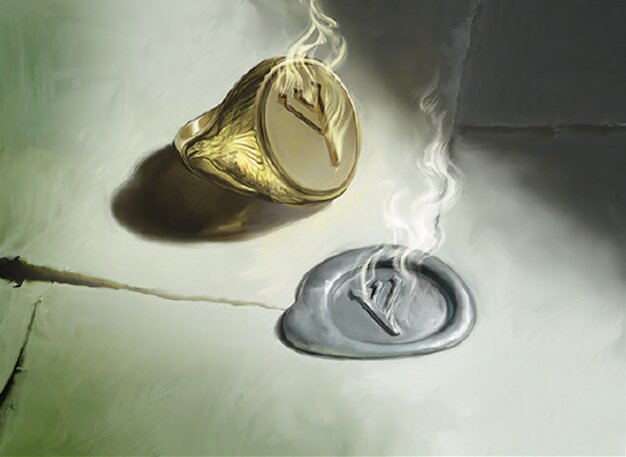
Arcane Signet
Illustrated by Randy Gallegos
ES: Sello arcano
FR: Cachet d'ésotérisme
DE: Arkanes Petschaft
IT: Sigillo Arcano
PT: Sinete Arcano
JA: 秘儀の印鑑
ZH: 秘法印记
KO: 신비한 인장
RU: Магическая Печать
Sindarin
Laith nan ist chûl
Seal of secret knowledge
Quenya
Lihta muina ñóleo
Seal of secret knowledge
In translating Arcane Signet into Tolkien’s languages, I followed the same interpretive approach used for Arcane Denial, since neither Sindarin nor Quenya has a direct adjective corresponding to “arcane.” As in the previous title, I expressed the concept through a genitive construction referring to something associated with secret knowledge. For Sindarin, I rendered the title as Laith nan ist chûl, meaning “Seal of secret knowledge.” The noun laith “seal” was coined as a Sindarin cognate of Quenya lihta, deriving from the primitive root √LIK “glide, slip, slide, drip” with the noun-forming suffix ✶-ta meaning “a single product of an action.” The historical development follows the expected phonological progression: ✶likta → lixθa → lexθa → leiθa → leiθ → laiθ, producing the Sindarin form laith. This is paired with ist “lore, knowledge” and chûl “secret,” forming the phrase “seal of secret knowledge.” In Quenya, I rendered the title as Lihta muina ñóleo, using lihta “seal” together with ñóleo, the genitive form of nólë “lore, knowledge,” modified by muina “hidden, secret.” Both constructions therefore convey the idea of a signet or seal associated with hidden or arcane knowledge while remaining consistent with Tolkien’s vocabulary and historical phonological patterns.
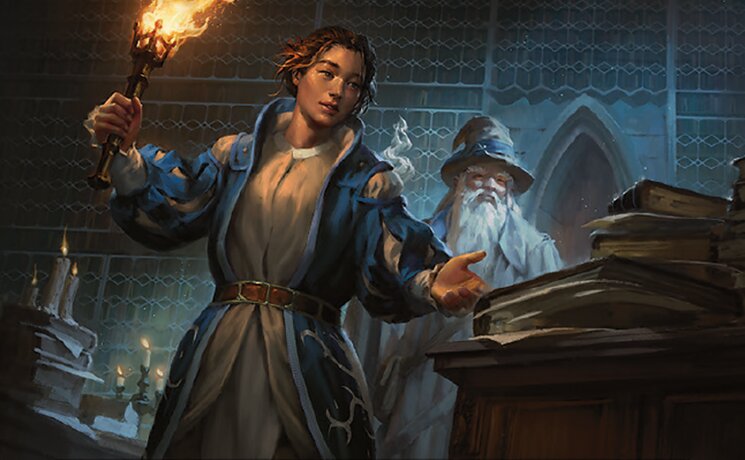
Archivist of Gondor
Illustrated by Wisnu Tan
ES: Archivista de Gondor
FR: Archiviste du Gondor
DE: Archivarin aus Gondor
IT: Archivista di Gondor
PT: Arquivista de Gondor
JA: ゴンドールの文書保管人
ZH: 刚铎档案师
Sindarin
Berior perf na Ñgondor
Protector of the Books of Gondor
Quenya
Varyamo parmar Ondonóreve
Protector of Gondor's books
In translating Archivist of Gondor into Tolkien’s languages, I was faced with the absence of a direct equivalent for “archivist” or “one who maintains records.” The official translations across languages generally preserve the idea of a keeper or caretaker of documents, though Tolkien’s languages do not provide a specialized term for archival professions. Rather than attempting a direct modern equivalent, I chose to render the role conceptually as a “protector of the books of Gondor,” which aligns more naturally with Tolkien’s linguistic and cultural framework. For Sindarin, I rendered the title as Berior perf na Ñgondor, deriving berior “protector” from the verb beria- “to protect” with the agentive suffix -or, and pairing it with perf “book,” alongside Ñgondor “Gondor.” In Quenya, I rendered the phrase as Varyamo parmar Ondonóreve, forming varyamo “protector” from varya- “to protect” with the agentive suffix -mo, and using parmar “books” together with Ondonóreve, the possessive form of Ondonórë “Gondor.” While a term such as “keeper” might seem closer to the modern sense of “archivist,” it risks introducing a more Anglicized or modern conceptual nuance. By instead using “protector,” both constructions reflect a role more consistent with Tolkien’s world, emphasizing stewardship and guardianship of knowledge rather than institutional archiving.
Arwen, Mortal Queen
Illustrated by Miranda Meeks
ES: Arwen, reina mortal
FR: Arwen, reine mortelle
DE: Arwen, sterbliche Königin
IT: Arwen, Regina Mortale
PT: Arwen, Rainha Mortal
JA: 人の子の女王、アルウェン
ZH: 归凡皇后阿尔玟
Sindarin
Arwen Rían fíreb
Arwen Mortal queen
Quenya
Arwen Firya tári
Arwen Mortal queen
In translating Arwen, Mortal Queen into Tolkien’s languages, the title follows a clear and direct structure, with most official translations rendering it simply as “mortal queen.” The emphasis lies in Arwen’s unique status as an Elf who chooses mortality, making the adjective “mortal” especially significant. For Sindarin, I rendered the title as Arwen Rían fíreb, using rían “queen, crowned-lady” paired with fíreb “mortal,” directly reflecting the descriptive nature of the English phrase. In Quenya, I rendered the title as Arwen Firya tári, using tári “queen, lady” together with firya “mortal.” Both constructions therefore preserve the straightforward adjectival structure found across the translations while highlighting Arwen’s defining choice to become mortal, expressed in forms consistent with Tolkien’s vocabulary and grammatical patterns.
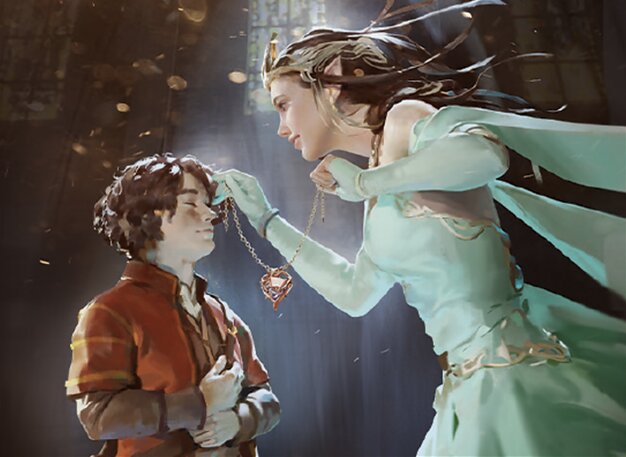
Arwen’s Gift
Illustrated by Wangjie Li
ES: Dádiva de Arwen
FR: Cadeau d'Arwen
DE: Arwens Gabe
IT: Dono di Arwen
PT: Dádiva de Arwen
JA: アルウェンの贈り物
ZH: 阿尔玟的赠礼
Sindarin
Ann Arwen
Gift of Arwen
Quenya
Anna Arwenwa
Arwen's gift
In translating Arwen’s Gift into Tolkien’s languages, the title follows a simple possessive structure that is consistently reflected across the official translations as “gift of Arwen” or “Arwen’s gift.” For Sindarin, I rendered the title as Ann Arwen, using ann “gift” combined with the proper name Arwen, expressing a genitival relationship without additional marking. In Quenya, I rendered the phrase as Anna Arwenwa, using anna “gift” together with Arwenwa, the possessive form of Arwen, meaning “Arwen’s.” Both constructions therefore preserve the straightforward possessive meaning of the original title while remaining consistent with Tolkien’s grammatical patterns and vocabulary.
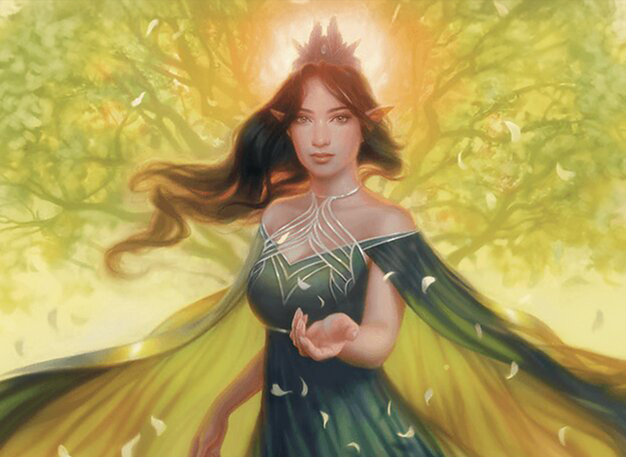
Arwen Undómiel
Illustrated by Yongjae Choi
ES: Arwen Undómiel
FR: Arwen Undómiel
DE: Arwen Undómiel
IT: Arwen Undómiel
PT: Arwen Undómiel
JA: アルウェン・ウンドーミエル
ZH: 阿尔玟·乌多米尔
Sindarin
Arwen Tinnúvel
Arwen Undómiel
Quenya
Arwen Undómiel
Arwen Undómiel
In translating Arwen Undómiel into Tolkien’s languages, the title already exists in Quenya and is preserved unchanged across all official translations, as it is Arwen’s canonical epithet meaning “Evenstar.” In Quenya, Undómiel is formed from undómë “twilight, evening” and él “star,” conveying the image of the evening star appearing at dusk. For Sindarin, I rendered the title as Arwen Tinnúvel, coining a parallel formation using tinnu “(starry) twilight, dusk, early night” and êl “star.” This produces a Sindarin equivalent meaning “twilight star” or “evening star,” closely mirroring the sense of the original Quenya name. Both forms therefore preserve the poetic imagery associated with Arwen’s epithet while remaining consistent with the vocabulary and word-formation patterns of Tolkien’s languages.
Arwen, Weaver of Hope
Illustrated by Axel Sauerwald
ES: Arwen, tejedora de esperanza
FR: Arwen, tisseuse d'espoir
DE: Arwen, Weberin der Hoffnung
IT: Arwen, Tessitrice di Speranza
PT: Arwen, Tecelã da Esperança
JA: 希望の紡ぎ手、アルウェン
ZH: 希望织匠阿尔玟
Sindarin
Arwen Gwîr Estel
Arwen Weaver of Hope
Quenya
Arwen Vaire Estelo
Arwen Weaver of Hope
In translating Arwen Undómiel into Tolkien’s languages, the title already exists in Quenya and is preserved unchanged across all official translations, as it is Arwen’s canonical epithet meaning “Evenstar.” In Quenya, Undómiel is formed from undómë “twilight, evening” and él “star,” conveying the image of the evening star appearing at dusk. For Sindarin, I rendered the title as Arwen Tinnúvel, coining a parallel formation using tinnu “(starry) twilight, dusk, early night” and êl “star.” This produces a Sindarin equivalent meaning “twilight star” or “evening star,” closely mirroring the sense of the original Quenya name. Both forms therefore preserve the poetic imagery associated with Arwen’s epithet while remaining consistent with the vocabulary and word-formation patterns of Tolkien’s languages.