e·Nordh ah i·Lisg
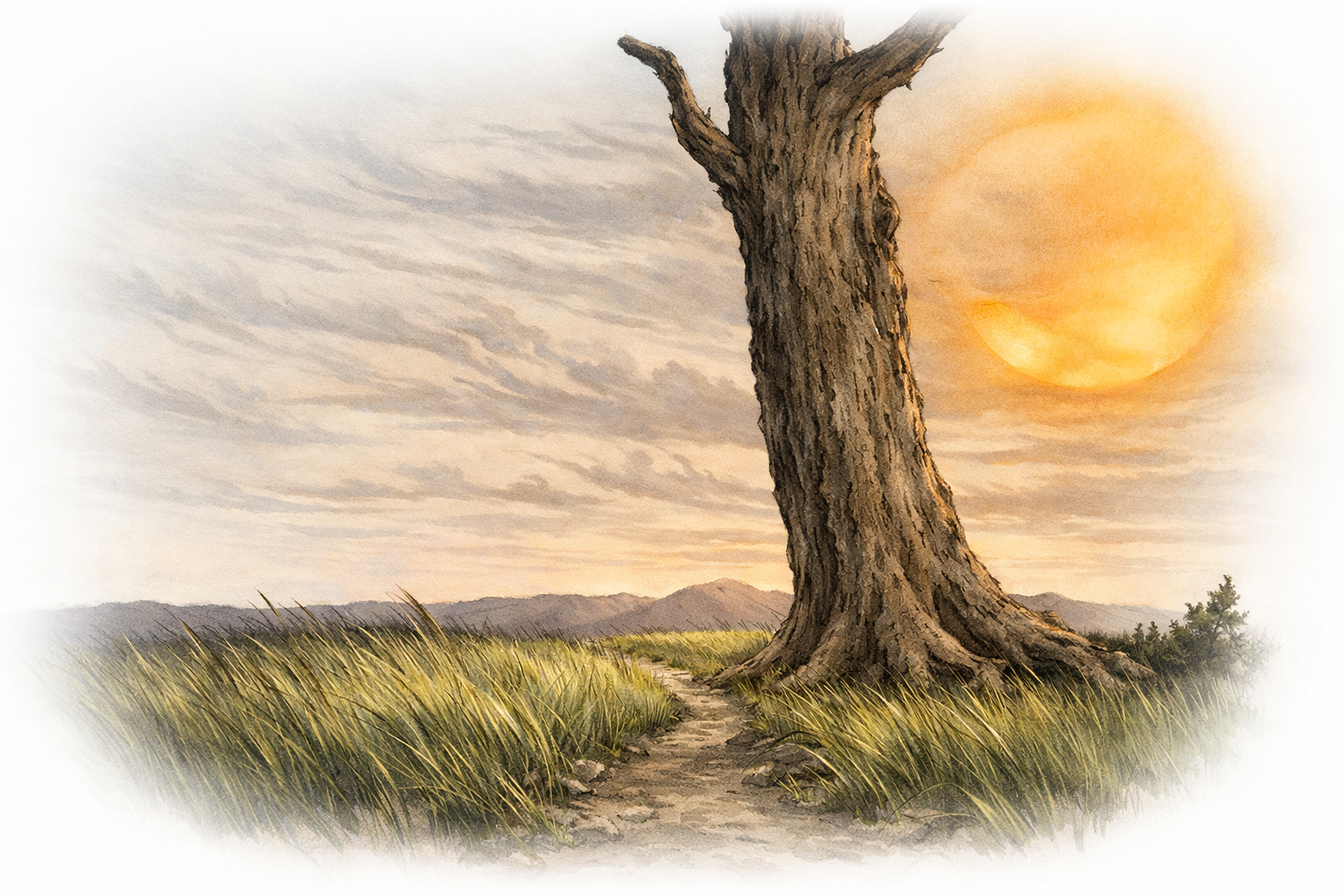
The Oak and the Reeds
§
Sindarin
Back Translation
Original
1.1
Nordh veleg ador ha cheleth ias1 Lisg fim óler.
[A] great oak stood along [a] brook where slender Reeds grew.
A Giant Oak stood near a brook in which grew some slender Reeds.
1.2
Io e·‘wae húdast, e·nordh veleg ador darlang a thalch, ah i·ñgelf doch dín alanner n’ ell.
When the wind blew, the great oak stood proud and upright, and its hundred branches stretched to [the] sky.
When the wind blew, the great Oak stood proudly upright with its hundred arms uplifted to the sky.
1.3
Ach i·lisg awórer eni ‘wae a lhinnanner lind dhem a nírol.
But the reeds yielded to the wind and sang [a] sad and sorrowful song.
But the Reeds bowed low in the wind and sang a sad and mournful song.
1.4
“Sevig gaeth an nornad,” ebent e·nordh.
“You have reason to complain,” said the oak.
"You have reason to complain," said the Oak.
1.5
“i·Whest robin i bresta balath e·nen ceiria gin loethad, lo im, nordh mbelaith, terin daer a thaug choe ‘waew vrui.”
“The littlest breeze that disturbs [the] surface of the water causes you to bend, while I, nordh mbelaith, terin daer a thaug choe ‘waew vrui.”
"The slightest breeze that ruffles the surface of the water makes you bow your heads, while I, the mighty Oak, stand upright and firm before the howling tempest."
1.6
“Av’ olo brestannen vo e·nast vín,” ebenner i·lisg.
“Don’t become troubled by (agent of) our being,” said the reeds.
"Do not worry about us," replied the Reeds.
1.7
“i·Ñgwae ú-geiriar charnas aphen.
“The winds do not cause harm to us.
"The winds do not harm us.
1.7a
Awóreb cho din, an ú-regib.
We yield before them, for we do not break.
We bow before them and so we do not break.
1.7b
Tauglog i·suil vo il e·vlaud a bellas gín.
You resisted the winds by (agent of) all your pride and strength.
You, in all your pride and strength, have so far resisted their blows.
1.7c
Ach dôl e·vethed.”
But the end [is] coming.”
But the end is coming."
1.8
Lo i·lisg ebenner, gwaew veleg ethul eph forod.
While the reeds spoke, [a] great storm came out of [the] north.
As the Reeds spoke a great hurricane rushed out of the north.
1.9
e·Nordh ador tarlang a dadhrant e·waew, lo i·lisg ‘warol loethasser chaug.
The oak stood proudly and opposed the storm, while the yielding reeds bent low.
The Oak stood proudly and fought against the storm, while the yielding Reeds bowed low.
1.10
e·‘Wae olast valch, ah e·‘aladh veleg dannast vregol, nerchennin i·sylch ui dalaf, a chaedast vig i·lisg nírol.
The wind became fierce, and the great tree fell suddenly, the roots were torn from the ground, and it lay among the sorrowful reeds.
The wind redoubled in fury, and all at once the great tree fell, torn up by the roots, and lay among the pitying Reeds.
Notes:
1 ias, pron. “where (relative)” ⪤ ᴹQ. yassë, adv. “there [remote, relative]”
2 Basing dôl e·vethed off of tôl acharn “vengeance comes / vengeance is coming”.